By Benjamin Akoto
Sunyani (Bono), Aug. 21, GNA-Professor Akbar Saeed, an Associate Professor of Information Systems, Wilfrid Laurier University, Canada, has urged Ghanaian technology firms to develop software tailored to local conditions. He was, however, quick to add that they must be mindful of existing social biases.
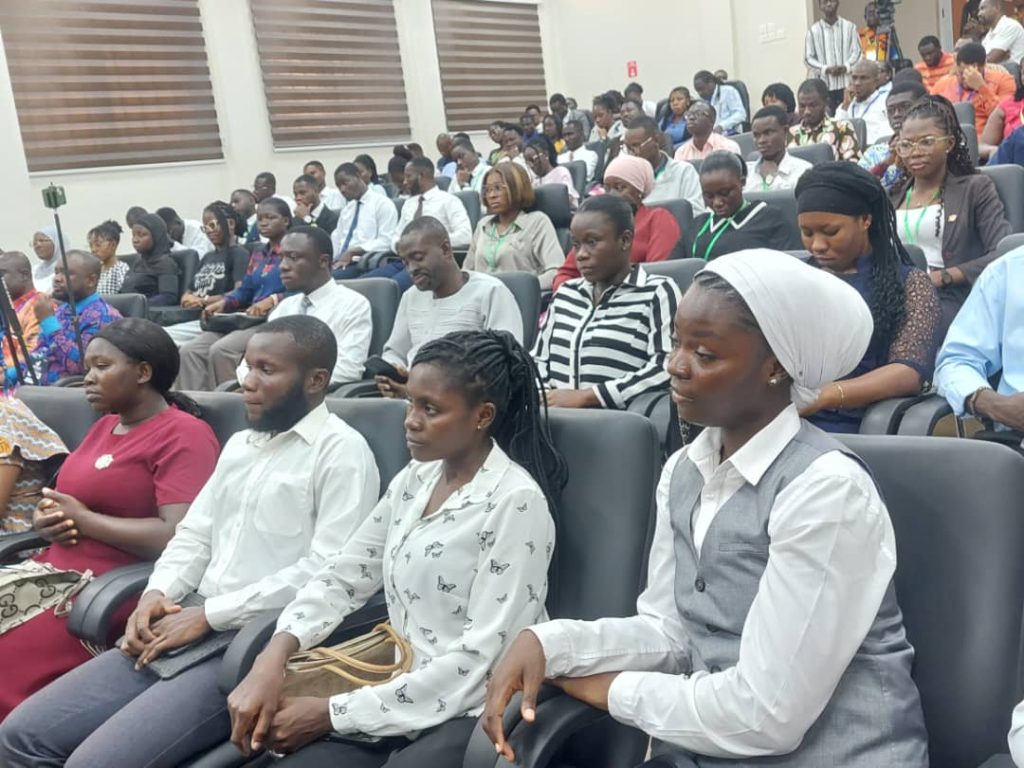
Prof Saeed gave the advice when interacting with the media on the sidelines of Second edition of the International Conference on Science Technology, and Health Innovation for Sustainable Development (STHISD 2025) of the School of Sciences of the University of Energy and Natural Resources (UENR) in Sunyani.
He explained that software developed by Western countries often reflected the cultural context and algorithmic biases of the creators that might necessarily not align with the realities of developing nations like Ghana.
The conference was on the theme “Advancing sustainable futures through environment, health, ICT and food security: The role of emerging Scientists”, and aimed at fostering knowledge exchange among experts, practitioners, policymakers and young scientists.
It also sought to address interconnected global challenges while empowering emerging scientists by recognizing their creativity, resilience, and potential to drive sustainable progress.
Prof Saeed cautioned that: “if algorithmic biases are not identified and addressed, they risk being replicated in local systems, resulting in mismatches and unfair outcomes” and emphasized the need for local developers to understand and minimize biases by designing software that reflected Ghana’s unique social and cultural context.
He said beyond development much attention ought to be given to post-implementation analysis to detect discriminations or biases that might emerge, saying that would enable developers to refine software to promote equity and better serve the diverse needs of society.
Prof Elvis Asare-Bediako, the Vice-Chancellor of UENR noted that climate change was no longer a future concern, however, a present reality, reshaping coastlines, altering rainfall patterns, and disrupting livelihoods.
He observed that health systems already strained by inequality and underinvestment, now faced compounded challenges from persistent diseases to emerging pandemics.
Prof Asare-Bediako stressed that ICT, once considered a luxury, was presently essential, enabling connectivity, innovation and improving access to education, healthcare, and governance.
He expressed worry that food security remained fragile in many regions being threatened by environmental shocks, market instability, and policy gaps.
Prof Asare-Bediako the challenges were deeply interconnected, saying a degraded environment weakens food systems, insecure food sources, affected health adding when utilized productively, ICT could be a powerful tool for resilience and equity.
He said science ought to serve as the foundation for addressing these complex issues, noting that no single institution, discipline or country could tackle challenges alone, calling for effective collaboration.
Prof Asare-Bediako also called for stronger partnerships between academia and industry, research and policy, and science and society and urged stakeholders to commit to translating knowledge into action, research into policy, and innovation into meaningful impact.
GNA
Edited by Dennis Peprah/Kenneth Odeng Adade