By Francis Ntow, GNA
Accra, June 12, GNA – Ghana rallies its neighbouring West African countries behind a “mine together, process together,” campaign, aimed at adding value to the region’s mineral wealth to build giant industries and increase inter-continental trade in Africa.
The neighbouring countries, forming the Economic Community of West African States (ECOWAS) are Benin, Cabo Verde, Cote d’Ivoire, The Gambia, Guinea, Guinea-Bissau, Liberia, Nigeria, Senegal, Sierra Leone, and Togo.
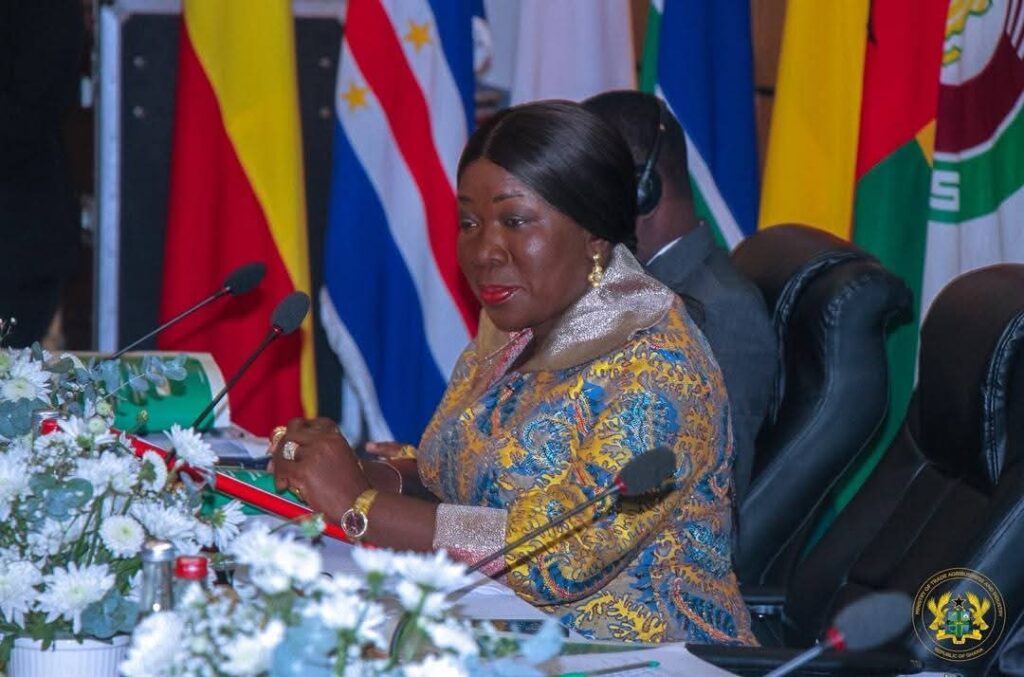
At the opening of the fifth joint ECOWAS meeting of Ministers of Trade and Industry in Accra on Thursday, Mrs Elizabeth Ofosu-Adjare, Ghana’s Trade Minister, declared that Africa could no longer relent on its industrialisation and free trade.
While Africa was endowed with mineral resources, including gold, diamond, bauxite, copper, iron ore, lithium, manganese, and cobalt, they were often mined and exported in their raw form, while continental trade remained low, a situation Mrs Ofosu-Adjare said must change.
Data from the World Trade Organisation (WTO) indicates that Africa accounts for less than one per cent of global exports, with over 30 per cent of regional trade still in “wheel-related products.”
Ghana’s Trade Minister called for building of factories, integrating standards and providing the critical transport and storage infrastructure, while addressing all non-tariff agreement bottlenecks, to deliver jobs, value addition and shared growth for the continent.
She pointed to the ECOWAS free trade, which has been running since 1990, allowing a duty-free and quota-free movement of goods across borders, as a guide to accelerate the implementation of the African Continental Free Trade Area (AfCFTA).
Mrs Ofosu-Adjare said no country could industrialise alone, calling for stronger and integrated regional supply chains and harmonised standards.
She indicated that Ghana, the host of the AfCFTA Secretariat, would provide critical leadership for the cause.
“Without common rules on quality, packaging and certification, goods cannot move freely even under AfCFTA’s zero-tariff regime,” she said, urging African countries to scale digitalisation at border posts to help address the challenges of non-tariff barriers.
The convening would end with implementation timelines, with monitoring and periodic review mechanisms to track progress, identify challenges and address them for trade to deliver prosperity to Africa.
“This shouldn’t be one of those meetings… we’ll come up with timelines and implementation targets… and Ghana will start implementation immediately to achieve results West Africans deserve,” Mrs Ofosu-Adjare said.
Dr Jumoke Oduwole, Nigeria’s Federal Minister of Industry, Trade and Investment, raised concerns about Africa’s significant amounts of critical minerals and other resources being exported in their raw states, calling for a united front to change the situation.
Responding to a question by the Ghana News Agency, she said leaders must enhance their collaborations to ensure that AfCFTA lifted its citizens out of commodity dependence, noting that minerals value addition and industrialisation was the way to go.
Dr Oduwole pointed to recent wins as proof coordination works, citing a visa-free 30-day entry for Africans granted after she intervened for Nigerian and Ghanaian citizens, showing how joint decisions could remove bottlenecks for traders and investors.
“Some countries have oil, others have gas, but factories need reliable power. We must solve the energy and infrastructure challenges together,” she said, urging ministers to coordinate grids and connect transport corridors so processed goods could reach markets.
The Nigerian Minister said the meeting must answer one question: “how will Africa mine together and process together?” arguing that collaboration on minerals, energy and factories was the only path to prosperity African citizens.
Alpha Ibrahim Sesay, Chairperson of the ECOWAS Ministers of Trade and Industry, told the meeting that US$1.5 billion was needed for rapid development in West Africa alone, pledging the Commission’s resolve to change its approach to focus on delivery.
He said Africa depended on cities and industrial markets for growth, not isolated national projects, calling for a strong community foundation built on joint action.
“We are moving from policy documents to packaged implementation tools. ECOWAS is already funding that shift,” the Commissioner said, indicating that decisions taken in Accra would be critical going forward.
Mr Sesay urged leaders to adopt documents that could be implemented, not just discussed, so Africa could build an industrial market that helped its people.
GNA
Edited by Agnes Boye-Doe
12 June 2026
Picture attached
Reporter: Francis Ntow