By James Amoh Junior, GNA
Accra, Oct. 20, GNA – Mr. Adam Mutawakilu, the Managing Director of Ghana Water Ltd. (GWL), has called on Corporate Ghana, development partners, and government agencies to partner with the company to undertake a nationwide desilting exercise to restore the country’s heavily silted water treatment intakes.
He said the company required urgent financial, logistical, and material support to recover its raw water sources, many of which have been clogged with sand, sludge, and debris, drastically reducing their ability to supply water to treatment plants across the regions.
Mr. Mutawakilu, at a press conference in Accra on Monday, said the scale of siltation facing Ghana’s treatment systems was beyond the capacity of the utility to handle alone, as it operated under a regulated tariff structure set by the Public Utilities Regulatory Commission (PURC).
“Desilting our water intakes is not captured under our approved tariff. We cannot divert operational funds meant for other regulated functions into dredging works,” he said.
He further stated: “That is why we are appealing to Corporate Ghana, development partners, and government agencies to come to our aid. We need financial, material, and logistical support to desilt these intakes so that we can maintain water supply, especially during the dry season.”
The MD said several treatment plants, including those at Owabi, Mampong, Kwanyako, Daboase, Sekyere Hemang, Bonsa, Nsawam, Anyinam, Kibi, Osino, Akim Oda, Odaso, Konongo, Jambusie, Kpeve, Agordome, and Dalun, have all been seriously affected.
Mr. Mutawakilu said GWL’s immediate target was to desilt all plants except Barekese, which requires a separate, large-scale intervention because it holds about six million cubic metres of silt.
According to the MD, the cost of desilting the remaining plants is estimated at GHS 300 million.
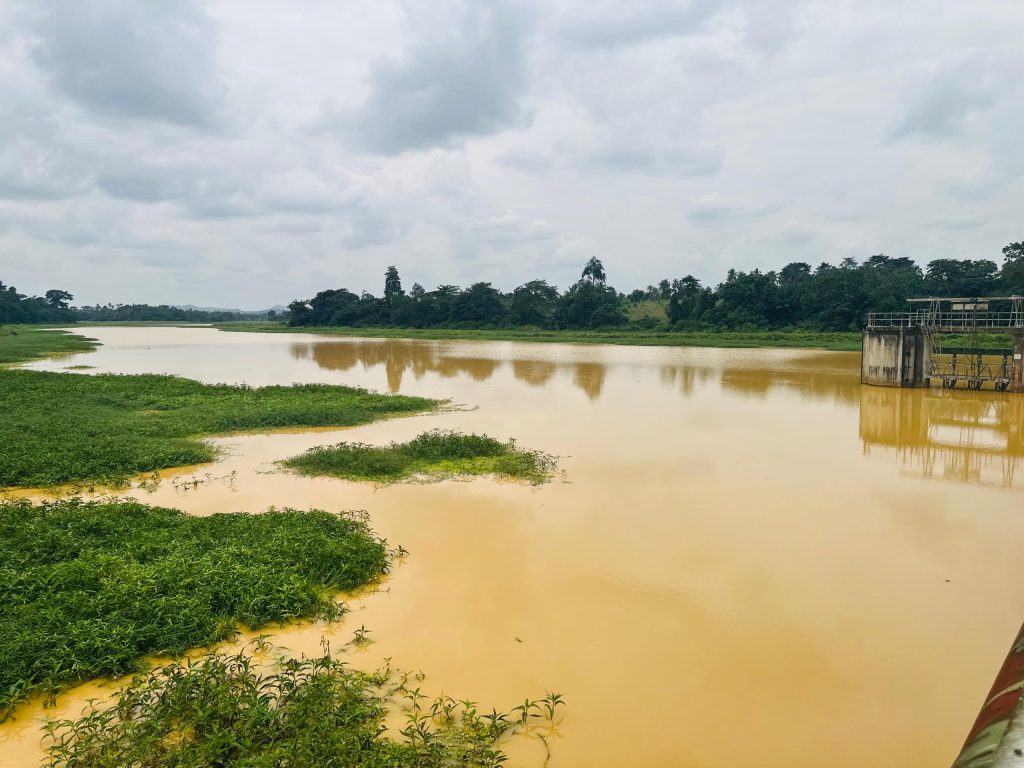
“Last year, we spent GHS 64 million to dredge Owabi and GHS 13.8 million at Mampong just to keep the abstraction channels open. These were emergency interventions that came at a cost to the company’s operations and to consumers,” he said.
He explained that siltation had become a national crisis affecting all regions and that the causes were beyond illegal mining.
“It is not only galamsey that is silting our rivers. We have sand winning, construction along riverbanks, farming too close to water bodies, and the dumping of refuse; all these contribute to the problem,” he said.
The Managing Director said the desilting exercise would restore the depth of the intakes, protect pumps and infrastructure, reduce treatment costs, and stabilise water supply to homes, schools, hospitals, and industries.
He said: “So we need their support either in-kind or finances, materials, equipment, and logistics assigned to specific rivers, where each contribution will be visible, measurable, and auditable.”
Mr. Mutawakilu outlined GWL’s 24-month Catchment Recovery Plan, which includes riverbank stabilisation, re-vegetation of erosion-prone areas, targeted dredging of intake channels, and collaboration with communities and local authorities to enforce land-use regulations along river buffers.
He said the company had already implemented downstream measures, including intensified preventive maintenance, rehabilitation of filters, and re-engineering of pumps at some treatment plants, such as Kwanyako in the Central Region, where pumps had to be relocated to the surface to access cleaner water.
“These interventions are keeping some of our plants running, but they are not permanent solutions. The truth is that our pumps are literally buried in sludge. When we try to pump, we draw in silt and air, and that makes the plant struggle. We cannot continue like this,” he said.
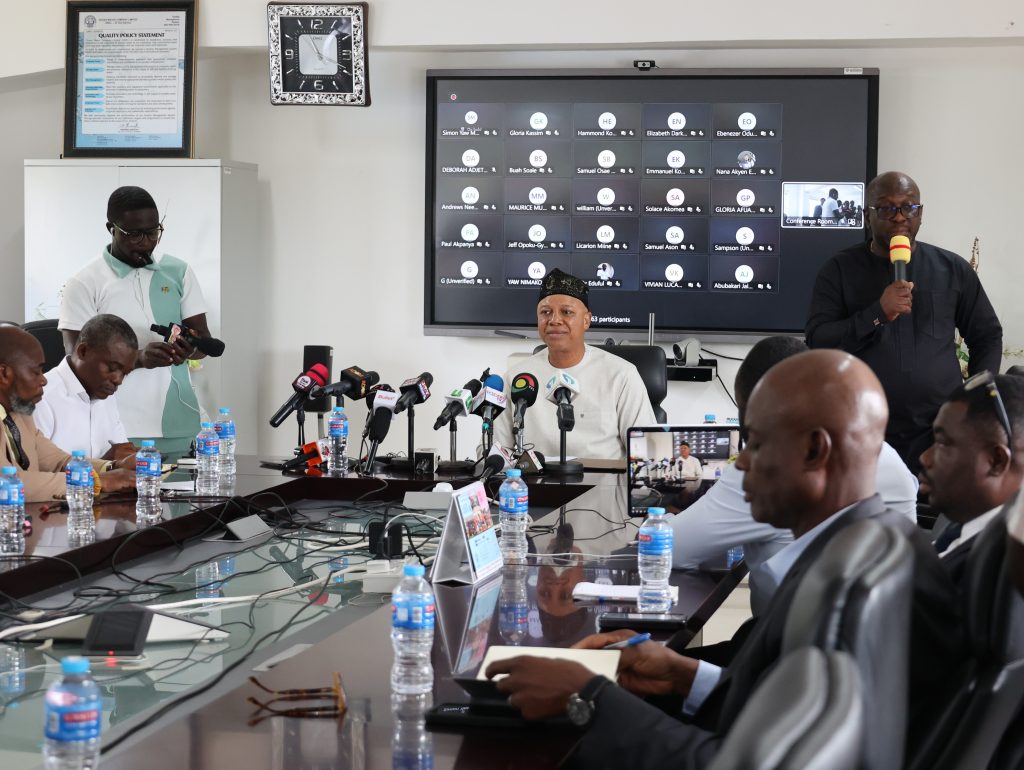
Mr. Mutawakilu commended government efforts to combat illegal mining and protect river systems, noting that initiatives such as the Blue Water Guard operations under the Ministry of Lands and Natural Resources, and the leadership of the Ministry of Sanitation and Water Resources, had yielded visible improvements in surface turbidity.
He also praised President John Dramani Mahama for instituting the National Anti-Illegal Mining Operations Secretariat (NAIMOS), and for his commitment to environmental sustainability through the registration and tracking of excavators and heavy equipment used in mining.
“These efforts are making a difference. In some catchments, we have seen significant improvement in water clarity. But while the surface is improving, the riverbeds remain choked. Without physical desilting, our pumps will still be stuck,” he said.
The Managing Director said the appeal for partnership was not a mere financial plea but an invitation to Corporate Ghana and development partners to demonstrate practical Environmental, Social and Governance (ESG) responsibility.
GNA
Edited by Christian Akorlie