By Muniratu Akweley Issah
Accra, July 24, GNA – Health experts, policymakers and civil society organisations have called for increased domestic financing and local pharmaceutical manufacturing to strengthen Africa’s health systems amid declining donor support.
They said efficient use of domestic resources and greater investment in local health systems were critical to improving healthcare delivery and reducing dependence on external funding.
The stakeholders made the call at a civil society dialogue organised by Hope for Future Generations on the sidelines of the African Union Extraordinary Summit in Accra.
Held on the theme: “Building Health Sovereignty: Local Manufacturing, Sustainable Financing, and Community Leadership for Health in Africa,” the dialogue brought together civil society organisations to advance sustainable domestic health financing and strengthen accountability for African Union commitments.
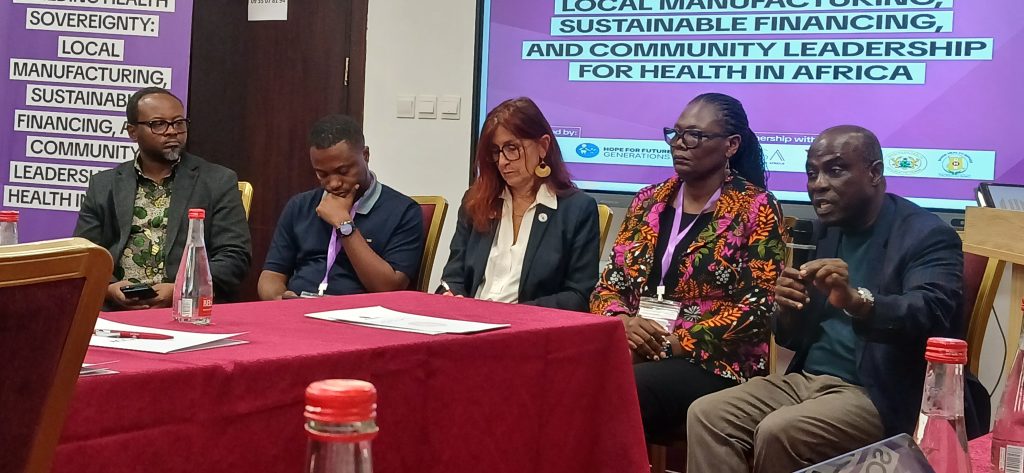
Dr Henry Nagai, a member of the Ghana Country Coordinating Mechanism (GCCM), said Africa needed to assume greater responsibility for financing and managing its health systems.
“We should be conscious about how we use resources, optimising the little resources that we have, ensuring that we are conscious of allocating resources adequately for our own health, making the right decisions when it comes to allocation of resources when it comes to optimisation of resources.
“Development partner funding is reducing, so we must optimise the little resources we have and make health a national priority,” he said.
Dr Nagai also called for improved deployment of health professionals and incentives to encourage specialists to serve in underserved communities.
Dr Thomas Winsum Anabah, Member of Parliament for Garu, said stronger domestic health financing should be accompanied by prudent management of available resources.
“We must be capable. We must eliminate wastage and invest where resources will have the greatest impact,” he said.
Dr Anabah said expanding local pharmaceutical manufacturing would reduce dependence on imported medicines, improve access to essential drugs during emergencies and create employment opportunities.

Dr Emmanuel Teviu, Programme Manager of the National AIDS/STI Control Programme, said Ghana should take greater responsibility for financing its healthcare system.
“It is time for us to wake up from our slumber and take our destiny into our own hands. It is something that is very critical,” he said.
Mrs Josephine Sackey, a Board Member of Hope for Future Generations, urged the Government to prioritise health financing and meet its co-financing commitments for programmes targeting HIV, tuberculosis, malaria and other priority diseases.
Participants said stronger domestic investment, community participation and sustained engagement with civil society would be essential to implementing health commitments adopted by African leaders.
GNA
Edited by Kenneth Sackey
Reporter: Muniratu Akweley Issah