By Samira Larbie
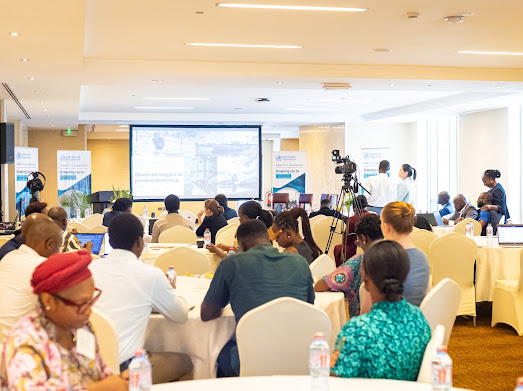
Accra, July 24, GNA – The World Health Organisation (WHO) has launched its PROTECT Technical Package in Ghana to strengthen national policies and systems for drowning prevention.
The framework provides governments with evidence-based guidance to reduce drowning deaths through legislation, governance and coordinated action across sectors.
Speaking at the launch in Accra ahead of World Drowning Prevention Day, observed annually on July 25, Dr Fiona Braka, WHO Representative to Ghana, said nearly 300,000 people died from drowning globally each year.
She said more than 90 per cent of drowning deaths occurred in low- and middle-income countries, with children under five years and people under 30 accounting for a significant proportion of the fatalities.
Dr Braka attributed the burden to poverty, rapid urbanisation, climate change, inadequate water safety measures and growing reliance on water for transport and livelihoods.
She said the WHO and its partners had strengthened global attention to drowning prevention through resolutions adopted by the United Nations General Assembly and the World Health Assembly, as well as the establishment of World Drowning Prevention Day.
Dr Braka said proven and affordable interventions already existed but required stronger policies, legislation and institutional systems to achieve wider impact.
“The launch of the PROTECT package marks the beginning of a new chapter that should lead to safer interactions with water and fewer preventable deaths,” she said.
Mr Ebenezer Okletey Terlabi, Deputy Minister for the Interior, said Ghana’s selection to host the global launch reflected the country’s commitment to improving water safety.
He said an estimated 1,100 people died from drowning annually in Ghana, underscoring the need for coordinated national action.
Mr Terlabi said the Ministry for the Interior, through the Ghana Police Service, Marine Police Unit, Ghana National Fire Service, National Disaster Management Organisation and the National Ambulance Service, would continue strengthening drowning prevention and emergency response.
He announced plans to institutionalise specialised water rescue training for emergency responders in swimming, swift-water rescue, boat handling, resuscitation and incident management.
The Deputy Minister also called for increased investment in rescue boats, life jackets, ropes, communication equipment and medical kits, and said the Government would strengthen community-based prevention through risk mapping, warning signs, swimming education, promotion of life jacket use and improved data collection.
He assured stakeholders of the Government’s commitment to working with the WHO and development partners to implement the technical package.
Presenting findings from the WHO’s 2024 Global Situational Assessment on Drowning Prevention, Dr Caroline Lukaszyk, WHO Technical Advisor, said 139 countries participated in the assessment, which identified significant gaps in national policies and legislation despite the existence of community-based interventions.
“Policy and legislation are essential for accountability, sustainability and large-scale implementation,” she said.
Dr Lukaszyk said the PROTECT Technical Package promoted seven priority interventions covering safer water infrastructure, rescue and resuscitation systems, occupational safety, transport safety, swimming and water safety education, childcare and child protection, and preparedness for floods and other water-related emergencies.
Speaking on behalf of Bloomberg Philanthropies, Ms Rebecca Bavinger said the organisation had supported drowning prevention programmes for more than a decade after recognising drowning as a leading cause of injury-related deaths worldwide.
She said WHO estimated that about 300,000 people died annually from unintentional drowning, with more than 90 per cent of the deaths occurring in low- and middle-income countries.
Ms Bavinger said a nationwide household survey conducted by the Kwame Nkrumah University of Science and Technology estimated that more than 1,300 people died from drowning each year in Ghana.
She said Bloomberg Philanthropies was supporting lifeguard deployment at selected beaches and survival swimming lessons for children aged six to 15 years to reduce drowning.
“The PROTECT Technical Package provides governments with practical guidance to translate evidence into sustainable national action that saves lives,” she said.
The theme for this year’s World Drowning Prevention Day is “Unite to turn the tide.”
GNA
Edited by Kenneth Sackey
Reporter: Samira Larbie