By Rev. D.N.A. Affram
Accra, June 17,GNA –
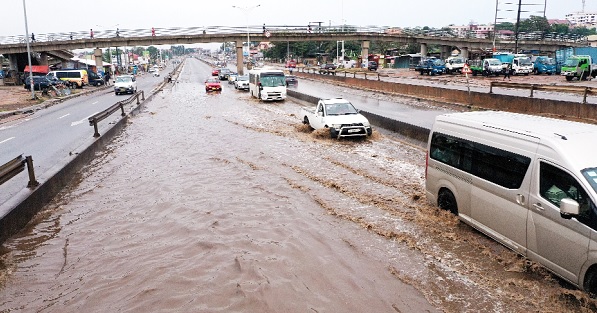
It is June. The rains are here. And so are the floods.
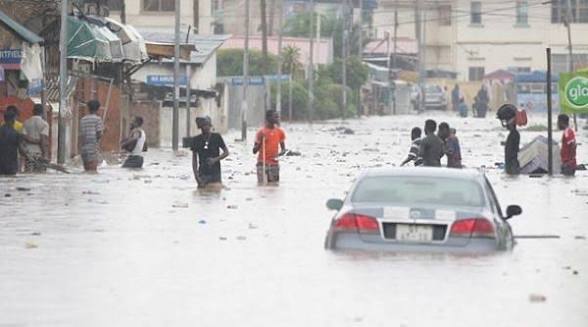
There are families in Accra who have already lost their furniture, their clothing, their documents, and everything they worked for to floodwaters that arrived, as they always do, in June.
There are people who have already died. There are children who went to sleep in a home and woke up in a disaster. This is not a warning about what might happen. It is a description of what is already happening, right now, in communities across this city.
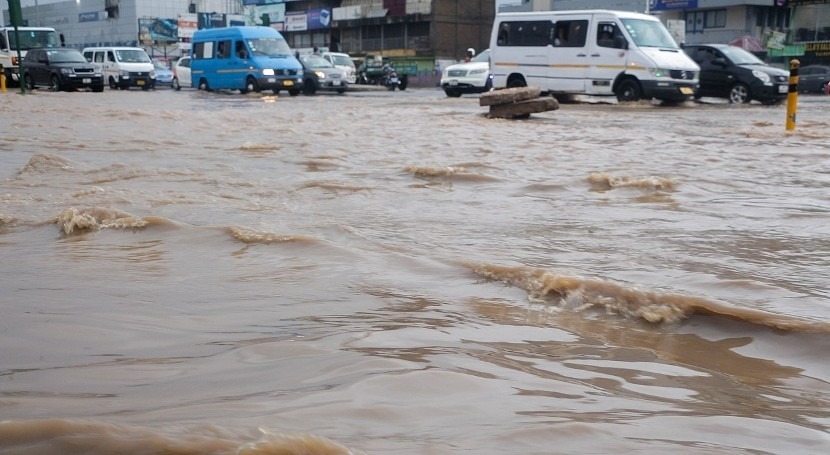
And it is not new. Accra has flooded every rainy season for decades. The June 2015 floods killed over 150 people in a single night. The May 2025 storms dumped 132 millimetres of rainfall on Greater Accra, killed four people, displaced more than 3,000 others, and submerged roads in Kaneshie, Adabraka, Adentan, Oyarifa, Weija, and parts of Tema.
Every year, the pattern repeats. The rains come, the drains overflow, the low-lying communities go under, and the country responds with shock as if none of this was expected.
The tragedy is not that Accra floods. The real tragedy is that Accra floods predictably. Everyone knows June is coming. Everyone knows the vulnerable communities. Everyone knows the blocked drains and the encroached waterways. And yet, year after year, we behave as though disaster has surprised us.
This article is not addressed to the government, though the government must act. It is addressed to the Church, the single most organised, most widely distributed, and most morally: authoritative institution in this country, with one direct and uncomfortable question: where are you?
The numbers that cannot be ignored
Ghana’s 2021 Population and Housing Census says 71.3 per cent of Ghanaians are Christians: 28.3 per cent Pentecostal and Charismatic, 18.4 percent Protestant, 13.1 percent Catholic, and 11.4 percent other Christians. In a country of some 34 million people, that is over 24 million citizens who claim the name of Jesus Christ.
In Accra, the concentration is even more striking. There is a church on almost every street. On Sunday mornings, the city quiets down because most of its residents are in a pew. Ghana has more churches per square kilometre than almost any comparable city on the continent.
Now consider what President John Dramani Mahama said in London on May 31, 2026. He stated that Accra’s flooding is primarily a problem of indiscipline—of people dumping refuse in drains, of buildings constructed on natural waterways, of a city that has lost its civic conscience.
He was not describing a small fringe. He was describing the majority. And in a nation that is 71 per cent Christian, the majority is the Church.
The blocked drain on your street was most likely blocked by someone who attends church on Sunday. The illegal structure sitting on the waterway nearby was most likely built by someone who tithes. Christian indiscipline and civic indiscipline, in Ghana, are not two separate problems. They are one problem wearing two names. The Church needs to own that.
What is actually causing the floods
The popular narrative that Accra floods because of government negligence alone is only partly true. The harder truth is that the flooding is largely driven by choices that ordinary citizens, ordinary church members, make every single day.
Natural wetlands that once absorbed heavy rainfall have been built over. Drainage channels are blocked not because they were badly designed but because they have been filled, deliberately, with plastic waste and construction debris.
A former head of the Ghana Institute of Planning, Alhassan Mohammed Damba, told Radio interviewer n June 2026 that the problem was not planning. The plans exist. The problem is enforcement, and the corruption that makes enforcement optional.
He noted that illegal developments in floodplains continue with the full knowledge of local assemblies.
This matters for the Church because it means the solution is not simply waiting for a government to lay new pipes. Part of the solution requires changing what people believe about shared responsibility, about the common good, and about what a follower of Jesus Christ owes to the community they live in.
That is a discipleship conversation. And discipleship is what the Church does.
The Church has said the right things
What makes this moment particularly urgent is that the Church in Ghana has not been silent.
In 2025 and 2026, every major stream of Ghanaian Christianity has spoken about environmental responsibility. The words are on record. The themes have been proclaimed. The study books have been printed. The problem is that the words have not yet become action.
The Evangelical Presbyterian Church, Ghana adopted the theme ‘Cleanliness is Next to Godliness, Keep Clean!’ as its General Assembly theme for 2026.
The Moderator of the General Assembly, Rt. Rev. Dr. Lt. Col. Bliss Divine Agbeko, launched this with a charge that every EPCG congregation should still be acting on: keeping clean, he said, means ‘to care for our environment so that it remains healthy, beautiful, and worthy of God’s Presence.’
The Christian Council of Ghana launched the 2026 Christian Home Week on the theme, “A Clean Environment, Our Responsibility,” producing a full study book for congregation use.
The CCG General Secretary, Rev. Dr. Cyril Fayose, specifically urged all churches to mobilise their members for National Sanitation Day, held on the first Saturday of every month. The Minister of Local Government, present at the launch, called the Church one of the most transformative forces in Ghana’s history and urged it to lead the push for a cleaner, more disciplined society.
The Ghana Catholic Bishops’ Conference held its 2025 National Catechists Conference on. the theme “Our Call to Care for the Environment: A Divinely Assigned Responsibility.”
In March 2026, the GCBC President, Bishop Matthew Kwasi Gyamfi, was unambiguous: ‘The phrase “to till it and keep it” states without equivocation that man’s role is not ownership but stewardship. The earth is the Lord’s. We are only stewards, not owners.’
The Ghana Pentecostal and Charismatic Council, through its President Apostle Eric Nyamekye, publicly supported the reintroduction of National Sanitation Day, calling poor sanitation a serious national health hazard and demanding collective action across all sectors.
Read that list again. The EPCG. The Christian Council. The Catholic Bishops. The GPCC. Every major Christian body in Ghana, speaking with one voice, within the last eighteen months.
This is not scattered or coincidental. It is a convergence. And yet it is June, the drains are still blocked, and the same communities are still underwater. Something is not getting from the platform to the pavement.
What God says about this
The Christian case for environmental stewardship does not need to be imported from secular environmentalism. It is in Scripture from the very first pages.
Genesis 2:15 records the first commission God gave to human beings: to tend the garden and to keep it. The Hebrew words are a bad, to serve and work, and shamar, to guard and preserve. This was not a suggestion. It was humanity’s original calling, given before the Fall, before the Law, before the Prophets. We were placed here as stewards of a world that belongs to God, and we were told plainly to keep it.
Psalm 24:1 settles the ownership question: “The earth is the Lord’s, and everything in it.” The waterway someone built over is not theirs to destroy. The drain filled with refuse is not private property to ruin. The wetland a developer encroached on belonged to the God who designed it to absorb floodwater and protect the communities downstream. Destroying it is not just civic indiscipline. It is spiritual presumption.
Ezekiel 34:18 speaks directly to those who foul what others depend on: “Is it not enough for you to drink clear water? Must you also muddy the rest with your feet?” One household dumps waste into a shared drain, and three streets away, a family’s home floods. One developer encroaches on a waterway for profit, and a poorer community pays the price for years. This is exactly what the prophet describes. And God is not neutral about it.
A God of order does not bless a people who practise disorder in public and claim devotion in private. Holiness is not confined to the sanctuary. It has something to say about what happens on the street outside.
What the Church must stop doing and start doing
The Church’s response to Accra’s flooding has followed the same tired pattern for too long. The rains come, people lose property, some lose their lives, churches pray, relief items are distributed, and then everyone waits for next year. That pattern is no longer acceptable.
If flooding is predictable, then Christian love demands preparation, not merely sympathy. Here is what genuine preparation looks like.
First, the Church must embrace the Ministry of Stewardship as a discipleship issue, not merely a sanitation matter.* Many Christians throw refuse into gutters. Many Christians build on waterways.
Many Christians participate in the very behaviours driving this annual disaster. The Church has always understood that faith must show itself in daily conduct. What a person does with their refuse on Wednesday is as much a spiritual matter as what they do in the prayer meeting on Wednesday night.
Preachers must preach this, not once as a passing reference to the General Assembly theme, but consistently, Scripturally, and without apology. Genesis 2:15 in April before the rains. Ezekiel 34:18 in June when the floods are here.
The connection between Sunday faith and Monday behaviour must be drawn clearly from every pulpit in this city.
Secondly, the Church must move from words to the Ministry of Prevention.
The CCG General Secretary has already called on churches to participate in National Sanitation Day. The EPCG General Assembly theme has already given the mandate. What is missing is execution. Before the rainy season, every church in Accra should be organising drain-clearing exercises in its community, educating households, and partnering with the local sub-metro assembly.
Thousands of congregations doing this consistently would make a visible and measurable difference.
The study book for the 2026 Christian Home Week, titled ‘A Clean Environment, Our Responsibility,’ was produced and distributed. The honest question is: how many churches have actually used it?
Thirdly, the Church must recover the Ministry of Advocacy with genuine courage.
The Church speaks loudly on many moral issues in Ghana. It has taken firm public positions on sexual ethics, on electoral integrity, on corruption in high office.
Good. But when did a major denomination last write publicly to the Accra Metropolitan Assembly demanding enforcement of building and planning codes that exist on paper but are never applied? When did a church leader stand before cameras and name, by practice, the corruption that allows illegal waterway encroachments to continue with official knowledge?
The prophets of Scripture did not confine their moral voice to the bedroom. They confronted every form of injustice that destroyed the lives of the poor. The Church must recover that same breadth of moral courage here.
Fourth, because flooding in Accra is no longer unexpected but scheduled, the Church must develop a genuine Ministry of Preparedness.
Every church in a flood-prone community should have an emergency response team, a designated temporary shelter, a food and clothing reserve, a database of vulnerable members, and a plan that is activated before the first heavy rain, not after. If hospitals prepare for emergencies as a matter of professional responsibility, then the Church, which calls itself the body of Christ in the community, has no excuse for being caught unprepared year after year.
Preparedness is not a government function that the Church is waiting on. It is a pastoral responsibility.
Fifth, the Church must deepen its Ministry of Compassion beyond the relief package.
When floods come, people run to the Church, and that is as it should be. Shelter, food, clothing, counselling, and hope should be available not after a national appeal has been made, but as a standing ministry, ready and stocked before the television cameras arrive. But compassion must also mean following the displaced family still sleeping on a neighbour’s floor three weeks after the flood.
It means advocating for the widow who lost everything in a single night. It means helping a member rebuild their livelihood, not just their spirit.
A church that is only compassionate on camera has missed the entire point.
The uncomfortable truth the Church must face
There is one more thing that must be said, and it requires the kind of honesty the Church often reserves for other people’s sins.
Some of the people building illegally on waterways in Accra are church members. Some of the landlords renting flood-prone structures to desperate tenants are church members. Some of the developers encroaching on natural drainage corridors for personal profit attend church regularly, give offerings, and sit on committees. And some of the assembly officials who look the other way in exchange for something in an envelope are in the choir.
The Church in Ghana has shown it can discipline members for sexual misconduct. It has shown it can sanction leaders for financial impropriety. It has shown it can take moral positions that cost it popularity.
It must now show that the same moral seriousness applies to environmental injustice, because people are dying because of it. A church that addresses one category of sin from the pulpit and stays silent about another category that is killing its neighbours has not applied the gospel fully. It has applied it selectively. And selective application of the gospel is just another name for hypocrisy.
The Church must lead
Ghana’s Church is the most organised institution in this country. It has more reach, more trusted community relationships, and more proven capacity for mobilisation than any government agency.
When the Church decides something matters, it moves people. It changes behaviour. It builds institutions. It has done it before on issues it cared about deeply enough to act on.
In 2026, the EPCG said keep clean. The Christian Council said a clean environment is our responsibility. The Catholic Bishops said we are stewards, not owners.
The GPCC said sanitation is both physical and spiritual. The government said the Church is one of the most transformative forces in Ghana’s history and asked it to lead. Every voice is pointing in the same direction. The theology is sound. The mandate is clear.
But it is June. Right now. The waters are already rising. People have already lost their homes. Some have already lost their lives. And the question this article leaves with every church leader, every pastor, every elder, every Christian in Accra is painfully simple: when your neighbour’s house floods this month, will the Church already be there, or will it arrive, as usual, after the damage is done?
The earth is the Lord’s. The flood is the neighbour’s. The response is the Church’s.
GNA
The author is an Ordained Minister of the Evangelical Presbyterian Church, Ghana, serving as District Minister at EPCG Kaneshie District, Accra.
Edited by Samuel Osei-Frempong