By Stanley Senya
Accra, Aug. 1, GNA – Bountiful Technologies Company Limited, in partnership with the Academic Talent Development Programme and the Bountiful STEM Educational Foundation, is set to launch the Bebras International Computational Thinking Challenge to equip Ghanaian learners with future-ready digital and problem-solving skills.
The challenge, scheduled for November 9 to 20, 2026, is open to eligible learners aged six to 19 years from both public and private schools across the country.
A statement issued in Accra said the initiative sought to inspire learners to solve problems creatively, think logically and develop computational thinking skills required to thrive in the digital economy.
It said the Bebras Challenge introduced learners to age-appropriate puzzles, logical reasoning tasks and real-world problem-solving activities that promote creativity, pattern recognition and structured thinking.
According to the statement, unlike traditional computer-based examinations, participants would not require prior knowledge of coding or programming, as the challenge focused on reasoning, innovation and problem-solving rather than technical programming skills.
The statement noted that the initiative formed part of efforts to prepare Ghanaian learners for opportunities in science, technology, engineering and mathematics (STEM), artificial intelligence, robotics, entrepreneurship and innovation.
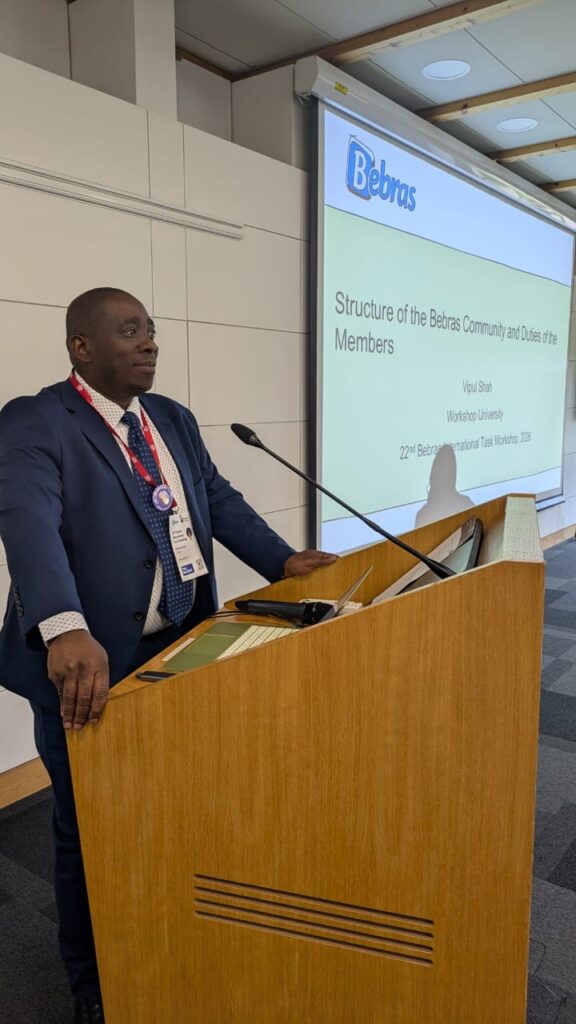
Mr Seth Ogoe Ayim, Co-founder and Chief Executive Officer of Bountiful Technologies Company Limited, said the challenge would provide learners with an opportunity to build confidence in computational thinking and discover their potential as innovators and creators.
“Our goal is to create a national platform where learners from public and private schools can develop essential future-ready skills and see themselves as problem-solvers, innovators and creators,” he said.
Mr Ayim noted that as the world became increasingly digital, learners required more than the ability to operate technology.
He said there was a growing need for skills in analysing problems, recognising patterns, organising information, and developing logical solutions.
He explained that the Bebras Challenge would help learners develop these competencies through engaging activities relevant not only to computing but also to mathematics, science, engineering, business, agriculture, health, education, and everyday life.
Mr Ayim said the competition would be organised into six age-based categories: Kits, Castors, Juniors, Intermediates, Seniors and Elites, to ensure participants undertake tasks appropriate to their developmental stage and educational level.
He reaffirmed the organisers’ commitment to ensuring broad participation by encouraging entries from both public and private schools, including institutions with varying levels of access to computers, internet connectivity, and other digital resources.
He said school heads, ICT coordinators, mathematics and science teachers would receive registration guidelines, implementation resources and teacher-support materials ahead of the challenge to facilitate smooth participation.
He appealed to parents, school administrators, education leaders, and teachers to encourage learners with an interest in puzzles, logical thinking, and creativity to participate.
He emphasised that the competition was open to all learners and not only those with programming experience.
The organisers also called on corporate institutions, technology firms, telecommunications companies, banks, insurance companies, development partners and philanthropic organisations to support learners, particularly those from underserved communities, to participate in the challenge.
They said such partnerships would help develop Ghana’s future pipeline of talent in technology, innovation and STEM-related fields.
GNA
Edited by Lydia Kukua Asamoah