By Evans Worlanyo Ameamu
Keta (VR), June 5, GNA-The National Commission for Civic Education (NCCE), in collaboration with the Forestry Commission’s Anloga-Keta branch, in the Volta Region, has led a tree-planting exercise in selected basic schools to mark the ‘Tree for Life’ initiative.
The event, originally slated for Friday, June 5, was to mark World Environment Day, on the theme, “Forest and Economies” and Sustainable Growth Through Tree Crop Investment.”
Madam Lina Elinam Bensah, the Keta Municipal NCCE Director, in an interview with the Ghana News Agency, said the organisation in collaboration with the Forestry Commission staff, teachers, pupils and community members to plant a mix of palm and mahogany seedlings across beneficiary school compounds.
“The joint action aimed to instil environmental consciousness and civic responsibility among the young learners. We received a total of 200 trees including 150 Mahogany and 50 palm seedlings,” she said.
Madam Bensah explained that the species were selected for their ecological benefits and potential to provide shade and future economic value for schools and commuschools at large.
She said beneficiary schools included Norlivime Basic 1 & 2, Dzelukope Evangelical Presbyterian (EP) basic school, Dzelukope Roman Catholic (RC) basic, Ketasco Basic 1 & 2 and Vodza Roman Catholic (RC) basic among others.
“Pupils from the various schools actively took part in the planting and we teach them the proper techniques for planting and caring for the saplings to mature well to serve a purpose.”
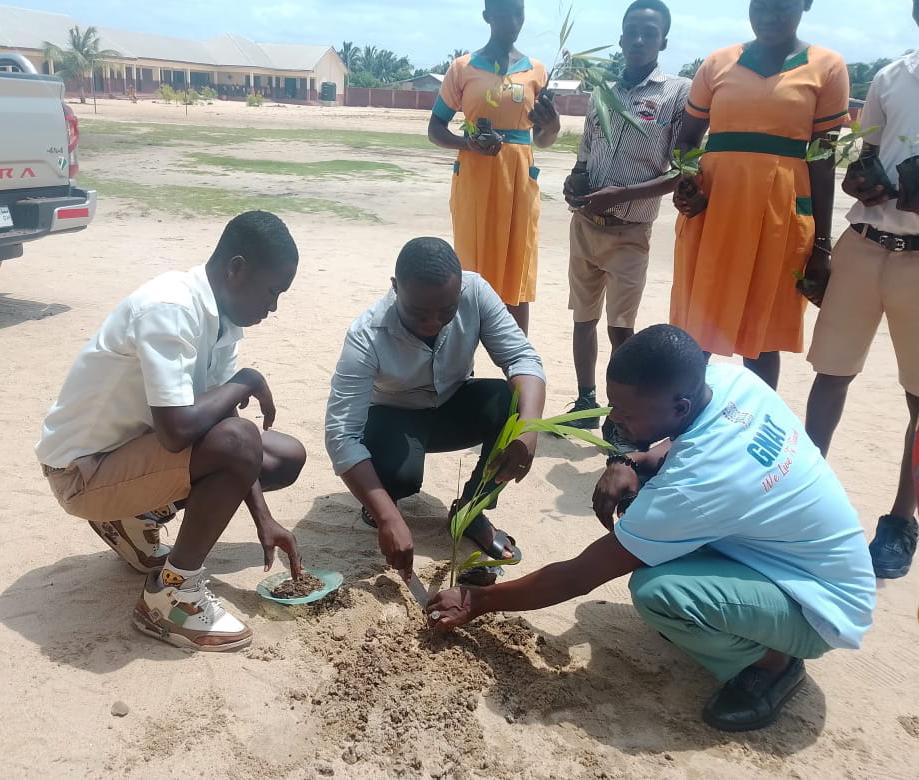
Madam Bensah said the initiative aligned with thle Commission’s mandate to promote responsible citizenship and public education on national issues, including environmental stewardship, and urged pupils to view the trees as living legacies of their civic duty.
Mr Hope Avulete, Assistant Forestry Commissioner at Anloga-Keta Forestry, emphasised the importance of early engagement, and noted that involving children fosters long-term behavioural change.
He emphasised that follow-up monitoring and maintenance by schools and communities would be critical to ensuring high survival rates.
Some headteachers in various beneficiary schools welcomed the exercise and pledged to integrate tree-care activities into school routines and clubs highlighting the dual benefits of the initiative to enhance school environments and teaching practical lessons in biology and sustainability.
Community leaders commended the partnership between the NCCE and the Forestry Commission, and called for sustained collaboration and support from parents, traditional authorities and local authorities to protect the seedlings from grazing and vandalism.
Environmental advocates in the municipality further encouraged more agencies and private organisations to replicate such programmes.
They said community-based tree planting in schools contributes to climate resilience, improving air quality and nurturing the next generation of environmentally conscious citizens.
GNA
Edited by: Maxwell Awumah/Kenneth Odeng Adade