By D. I. Laary
Kyebi (E/R), June 9, GNA – Participants at a reparations and reparatory justice forum have raised concerns over the continued use of imported schnapps in libation rituals, arguing that the practice reflects enduring cultural and economic legacies of slavery and colonialism.
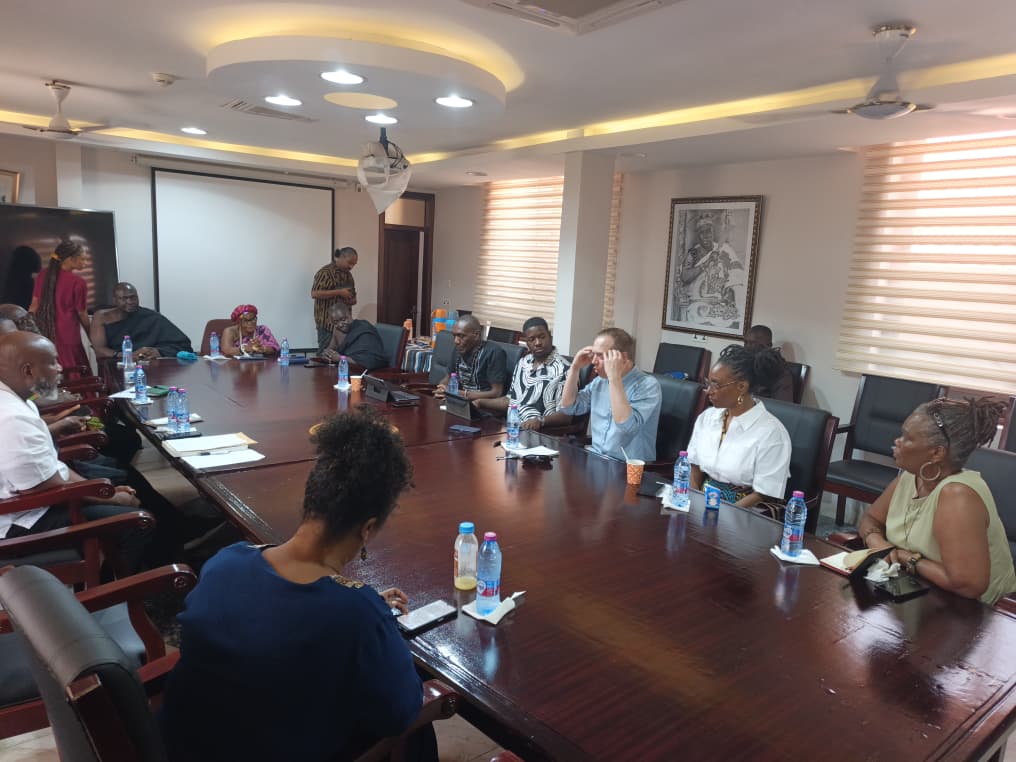
The issue emerged during a two-day dialogue organised by the Office of Daasebre Dr Twum Ampofo II in partnership with the Nana Fofie Nkrabea Foundation, the Dutch-based slavery institute NiNsee, and diaspora stakeholders at Ofori Panin Fie in Kyebi.
Participants said imported spirits, introduced through European trade networks during the slave trade era, had become embedded in traditional ceremonies and now symbolised broader questions of cultural identity, economic dependency, and spiritual restoration.
Nana Fofie Afia, Nkosuohemaa I of the Nana Tongo Shrine at Asokore-Koforidua, said continued reliance on imported products in spiritual ceremonies reflected wider cultural and economic legacies of slavery.
“We still buy foreign products while creating economic opportunities for the West,” she said.
She argued that greater use of locally produced alternatives such as palm wine and indigenous drinks would support local industries, strengthen cultural authenticity, and retain more value within African economies.
“Something was bigger done than just taking our lands and our people,” she said, adding that colonial systems weakened traditional authority and disconnected many descendants of enslaved Africans from their cultural roots and ancestral institutions.
Participants did not provide figures on the economic value of imported spirits used in traditional ceremonies but maintained that the practice reflected broader dependence on foreign products.
Daasebre Dr Twum Ampofo II, Chief of Asiakwa and Nifahene of the Akyem Abuakwa Traditional Area, said slavery and colonialism stripped African societies of people, resources, cultural heritage, and spiritual foundations.
“When you talk about slave trade, Akyemman has to be mentioned,” he said.
He noted that historical accounts suggest some enslaved people were held in areas around Kyebi before being transported elsewhere, citing Dedyase as one such site in local oral history.
According to him, communities lost productive populations, artefacts, natural resources, and development opportunities through slavery and colonial exploitation.
“Physically, they took from us virtually everything. They took our people, our resources, our artefacts and our opportunities for development. These resources could have been used to develop Akyemman. It has taken us centuries back,” he said.
Daasebre Dr Twum Ampofo II added that the disruption of indigenous belief systems and traditional practices had weakened African societies.
“They took from us our belief. They took away our spirituality, our customs and many of the things that gave us identity as a people. To get to the people, you have to break them spiritually and mentally, and one way of breaking an individual is taking away his religion,” he said.
He stressed that slavery deprived African societies not only of people and resources but also of institutions, cultural confidence, and knowledge systems that had sustained communities for generations.
Ms Bridget Agbee-Bamfo, a Ghanaian-born career civil servant based in Australia, said the spiritual consequences of slavery and colonialism remained among its most enduring legacies.
“The first thing they have to take from us is our spirituality,” she said.
She argued that generations of Africans were encouraged to regard foreign religions, languages, and customs as superior to indigenous traditions.
“Until recently, if you speak English you are well respected,” she said.
According to her, traditional naming ceremonies, child outdooring practices, and community support systems once built identity and belonging but had weakened over time.
“We are people without foundation,” she said.
Ms Agbee-Bamfo said healing would require Africans and the diaspora to engage honestly with the history of slavery and its continuing effects.
“There is a lot of mistrust between the diaspora and us,” she said.
Mr Ranger Mawuenyega, Advisor on International Relations and Diaspora Affairs at the Office of Daasebre Dr Twum Ampofo II, said the dialogue formed part of broader efforts to link reparations to cultural restoration, economic empowerment, and reconciliation between Africa and the diaspora.
He said the initiative followed engagements with diaspora organisations and NiNsee during a cultural diplomacy mission to the Netherlands last year, and gained renewed relevance following Ghana’s advocacy on reparations at the United Nations.
“As a slavery institute, they wanted to come and hear from us, the traditional leaders, what we think about the subject matter and how prepared we are to embark on this journey,” he said.
Mr Mawuenyega said participants examined issues including reparations, cultural restoration, education, trade, economic empowerment, and healing.
“We have to look at what trade imbalances have been created as a result of the transatlantic slave trade,” he said.
Participants called for education, cultural restoration, mental health support, economic empowerment, and stronger engagement between Africa and the diaspora as key pillars for healing and any future reparations framework.
They also urged continued dialogue on restoring indigenous institutions, strengthening traditional knowledge systems, and rebuilding trust between Africa and descendants of enslaved Africans abroad.
The forum referenced the CARICOM 10-Point Reparations Plan and welcomed growing international recognition of slavery as a historical injustice requiring redress.
The transatlantic slave trade forcibly transported an estimated 12.5 million Africans across the Atlantic between the 16th and 19th centuries, according to the Slave Voyages database, with about 10.7 million surviving the journey.
While participants differed on specific approaches, they agreed that reparations should address not only economic losses but also the spiritual, cultural, and institutional damage they say continues to shape African societies today.
GNA
Edited by Audrey Dekalu
Reporter: D.I. Laary