A GNA Feature by Hannah Awadzi
Accra, July 27, GNA – The Presbyterian Church of Ghana (PCG) has reached a defining moment in its history of Christian witness and social transformation with the ordination of its first minister with visual impairment.
On July 15, 2026, at the fifth ordination service of the year held at Ebenezer Congregation, Kyebi, in the Akyem Abuakwa Presbytery, the Church ordained Reverend Seth Kwame Ativor into the Ministry of Word and Sacrament.
Rev Ativor was among 15 ministers ordained during the service, which was presided over by the Moderator of the General Assembly, Rt. Reverend Dr Abraham Nana Opare Kwakye. Also present were the Clerk of the General Assembly, Rev. David Aboagye Danquah, presbytery chairpersons and clerks, and other officials of the Church.
The ordination brought the total number of ministers ordained by the Church in 2026 to 88.
The milestone follows an equally historic development two years earlier. On July 26, 2024, the Presbyterian Church of Ghana commissioned Rev Ativor as its first minister with visual impairment, paving the way for the next stage of his ministerial journey.
Formation and Ministry
Born on July 25, 1981, Rev Ativor was nurtured in the faith at Christ Church, Akropong-Akuapem, within the Akuapem Presbytery. He received his theological training at the Ramseyer Training Centre in Abetifi and the Akrofi-Christaller Institute in Akropong. Following his commissioning in 2024, he served faithfully as a probationary minister at Peace Congregation, Akropong.
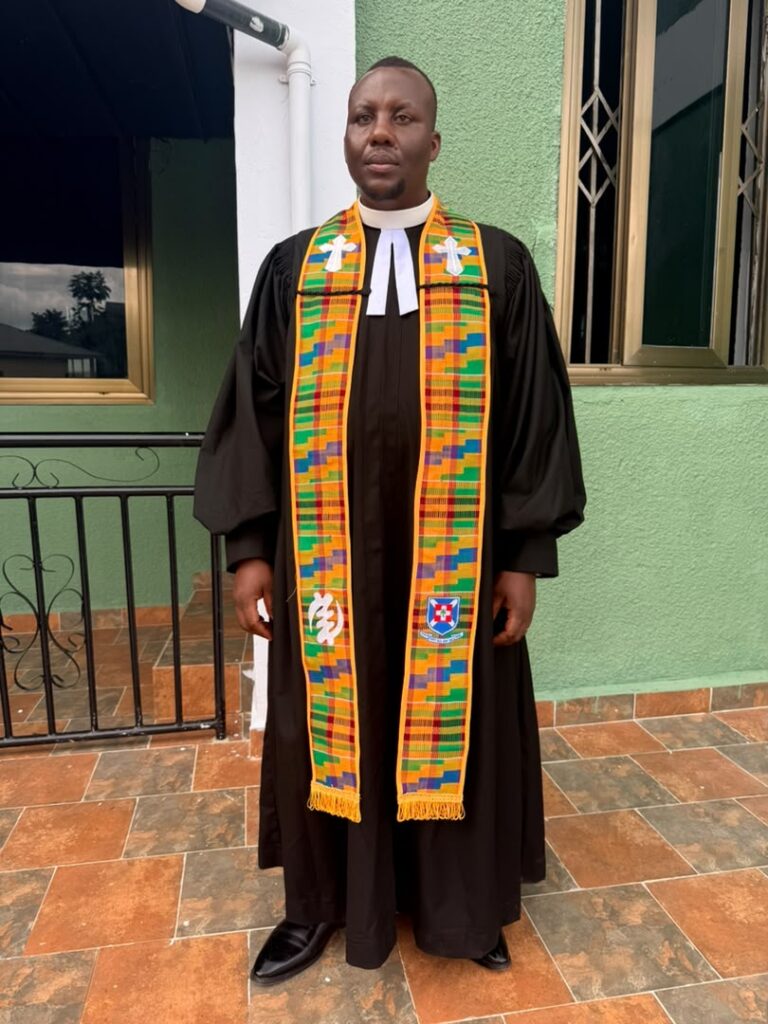
During his two years of probationary ministry, Rev Ativor showed faithfulness, theological competence, pastoral sensitivity, and effective leadership — evidence that these qualities are not determined by physical sight, but by God’s calling, spiritual gifts, and commitment to service.
A Theological Affirmation
Reflecting on his ordination, Rev Ativor offered words that capture both theological depth and prophetic vision.
“The imago Dei is not affected by disability,” he affirmed. “Our vulnerability exists within the sovereign creative authority of God. I pray the Church will keep open the door she has opened to other persons with disabilities, and all of this will lead to the glory of God and the salvation of many.”
The Christian Scriptures consistently affirm that God’s call is not restricted by human limitations. Throughout biblical history, God chose individuals whose perceived weaknesses became platforms for divine strength.
Moses struggled with speech, while the Apostle Paul openly acknowledged his weaknesses. Yet both became powerful servants of God. The ordination of Rev Ativor reflects the same biblical principle: vocation is discerned through God’s call and the Church’s recognition of gifts rather than physical ability.
As the Apostle Paul wrote to the Corinthians, the body of Christ has many members, and each is indispensable (1 Corinthians 12:12–22).
Breaking Barriers
For generations, persons with disabilities have often faced barriers when seeking positions of leadership, including within faith communities.
These barriers have ranged from inaccessible infrastructure to attitudinal, institutional and cultural limitations. Frequently, disability has been wrongly perceived as a limitation on one’s ability to lead congregations, preach, administer the Sacraments or provide pastoral care.
The Presbyterian Church of Ghana has challenged such assumptions. Through Rev Ativor’s commissioning and eventual ordination, the Church has affirmed that disability should never be viewed as a disqualification from ministry but rather as one aspect of human diversity within the Body of Christ.
Significantly, during the ordination service, no special distinction was made between Rev Ativor and his 14 colleagues. Like every other candidate, he was ordained on the basis of his calling, character and competence.
That quiet normalcy conveyed a powerful message: inclusion is achieved when people are recognised and treated as equals.
Implications for the Church
The ordination carries several important implications for the Church.
First, it strengthens the Church’s witness to the Gospel of inclusion. The Kingdom of God welcomes all people and calls them into service according to the gifts God has bestowed. Inclusion moves beyond charitable concern to genuine participation and shared leadership.
Second, it challenges congregations to recognise persons with disabilities not merely as recipients of care but as active contributors, theologians, educators, evangelists and leaders.
Third, it highlights the need for continued efforts to improve accessibility in theological education, ministerial formation, worship, church architecture and leadership development.
True inclusion requires sustained transformation of both attitudes and structures.
A Message of Hope
For persons with disabilities across Ghana, particularly those discerning a call to ministry, this ordination offers hope. It declares that faithful service is possible despite societal barriers. It encourages families to nurture the aspirations of children with disabilities rather than limiting their expectations.
The Gospel proclaims that every human being bears the image of God. The ministry of Jesus Christ consistently restored dignity to those whom society excluded. The Church cannot faithfully proclaim Christ while maintaining barriers that prevent gifted believers from serving according to God’s purposes.
Looking Forward: A Jubilee Connection
The significance of Rev Ativor’s ordination is heightened by its timing.
The year 2026 marks 50 years since the Synod of the Presbyterian Church of Ghana unanimously voted, in 1976, to open ordained ministry to women — a decision reached only after five years of debate and persistent advocacy within the Church.
Reverend Dora Ofori Owusu became the first woman commissioned under this new policy, and Reverend Gladys Maku Nyarko became the first woman to be ordained, followed shortly after by Reverend Alice Kyei-Anti. Five years later, in 1981, Reverend Dr Abraham Berinyuu became the first person with a disability to be commissioned into the ministry of the Church — a milestone that, alongside the ordination of women, reflects a Church steadily and progressively widening its understanding of who may serve at the altar.
Seen against this history, Rev Ativor’s ordination in 2026 stands not as an isolated moment of inclusion, but as a continuation of a 50-year trajectory the Church itself set in motion.
Fifty years ago, the Church challenged the assumption that gender disqualified one from ministry. Today, the Church challenges the assumption that disability disqualifies one. Both moments reflect the same biblical conviction: God’s call is discerned through gifts and faithfulness, not through human categories of limitation.
Continuing the Journey
Church leaders and advocates say the achievement should not lead to complacency.
Much work remains. There remains a need for continued investment in accessible theological education, assistive technologies, inclusive worship and mentorship programmes for future ministers with disabilities.
Yet gratitude must be expressed to those whose vision and courage made this moment possible, from the pioneers of 1976 to the leaders of today. Their willingness to recognise gifts beyond disability has created a legacy that will inspire generations.
For Rev Seth Kwame Ativor, ordination marks not the conclusion of a remarkable journey but the beginning of deeper service. Like every ordained minister, he now bears the responsibility of preaching the Gospel, administering the Sacraments, and shepherding God’s people.
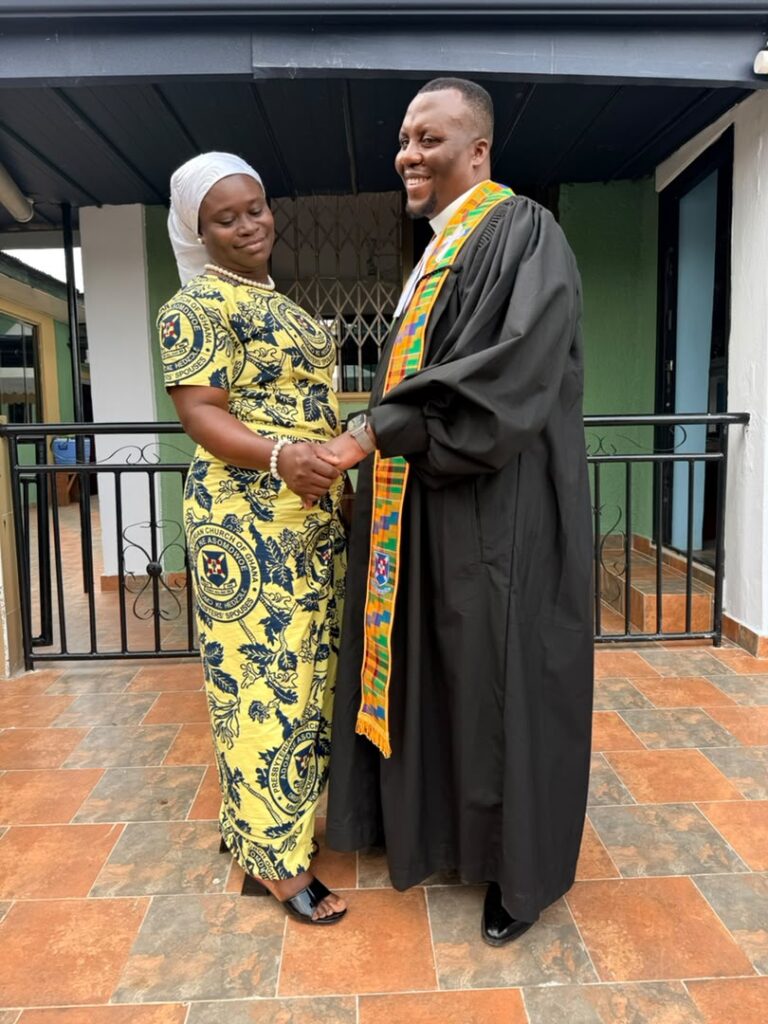
His ministry will continue to demonstrate that God equips those whom He calls, granting pastoral compassion, theological depth, and faithful leadership in abundance.
His ministry continues at Peace Congregation, Akropong, in the Akuapem Presbytery, where he serves as a testimony to the truth that God equips those He calls.
History may remember July 15, 2026, as the day the Presbyterian Church of Ghana ordained its first minister with visual impairment. More importantly, it will be remembered as the day the Church reaffirmed a timeless truth: God’s calling is determined not by the limitations people see, but by the grace God gives.
GNA
Edited by Lydia Kukua Asamoah