By Iddi Yire
Accra, June 19, GNA -Liberia President Joseph Nyuma Boakai, Sr. has urged world leaders to advance justice and reconciliation, cautioning against allowing the landmark United Nations resolution to become another forgotten commitment.
“Let this not be remembered as another conference or another resolution that stirred consciences briefly before fading into history,” President Boakai cautioned.
He called for “a determined global effort to restore dignity, repair historical wrongs, and build a future founded on equity, shared prosperity, and shared humanity.”
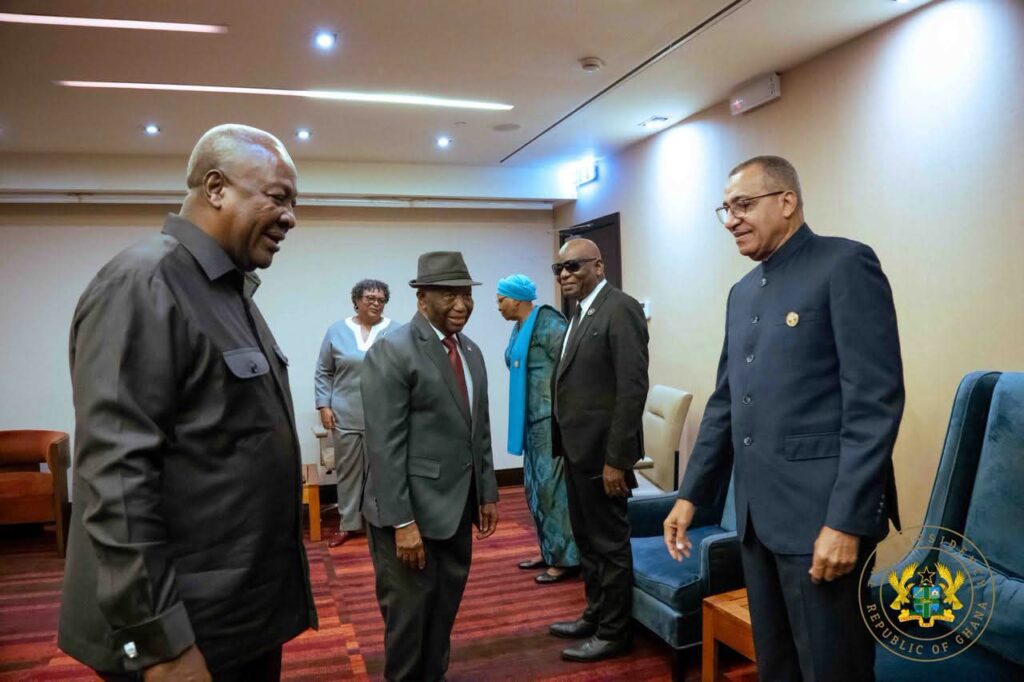
President Boakai gave the caution when he spoke at the High-Level Consultative Conference on the Next Steps for the Landmark United Nations General Assembly Resolution A/RES/80/250 on the Transatlantic Slave Trade in Accra.
He called on the international community to move beyond symbolic acknowledgments of the transatlantic slave trade as the gravest crimes against humanity and embrace concrete measures for reparatory justice, asserting that the historic exploitation of Africans continues to shape modern-day inequality and underdevelopment.
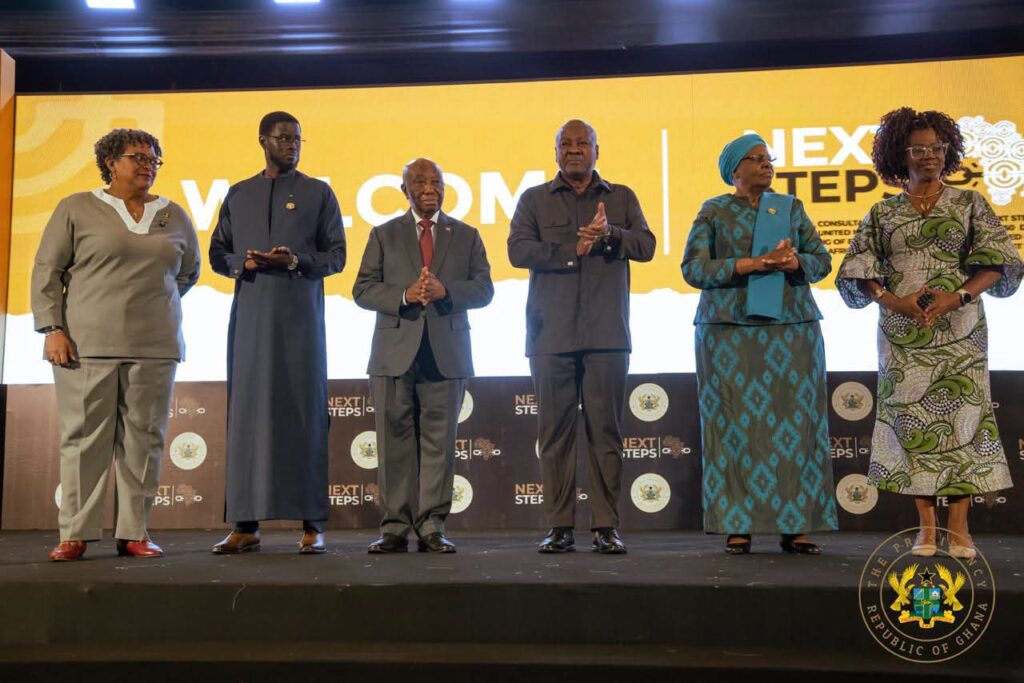
He said the adoption of the UN resolution recognising the trafficking and enslavement of Africans as among the gravest crimes against humanity must not be treated as a mere historical acknowledgment.
He noted that the consequences of slavery extended far beyond history books, insisting that the transatlantic slave trade and its aftermath remained deeply connected to the economic and developmental disparities confronting Africa and the Global South today.
“There is no doubt that the slave trade and its aftermath contributed profoundly to inequality and underdevelopment in Africa and across the Global South,” he said.
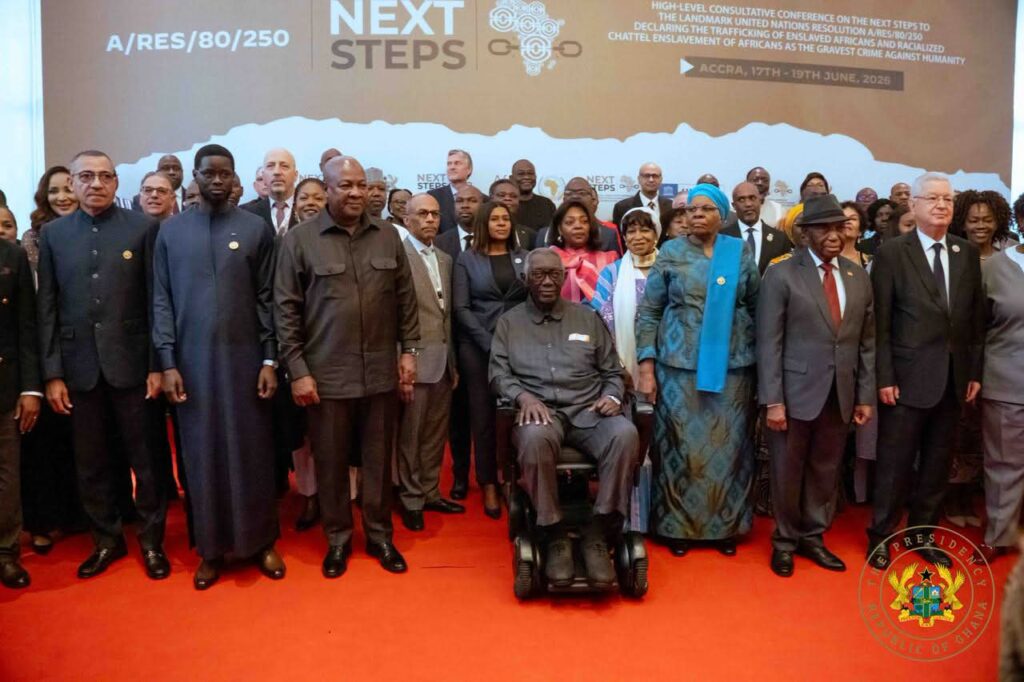
The Liberia President noted that the adoption of the UN resolution recognised the trafficking and enslavement of Africans as the gravest crimes against humanity among others and must not be treated as a mere historical acknowledgment.
Instead, he urged governments and international institutions to pursue a comprehensive framework that includes truth-telling, reconciliation, cultural restoration, educational reform, institution-building, and development partnerships aimed at addressing the enduring effects of slavery.
The President proposed the establishment of an African Union–United Nations Expert Commission to design a Global Reparatory Justice Mechanism, stressing the need for stronger collaboration among African nations, CARICOM, and diaspora organisations to advance a common position on reparations.
President Boakai advocated for the restitution of stolen cultural artifacts and expanded investments in historical research and education to counter what he described as misinformation and the erasure of Africa’s history.
While acknowledging that the damages caused by slavery could not be measured solely in financial terms, President Boakai explained that centuries of forced labor, human trafficking, and resource extraction generated enormous wealth that helped shape the economic foundations of many societies around the world.
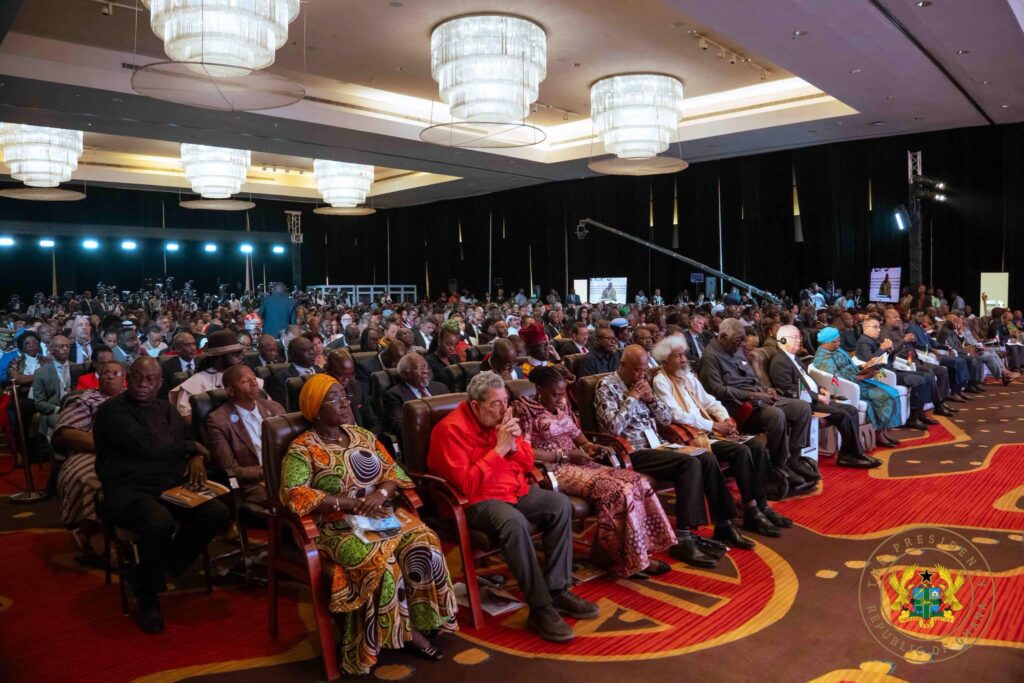
The Liberian Leader challenged the global community to match its declarations with meaningful action, saying, “Future generations will judge us not by the eloquence of our declarations, but by the courage of our actions today.”
President Boakai said the pursuit of reparatory justice should not be viewed as an attempt to assign personal guilt to present generations but a call for understanding, recognition, and collective responsibility in addressing the enduring legacy of historical injustice.
The Accra Summit, which was hosted by President John Dramani Mahama sought to reinforce the historic step taken by the international community to recognise the enduring legacy and global consequences of the enslavement of Africans and the racialised chattel enslavement of Africans.
It brought together world leaders, diplomats, academia, development partners, civil society leaders, and representatives of the global African diaspora from over 80 countries.
Among the world leaders who attended the Accra Summit were President Netumbo Nandi-Ndaitwah of Namibia, President Bassirou Diomaye Faye of Senegal, and the Prime Minister of Barbados Honourable Mia Amor Mottley.
Others were Prime Minister of Equatorial Guinea, Manuel Osa Nsue Nsua, President of São Tomé and Príncipe, Carlos Vila Nova and the Speaker of the Algerian Parliament, Mr. Azouz Nasri.
GNA
Edited by Linda Asante Agyei