By Samira Larbie
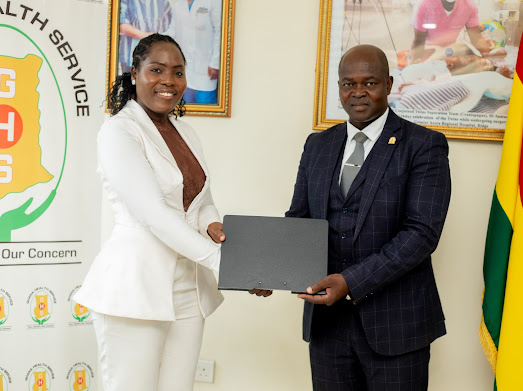
Accra, Aug. 3, GNA – The Ghana Health Service (GHS) and the International Sickle Cell Centre (ISCC) have signed a five-year Memorandum of Understanding to strengthen Ghana’s response to sickle cell disease.
The agreement provides a framework for collaboration in public education, screening, comprehensive care, research, policy development and health systems strengthening.
It will also support implementation of the National Strategy for Sickle Cell Disease (2024–2028) and the Sickle Cell Disease Screening and Case Management Guidelines introduced in 2025.
Dr Samuel Kaba Akoriyea, Director-General of the Ghana Health Service, said at the signing ceremony that the partnership would help institutionalise sustainable interventions for sickle cell disease within the national health system.
He said sickle cell disease remained a significant public health challenge requiring stronger health system responses and increased public awareness.
“Sickle cell disease is an issue that should matter to all of us, yet many people are still unaware of the scale and severity of its impact,” he said.
Dr Akoriyea said the GHS would integrate sickle cell interventions into broader public health programmes, including the Free Primary Healthcare initiative, to sustain services irrespective of external funding.
“We must build systems that continue to deliver results regardless of the presence or absence of external funding. In many communities, people are really suffering. We have a responsibility to make things happen and change the narrative,” he stated.
Dr Mary Dede Ansong, Chief Executive Officer and Co-founder of the ISCC, said the agreement represented a milestone in advancing implementation of Ghana’s national sickle cell disease agenda.
She said participants at the Third Annual National Sickle Cell Disease Conference, held in June 2026, identified inadequate public education and awareness as a continuing challenge.
Dr Ansong said implementation of a national education programme on sickle cell disease would be among the partnership’s immediate priorities.
“We have already begun engaging key stakeholders and look forward to bringing additional partners on board to support a government-led programme, with ISCC contributing as a technical and implementation partner,” she said.

Professor Gladys Amponsah, Senior Consultant to the ISCC, called for comprehensive care that addressed the range of challenges experienced by people living with sickle cell disease, including effective pain recognition and management.
She said improvements in policy and public awareness should translate into quality, responsive and dignified healthcare for patients.
The partnership will focus on five priority areas: education, counselling and behaviour change; screening, early diagnosis and linkage to care; comprehensive care and health systems strengthening; evidence generation, advocacy and policy; and social protection, economic empowerment and resilience.
Equity, inclusion, youth engagement, mental health and support for underserved communities will be integrated across all interventions.
A Joint Steering Committee will oversee implementation, coordinate activities and monitor progress over the five-year period.
The ISCC said it would continue to work with Government, healthcare professionals, patient groups, development partners and the private sector to improve outcomes for people living with sickle cell disease.
Sickle cell disease is Ghana’s most common inherited blood disorder.
An estimated 18,000 babies are born with the condition annually, while about one in four Ghanaians is estimated to carry the sickle cell or haemoglobin C trait, highlighting the importance of prevention, early diagnosis and comprehensive care.
GNA
Edited by Kenneth Sackey
Reporter: Samira Larbie