By Florence Afriyie Mensah
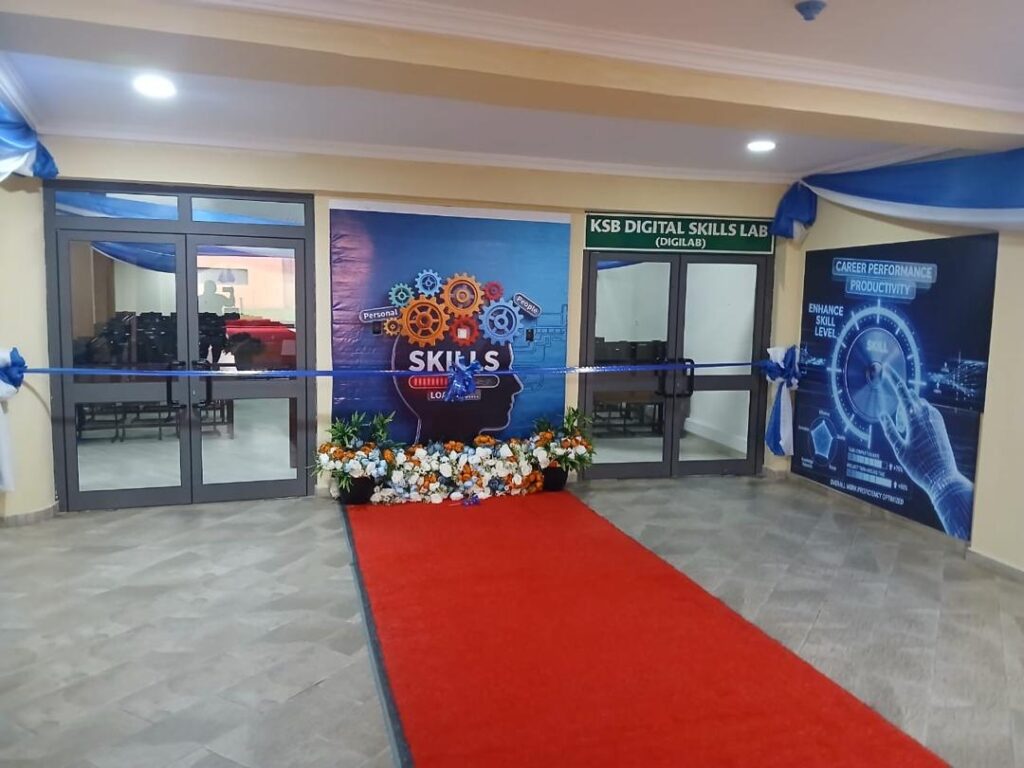
Kumasi, June 13, GNA – The KNUST School of Business (KSB) has launched a state-of-the-art Digital Skills Laboratory aimed at equipping students with industry-relevant digital competencies and improving graduate employability in an increasingly technology-driven world.
The facility, which forms part of the university’s broader digital transformation agenda, is expected to provide practical training in areas such as artificial intelligence, data analytics, digital marketing, financial technologies, cybersecurity, cloud computing and digital entrepreneurship.
The Laboratory equipped with 200 computers will serve as a resource centre for digital skills training, innovation and online examinations.
This innovation received significant support from corporate partners, with OmniBSIC Bank donating 30 computers and the Association of Chartered Certified Accountants (ACCA) Ghana providing 14 computers as well as helping to establish an additional 50-seat computer laboratory within the facility.
Professor Ahmed Agyapong, Dean of KSB, indicated that the initiative was a direct response to findings from a tracer study which revealed that although the School of Business graduates performed exceptionally well academically, many lacked the digital skills demanded by employers.
“The post-pandemic world has ushered in a new era defined by technological turbulence. While our students excel academically across the globe, there is a critical gap in employability skills due to insufficient digital competencies within the curriculum,” he stressed.
Beyond the skills training, Prof. Agyapong said the facility would support administration of online examinations, particularly for large classes, and improve efficiency in the submission and processing of examination results.
Coordinator of the Digital Skills Laboratory, Prof. John Serbe, described the facility as a centre for practical learning, innovation, collaboration and digital empowerment.
According to him, employers sought graduates who combined academic qualifications with practical digital competencies and was optimistic that the lab would provide opportunities for students, professionals and entrepreneurs to acquire marketable digital skills.
Representing the Vice-Chancellor, Prof. Samuel Asare Nkansah commended the school for the initiative, noting that digital skills had become essential for graduate employability and global competitiveness.
“We are in a moment where institutions are seeking global leadership and graduate employability, and among the key skills graduates require today are digital skills. That is why KSB is being applauded,” he pointed out.
He encouraged students and staff to take full advantage of the facility to enhance their skills and prepare for the future of work.
GNA
Edited by Yussif Ibrahim/Kenneth Odeng Adade
Reporter: Florence Afriyie Mensah