By Maxwell Awumah
Ho, July 25, GNA-Dr Carlien Jooste, the Director of Internationalisation, Sefako Makgatho Health Sciences University, South Africa, has said internationalisation must be embedded in the institution’s vision, strategic planning and curriculum to reflect global and diverse perspectives to foster inclusive and diverse academic community.
This, she said, required a visible commitment from the university leadership with field goals, policies and resources that promote both global and government-enhancing added future.
“Equally important is to create an opportunity for meaningful intercultural interactions through peer mentoring programmes, international research partnerships, community engagement projects, and cultural events.
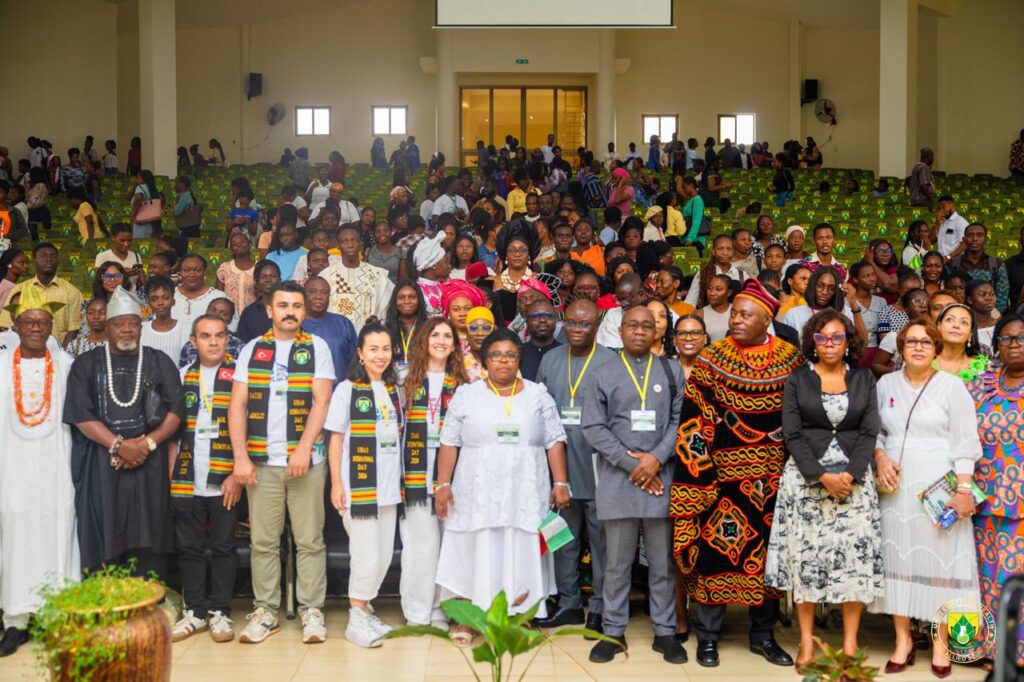
Dr Jooste made the comments during a virtual keynote presentation at the 2026 International Day of the University of Health and Allied Sciences (UHAS) held in Ho.
It was on the theme: “Internationalisation of Higher Education: Celebrating Cultural Diversity among Students and Staff.”
The UHAS International Day was set aside to celebrate foreign students and faculty, aimed at promoting internationalisation and creating a conducive environment and a sense of belonging.
Dr Jooste advocated regularly evaluation of the effectiveness of the international relations
Initiatives, collect feedback, monitoring participation and outcomes, and use this evidence to refine policies and practices, to ensure that international language and internationalization lead to genuine inclusion, rather than simply increasing cultural diversity.
Ultimately, she noted that successful internationalization was not measured by the number of international partnerships or students on campus but lies in creating a diversity, where every individual is able to share their experiences and experiences with others, and where the individual feels respected, included, and empowered to continue.
The Director indicated that, “when internationalization is guided by the principles of equity, inclusion, and intercultural learning, it enriches the educational experience for the entire university community.
“When institutions intentionally foster inclusion, cultural diversity becomes a powerful driver of excellence, both on campus and at home.”
Professor Lydia Aziato, tph Vice Chancellor of UHAS, who presided over the event emphasized that in an increasingly inter-connected world, universities are no longer confined by geographical boundaries, they have become a global enterprise, where knowledge, innovation and human capital move across borders, creating opportunities for collaboration and learning.
“Our international students and faculty members bring unique experiences, traditions, language and world views that enrich our academic community.”
“Let us reflect on the important role that diversity plays in fostering innovation and creativity with different cultural backgrounds come together, the generate new ideas, challenge assumptions and develop solutions to complex global challenges.”
She appreciated the international partners, faculty, staff, students, and all actors for their unflinching support, which culminatedino a successful celebration.
Mr Edmond Moukala, representative of UNESCO to Ghana, speaking as a special guest emphasized that internationalisation in higher education is essential for preparing students to become global citizens capable of addressing today’s health, scientific, and social challenges.
He encouraged UHAS students and faculty to embrace cross-cultural understanding, diversity, and international collaboration as strengths rather than barriers.
He highlighted the importance of quality education, scientific research, innovation, and knowledge sharing in achieving sustainable development and improving health outcomes.
He reaffirmed UNESCO’s commitment to supporting education, science, culture, and international partnerships.
He urged students to become ambassadors of peace, tolerance, and intercultural dialogue, stressing that education should promote mutual respect and understanding among people from different nations and cultures.
Prof Elvis E Tarkang, Dean International Programmes, UHAS said cultural diversity was fundamental to a vibrant and internationally enriching academic environment would catalyse into strengthening institutional identity, broadens perspectives and enhances the quality of teaching, learning, research and service.
He said through international collaborations, cross-cultural engagements and scholarly exchanges, UHAS continues to advance is mission of preparing globally competent health professionals equipped to address complex health challenges within diverse communities.
Staff and students exchange experiences were shared by beneficiaries, who gave how their participation had influenced their outlook, broadening their horizon, feat that they described would perpetually stay with them.
Cultural dresses, singing and dances heralded the occasion showing the diversity of students and faculty.
GNA
Edited by George-Ramsey Benamba
Reporter: Maxwell Awumah
Email: [email protected]