By Elizabeth Larkwor Baah GNA
Tema, May 24, GNA – The Tema Metropolitan Assembly (TMA) has called for a stronger and more structured relationship with the Ghana Ports and Harbours Authority (GPHA) to address the growing impact of port activities on the city’s infrastructure and development.
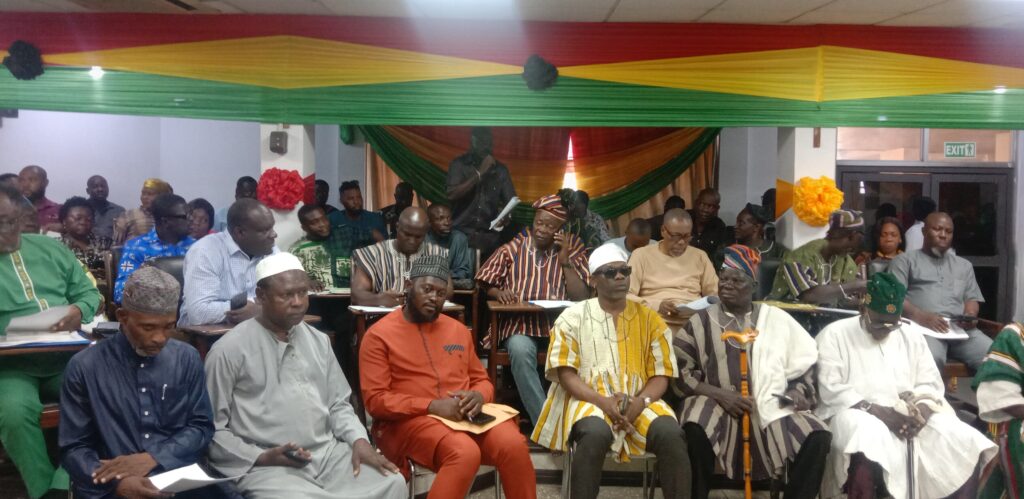
Ms Ebi Bright, the Tema Metropolitan Chief Executive (MCE), made this known after GPHA was summoned to the assembly’s general meeting to address concerns about roads leading to the port, particularly the harbour and Meridian roads.
The MCE in her response said collaboration between the Assembly and GPHA must move beyond goodwill and focus on clearly defined responsibilities that protect the interests of the city and its residents.
Ms Bright made this known during the first ordinary session at the assembly’s hall and mentioned that Tema continues to bear the social and infrastructural burden of the country’s expanding port activities, while the assembly has limited involvement in key decisions that affect the city.
She explained that the law gives the assembly authority over planning and development within its jurisdiction, making it important for all institutions operating in the city to align their activities with the broader vision of Tema’s development.
She acknowledged that GPHA had autonomous operational authority within the port enclave, stressing, however, that decisions taken within the port often had direct consequences on surrounding communities, particularly in areas such as transportation, environment, and public infrastructure.
Ms Bright pointed to the increasing number of trucks operating within the city as one of the major challenges linked to the expansion of the ports and said about 5,000 trucks move through Tema daily, placing enormous pressure on roads and other public facilities.
She further argued that Tema receives little direct financial benefit from hosting the country’s ports, as GPHA’s revenues go to the central government as a state institution, noting that the TMA does not receive a dedicated share of the GPHA’s revenue, despite the pressure port activities place on the city’s infrastructure.
She called for a “revolution” in the relationship between the assembly and GPHA to ensure fairness, accountability, and proper coordination in urban development, raising concerns about Tema’s long-term planning system, saying many of the city’s original development plans were outdated and no longer reflect current realities.
The MCE stressed the need for continuous dialogue between local authorities and national institutions operating within Tema to ensure that development remained sustainable and beneficial to residents, expressing the hope that future engagements between the assembly and GPHA would lead to a clearer understanding of responsibilities and stronger cooperation in addressing the city’s growing urban challenges.
hw-remosaic: 0;
touch: (-1.0, -1.0);
modeInfo: ;
sceneMode: Auto;
cct_value: 0;
AI_Scene: (-1, -1);
aec_lux: 51.0;
hist255: 0.0;
hist252~255: 0.0;
hist0~15: 0.0;
Meanwhile, Mr Kwamla Ofori, Engineering Manager at GPHA, emphasised that road construction and maintenance were not the direct responsibility of the port authority, although the GPHA supports such projects as part of its corporate social responsibility efforts.
Mr Ofori said GPHA had contributed to road repairs in several areas, including the Western Region, and was currently planning to rebuild the Tema Harbour Road despite falling outside its formal mandate.
He added that pothole repairs had also been undertaken, though maintaining the roads continuously remained difficult because the authority’s primary focus was port operations.
On the issue of truck parking, he acknowledged that heavy truck congestion in Tema remained a major challenge, saying that while the port authority provided truck parking facilities within its jurisdiction, truck drivers’ behaviour outside the port was beyond its control.
He said GPHA had acquired land near the Tema Oil Refinery for truck parking and plans to improve the site with pavement works, adding that attempts to establish additional truck parks near Ashaiman were unsuccessful due to lack of collaboration among stakeholders.
He stressed the need for stricter enforcement of truck parking regulations, including heavy fines for illegal parking, to encourage drivers to use designated parking facilities and reduce disruptions to residents and road users.
GNA
Edited by Laudia Anyorkor Nunoo/Kenneth Odeng Adade
Reporter: Elizabeth Larkwor Baah