By Isaac Newton Tetteh
Kpone, May 26, GNA – Planting People Growing Justice (PPGJ), a United States-based non-governmental organisation, in collaboration with the Kpone-Katamanso Municipal Health Directorate, has commemorated this year’s World Menstrual Hygiene Day at Kpone with a call for stronger community support and inclusive awareness on menstrual health.
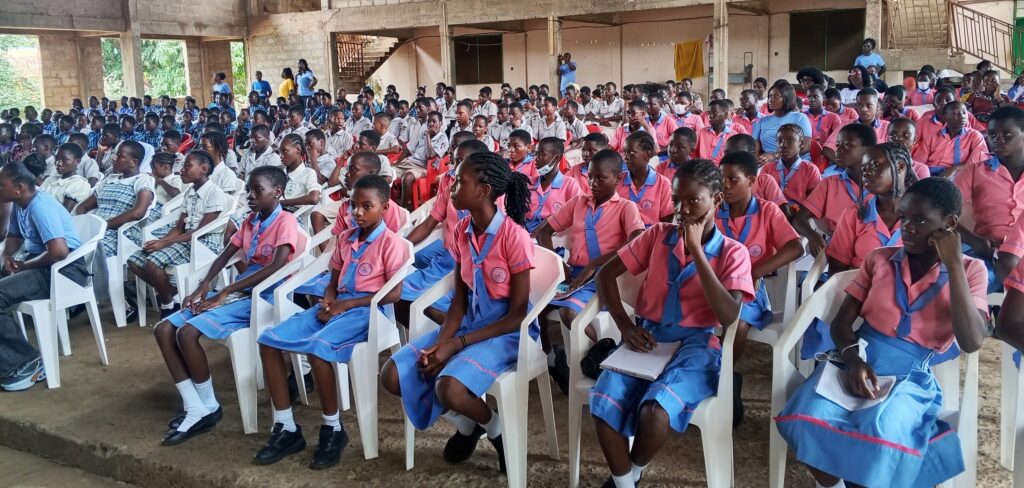
The event, which was on the theme “Together for a Period Friendly Ghana”, brought together students, health officials, community stakeholders and the assembly member for the area, sought to educate participants and help address misconceptions surrounding menstruation while promoting dignity and support for girls.
Mr Felix Larbie Appiah, Ghana Country Director of Planting People Growing Justice, stated that menstruation should not become a barrier preventing any girl child from accessing education.
Mr Appiah said the organisation remained committed to improving literacy and educational opportunities within communities where it operated, noting that menstrual health and education were closely linked.
According to him, Kpone had over the years remained committed to campaigns aimed at promoting menstrual hygiene and improving awareness within communities.
He noted that the NGO was prepared to collaborate with relevant stakeholders to establish pad banks in selected communities within the municipality to ensure girls had access to sanitary products.
He further called for a collective effort from all stakeholders to ensure that girls undergoing such natural life changes were not discriminated against or stigmatized within society.
“We need to create an environment where young girls can confidently manage their menstrual health without fear, shame or exclusion,” he said.
Mrs Henrietta Agyeiwaa Gyebi, Kpone-Katamanso Adolescent Health Coordinator, noted that there was the need for increased public education to correct misconceptions surrounding menstruation.
Mrs Gyebi explained that several myths and negative perceptions continued to affect the confidence and wellbeing of young girls.
She, therefore, called for a renewed mindset concerning issues of menstruation and urged communities to embrace open conversations that would help remove the stigma associated with it.
She stressed that proper menstrual education would contribute significantly towards the health and development of adolescent girls.
Mrs Edna Packu, Kpone-Katamanso Social Welfare Officer and Chairperson for the event, expressed appreciation to the organisers and stakeholders for supporting the programme.
She commended the collaborative efforts being made to promote menstrual health and assured participants of her readiness to support initiatives aimed at protecting the wellbeing and dignity of girls.
Mrs Packu said promoting menstrual hygiene was a shared responsibility and called for sustained efforts to ensure girls had access to the necessary support systems within their communities.
The programme featured educational engagements and interactions with students on menstrual hygiene management and related health concerns.
GNA
Edited by Laudia Anyorkor Nunoo/Kenneth Odeng Adade
Reporter: Isaac Newton Tetteh