By Emelia B. Addae
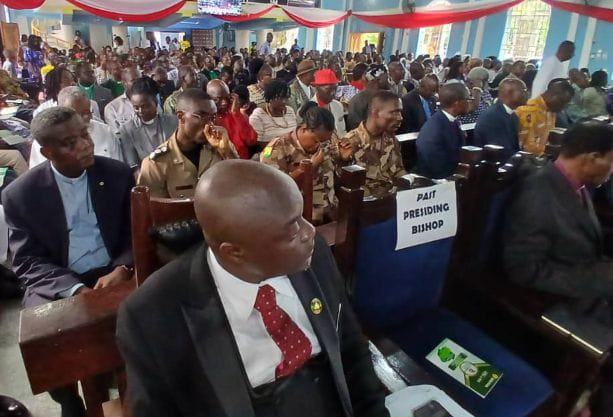
Koforidua, March 11, GNA – The Methodist Church Ghana and the Connexional Lay Movement have held the 16th S.H. Amissah Memorial Lecture in Koforidua, drawing members and institutions from across the country to discuss the national fight against illegal mining.
The event, held at the Wesley Cathedral of the Koforidua Diocese, focused on the theme: “Ghana’s Galamsey Menace: Causes and Effects; The Dilemma of Economic Versus Social Survival for Stakeholders.”
The S.H. Amissah Memorial Lecture serves as a platform through which The Methodist Church in Ghana honours outstanding lay leaders whose work has strengthened the church and contributed to national development.
This year’s lecture honoured Mr John E. K. Pratt, the fifth Lay President of The Methodist Conference (2011–2014).
He was presented with a plaque and citation recognising his years of service.
The Presiding Bishop, The Most Rev. Prof. Johnson Kwabena Asamoah-Gyadu, said the church viewed care of the environment as a moral and theological duty.
“Economic development must never come at the cost of human dignity, environmental sustainability and the wellbeing of future generations,” he said.
He added that the lecture was a timely contribution to the national conversation on illegal mining, calling on Ghanaians to “interrogate our values, rethink our development priorities and recommit to justice, stewardship and the common good.”
Illegal gold mining, popularly known as galamsey, involves the extraction of minerals without state permits, licences or safety and environmental standards.
Delivering the keynote address, investigative and environmental journalist Mr Erastus Asare Donkor outlined the extent of the crisis, saying Ghana closed 2024 with “highly polluted waterbodies”, some with turbidity readings in the thousands against the WHO drinking water standard of 5 NTU.
He noted that the intake point of the Ghana Water Company Limited at Daboase recorded levels as high as 14,000 NTU, driven by pollution from the Pra River.
Mr Donkor said illegal mining continued into 2025 across several settlements, including Wassa Gyapa, Ntwentwena, Dadieso, Atwima Mponua, Asante Akyem Central, Konongo and Odumase.
A Forestry Commission survey, he added, showed that illegal mining in forest reserves increased from 5,252.9 hectares in 2021 to 8,923.8 hectares by December 31, 2024.
“Instead of mining responsibly, we are practicing illegal mining that permanently destroys forest resources and biodiversity,” he said, warning that the activity also poses health risks such as intestinal obstruction and acute kidney disease.
He noted that many communities affected by galamsey “suffer in silence due to political intimidation, lack of access to media platforms or fear of reprisals,” and called for platforms that allow victims, activists and whistleblowers to speak out.
Mr Donkor praised the Media Coalition Against Illegal Mining, saying it had played a critical role in reclaiming civic space and exposing environmental crimes.
By combining journalism and advocacy, he said, the coalition had helped rebuild public trust and demand accountability.
He recommended that churches strengthen advocacy for environmental stewardship, promote community education on sustainable livelihoods, and hold duty bearers accountable.
He also urged youth to pursue ethical enterprises.
Mr Donkor called for closer collaboration among government, traditional leaders, civil society and the media, supported by independent enforcement, transparent licensing and district‑level accountability.
Additional recommendations included investment in alternative livelihoods, protection for whistleblowers, and proper reclamation of degraded lands.
Mr Pratt thanked the church for honouring him and pledged to support the construction of a church building at Pantoase, a Koforidua suburb where members currently worship in a temporary structure.
GNA
Edited by D.I. Laary/ Christabel Addo