By Prince Acquah
Elmina (C/R), July 09, GNA – The traditional authority of Edina, led by Nana Kodwo Conduah VI, the Edinamanhen, has performed rituals at the Benya Lagoon to lift the ban on fishing in the lagoon (Bakatue), climaxing a six-week sacred period for the ancient fishing community.
The solemn spiritual exercise also lifted a one-month ban on music and noisemaking in Elmina.
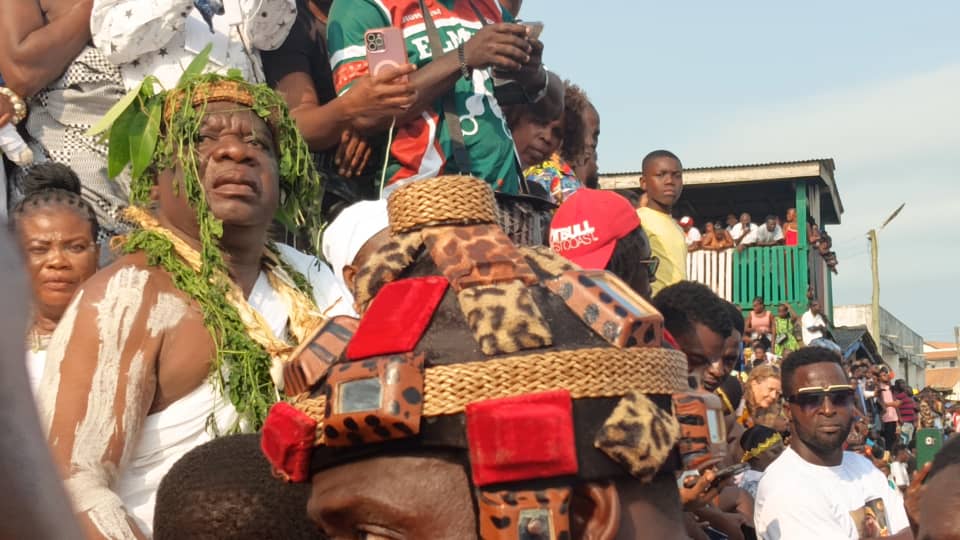
A rich blend of culture, tradition, customs, colour, music and dance transformed the banks of the lagoon into a spectacular scene as hundreds of people including tourists, expatriates, students and natives abroad flooded the grounds to witness the age-old customary rites.
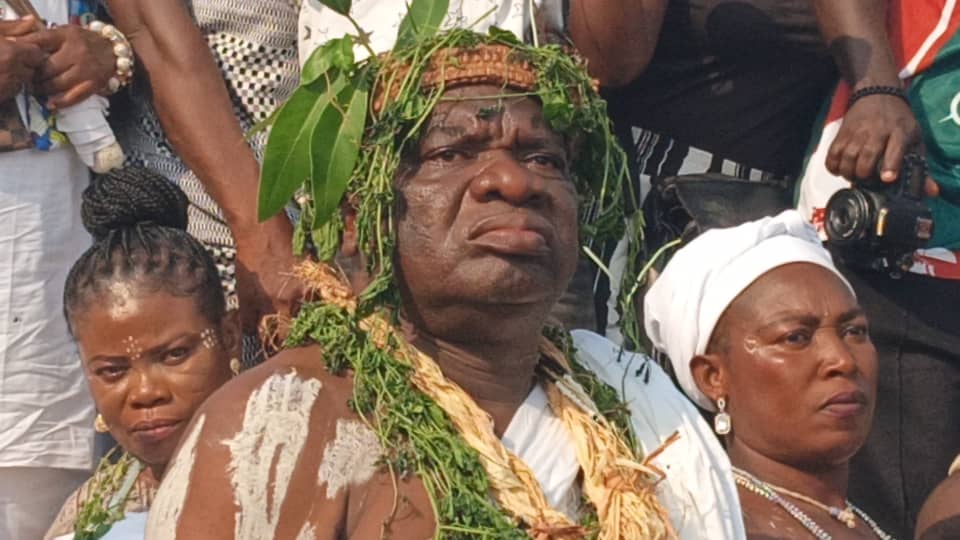
Amid deafening cheers and applause, an exciting regatta, interspersed with breathtaking speedboat and canoe stunts, as well as vibrant music and dance performances by ntekuafo in branded canoes, created a festive atmosphere for the occasion.
The ritual was attended by special guests from the Czech Republic and Suriname, some of whom trace their ancestry to Ghana, as well as political leaders and development partners.
This year’s celebration is on the theme: “Homecoming for unity, heritage and development.”
The six-week celebration starts from the first week of June with persistent announcements and cautions before the ban on fishing activities in the lagoon and noisemaking is declared.
However, swimming in the lagoon is permitted.
During this period, the traditional leaders undertake a series of solemn spiritual exercises and prohibit certain activities deemed capable of interfering with the observance.
For instance, persons who die during the period are buried on the same day, while bereaved families are prohibited from wailing or making any form of noise.
The sale of fresh farm produce such as maize, groundnut, onion, and pepper is banned in Elmina.
The buying and selling of fresh fish from the sea is permitted only at the landing beaches and proscribed in the market.
A critical ritual during the period is the overturning of a holy wooden platter (Korba butuw), signifying the beginning of a three-week fasting period for the gods.
Another key ritual is the first, second and third Dombo, during which traditional priests and priestesses perform sacred drumming and dancing to invoke the powers of the gods.
On the eve of Bakatue, the wooden platter is turned upright again (Kroba Tae), signifying the end of the fasting period.
Later that night, the third and final Dombo is performed to make way for the final rituals on Tuesday.
On Tuesday, the chiefs, queen mothers and the traditional priests and priestesses embarked on a colourful processions from the Anomansa Palace, the seat of the Edinamanhen, through the principal streets of Elmina to the Benya Lagoon.
Nana Conduah, together with the traditional priests, performed spiritual incantations, sprinkling ɛto (mashed yam) and putting some medicinal herbs with154 eggs in the lagoon to symbolically “break the fast” of the gods and summon the fishes.
Following the rituals, the Omanhen’s ceremonial fishing net was cast into the lagoon three times, with each cast yielding fish, symbolising the prospect of a bountiful fishing season.
The final cast was greeted with musketry, music and dance as spontaneous jubilation swept through the city.
The fish caught will be sent to the Chief of Eguafo who gave Nana Conduah the yam for the ɛto as sacrifice for the gods.
Speaking at the event, Madam Fidelia Graand-Galon, the Ambassador of Suriname to Ghana, stated that the Bakatue Festival served as a bridge between Africans on the continent and those in the diaspora.
She noted that the canoe traditions of the Edina people closely mirrored those of the Maroons in Suriname, where the practice had endured for centuries, describing the shared heritage as evidence of African cultural traditions preserved across generations.
Mr Charles Buabin, the Central Regional Director of the Ghana Tourism Authority underscored the festival’s contribution to tourism development in the region and reaffirmed the Authority’s commitment to promoting festivals and tourism across the region.
Meanwhile, the festival has infused the ancient city with renewed energy, drawing thousands of revellers and injecting fresh momentum into local economic activities.
Striking street murals adorning the main bridge and selected buildings now bring to life the rich history, culture and traditions of the Edina people, vividly portraying their heritage and way of life.

Together with freshly painted homes and revitalised public spaces, they have transformed the historic city, giving it a colourful new outlook while preserving its timeless charm.
Various brands have set up at different locations with new pubs, eateries and recreational spots springing up everywhere, turning the city into big party ground.
As the city ushers in a new year, its people, particularly the youth, have seized the opportunity to demonstrate their fashion sense, turning heads with an array of stylish outfits and eye-catching hairstyles.
The festival will be climaxed on Saturday with a grand durbar at the forecourt of the Elmina Castle.
GNA
Edited by Alice Tettey /Kenneth Odeng Adade
Reporter: Prince Acquah
E-mail: [email protected]