A GNA Feature by Patience Tawiah
Nkwanta (O/R), March 26, GNA – As Ghana celebrates its culture and traditions during Ghana Month, attention often turns to the vibrant clothes, music, and indigenous foods that define the nation’s heritage.
In the Nkwanta South Municipality of the Oti Region, one delicacy stands out as both a staple and a symbol of identity: ‘Yam fufu.’
Fufu, in general, whether made from yam, plantain, cassava, cocoyam or a combination of these is a preferred food across Ghana, Togo, Benin, Nigeria, Cote D’Ivoire and Liberia in West Africa. It is combined with various soups and stews depending on the ethnicity and culture of patrons.
The Making of Yam Fufu
Yam fufu begins with fresh yam, peeled, washed, and boiled until soft. The boiled yam is then transferred into a traditional mortar, where it is pounded with a pestle. In many homes, this pounding becomes a lively communal activity. Two or more people may take turns pounding rhythmically, while another stirs the mixture, ensuring it blends smoothly.
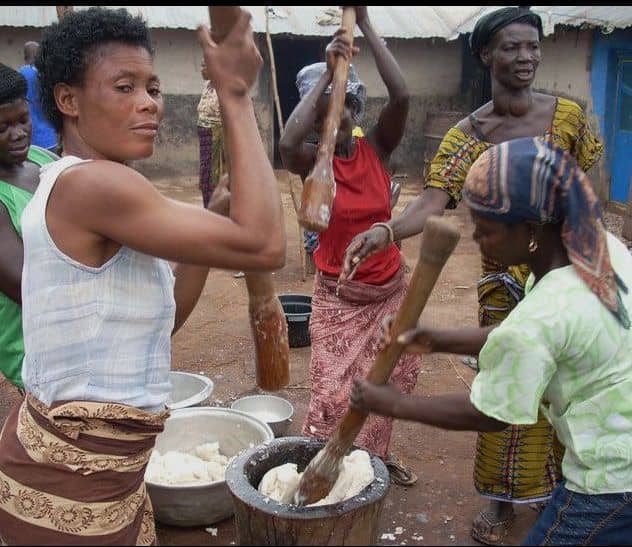
This teamwork not only speeds up the process, but also reflects the communal spirit deeply rooted in the culture of the people. The result is a soft, stretchy dough with a light, fluffy texture – easy to swallow and rich in taste.
The perfect pairing
Though yam fufu can be served with different soups, it is most often enjoyed with hot, spicy light soup. Made from fresh tomatoes, peppers, onions, and meat or fish, the soup’s bold flavours complement the smooth texture of the fufu, creating a meal that is both satisfying and comforting.
More than a meal
For many families in Nkwanta, yam fufu is more than food – it is tradition, unity, and hospitality. Its preparation often brings relatives together during gatherings, festivals, and special occasions, reinforcing social bonds and cultural pride.
Mr Kofi Awanfine, a farmer, describes yam not just as a staple crop, but as a symbol of livelihood.
“Cultivating yam requires effort – from land preparation to staking and weeding. Fufu gives me the energy to keep going,” he said, noting that demand for yam fufu during festive seasons motivates farmers to increase production.
The yam festival
Nana Obiako Akorla II, Chief of Nyambong, highlighted the role of yam fufu in the annual yam festival, ‘Gyogyi.’ Celebrated from late August to early September, the festival is a time of thanksgiving to God, the gods, and ancestors for abundant harvests. Yam fufu is the delicacy served to visitors, symbolizing gratitude and hospitality. The celebration also brings families and friends together from near and far, turning the season into a time of joy, love, and renewal.
Health benefits
Beyond its cultural significance, yam fufu offers nutritional value.
Mrs Nancy Dogoe, Nutrition Officer at Nkwanta South Municipal Hospital, explained that yam is rich in carbohydrates, providing energy for daily activities. It also contains dietary fiber and essential minerals that support growth and development.
She advised, however, that residents should balance the dish with protein to maximize its nutritional benefits.
Preserving culinary heritage
As Ghana marks Ghana Month, celebrating dishes like yam fufu helps preserve local culinary heritage and promotes appreciation for indigenous foods.
In Nkwanta, yam fufu continues to embody the community’s culture, agricultural lifestyle, and pride in tradition.
Indeed, yam fufu remains more than a delicacy, it is a story of identity, resilience, and the enduring spirit of Ghanaian culture.
GNA
Edited by: Maxwell Awumah/ George-Ramsey Benamba