By James Amoh Junior
African states on Tuesday renewed calls for the universal adoption of the Treaty on the Prohibition of Nuclear Weapons (TPNW).
Sustainable global security, they said, must be built on cooperation, trust and respect for human life, rather than on weapons of mass destruction.
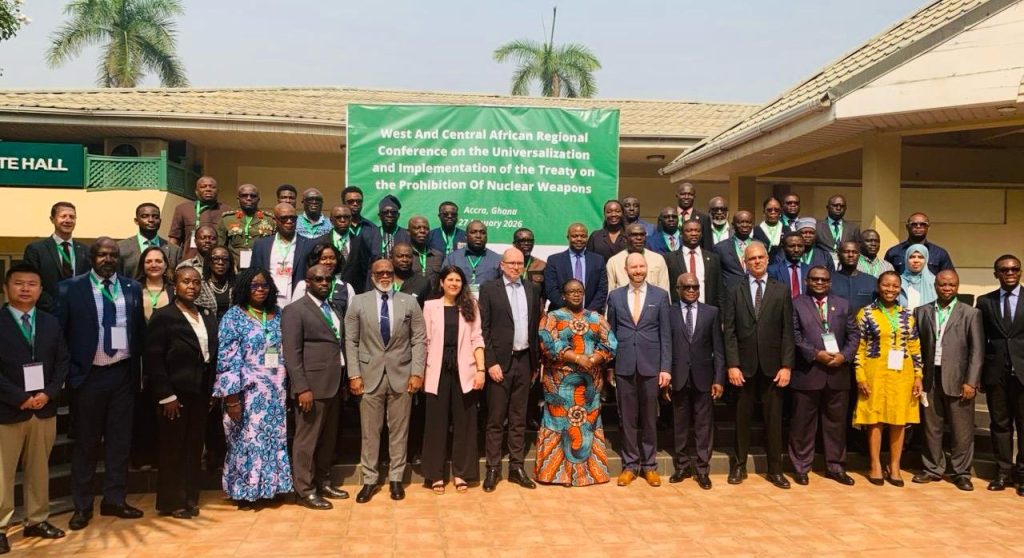
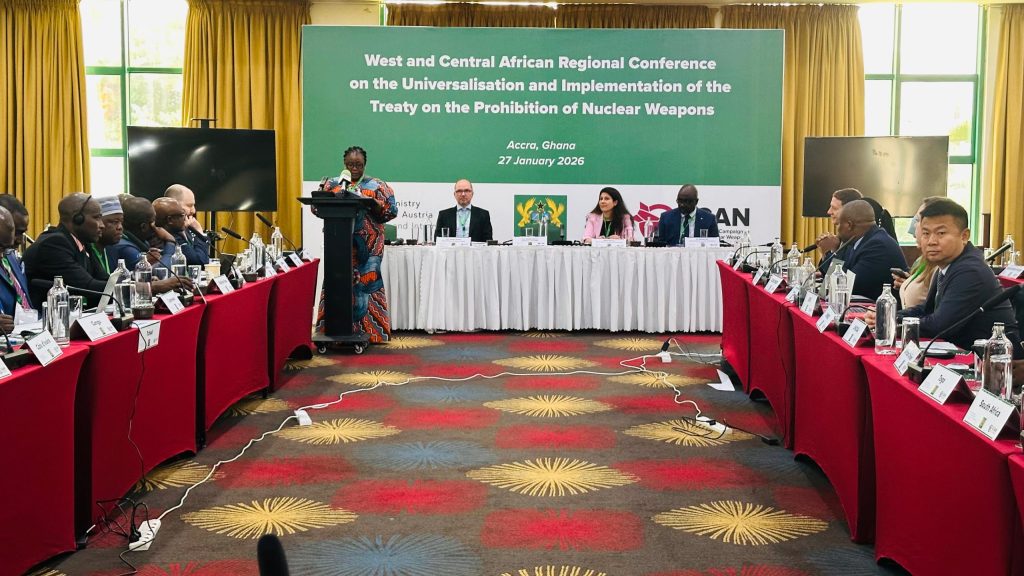
The call was made at the opening of the West and Central African Regional Conference on the Universalisation and Implementation of the TPNW in Accra.
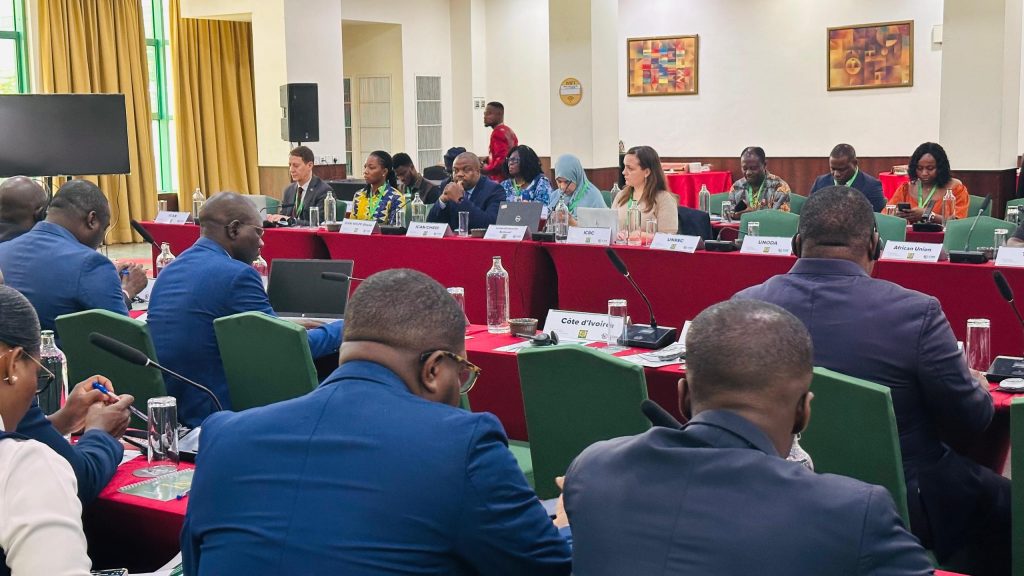
They brought together representatives of governments from the sub-region, international and regional organisations, and civil society actors to advance efforts toward a world free of nuclear weapons.
Ambassador Jürgen Heissel, Head of Mission of the Austrian Embassy to Ghana and Chairperson of the Conference, said the Accra meeting was aimed at injecting renewed momentum into global nuclear disarmament at a time of growing geopolitical tensions and the weakening of international arms control norms.
He noted that a majority of states worldwide had already signed or acceded to the treaty and expressed the hope that the conference would further galvanise collective action toward nuclear disarmament, strengthen multilateral cooperation and reinforce the global security architecture.
Ambassador Heissel commended Ghana for its strong partnership and leadership in advancing the universalisation of the treaty in Africa.
He described the collaboration as a model of effective multilateral engagement, demonstrating that collective diplomacy remained a credible pathway for advancing nuclear disarmament and strengthening the international security architecture.
Ambassador Khadija Iddrisu, Chief Director of the Ministry of Foreign Affairs and Regional Integration, said Africa’s long-standing rejection of nuclear weapons was rooted in the continent’s firm belief that peace and security could not coexist with arms capable of causing catastrophic humanitarian, environmental and intergenerational consequences.
She said the conference reflected a shared commitment to peace, multilateralism and the protection of humanity from the gravest threats.
Ambassador Iddrisu stressed that the TPNW was particularly relevant to Africa’s peace agenda, and that while the continent did not produce or possess nuclear weapons, it had historically borne the costs of militarisation, conflict and global power rivalries.
She recalled Ghana’s historic role in advocating nuclear disarmament, dating back to the vision of the country’s first President, Osagyefo Dr Kwame Nkrumah, who warned early on of the existential dangers posed by nuclear weapons.
According to her, Ghana’s unanimous ratification of the treaty in June 2025 reaffirmed its moral clarity and leadership at a time of heightened global insecurity, and demonstrated its belief that the prohibition of nuclear weapons was both a legal obligation and a moral imperative owed to future generations .
Dr Adedeji Ebo, Director and Deputy to the UN High Representative for Disarmament Affairs, said Africa had both a moral responsibility and a strategic interest in championing global nuclear disarmament, despite not possessing nuclear weapons.
He explained that African states had collectively renounced nuclear weapons through the Treaty of Pelindaba, which established the continent as a nuclear-weapon-free zone, thereby conferring strong moral authority and an obligation to play a leading role in multilateral disarmament.
Dr Ebo cautioned, however, that Africa was not insulated from nuclear threats, pointing to the lasting environmental and human harm caused by nuclear tests conducted in the Sahara in the 1960s.
He warned that the use of nuclear weapons anywhere in the world would result in severe economic, climatic and social disruption, mass displacement and human suffering that transcended borders.
Ms Céline Nahory, Director of Government Relations and Advocacy at the International Campaign to Abolish Nuclear Weapons (ICAN), congratulated Ghana on becoming the latest state party to the treaty and praised African states for their central role in negotiating and adopting the TPNW at the United Nations in 2017.
She said it was unacceptable that a small number of states still possessed thousands of nuclear weapons capable of threatening entire continents, including Africa, through their impact on human life, the environment, food security and economies.
Ms Nahory noted that each new signature and ratification strengthened international norms against nuclear weapons and made the world safer.
She added that the treaty was already influencing global behaviour, with financial institutions divesting trillions of dollars from nuclear weapons-related industries due to the growing legal and moral stigma attached to such arms.
Ms Nahory urged West and Central African states that had not yet joined the treaty to do so ahead of its first Review Conference, scheduled for November 2026 under the presidency of South Africa.
The conference was convened to take stock of progress under the TPNW, advance efforts toward further ratifications, and highlight the humanitarian consequences of any use of nuclear weapons.
The treaty, adopted by 122 countries in 2017 and in force since January 2021, has gained the support of 140 states at the UN General Assembly, with more than half of UN member states having signed, ratified or acceded to it.
GNA
Edited b George-Ramsey Benamba