By Opesika Tetteh Puplampu
Ada-Foah, Dec. 12, GNA – The Ayongo Foundation, in partnership with the Ghana Anti-Corruption Coalition (GACC), the National Commission for Civic Education (NCCE), and the Commission on Human Rights and Administrative Justice (CHRAJ), has observed the 2025 World Anti-Corruption Day in the Ada East District.
The commemoration was held at the Azizanya D/A Basic School and the R.C. Basic School, where officials engaged pupils on integrity, honesty, and the effects of corruption on national development.
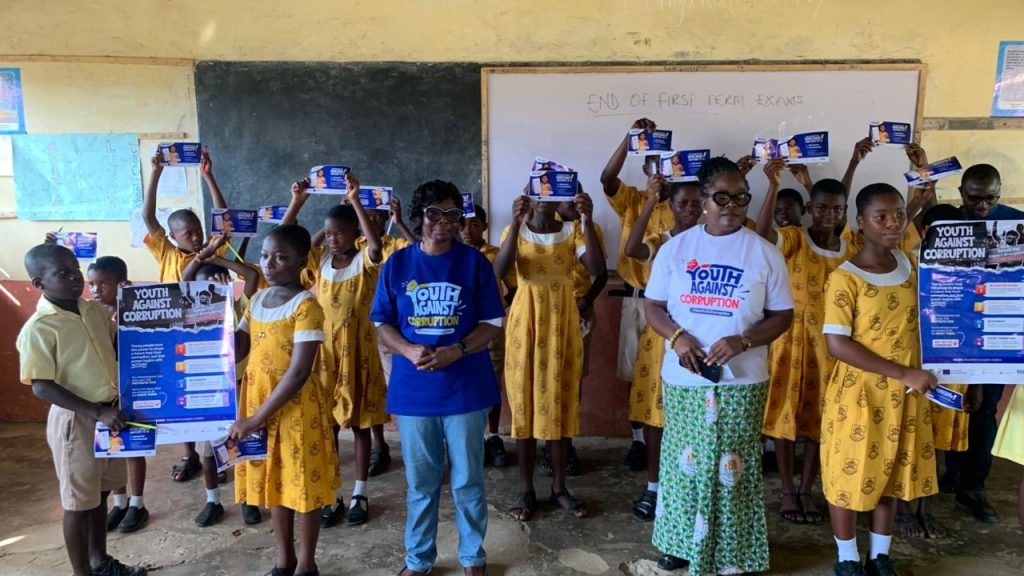
Madam Betty Sackey, representing the Ayongo Foundation, said the initiative formed part of efforts to sensitise young people on the dangers of corruption and encourage them to cultivate values that would support the nation’s fight against the practice.
Madam Sackey noted that shaping the moral foundation of children was critical to building a responsible future generation capable of upholding accountability in both public and private life.
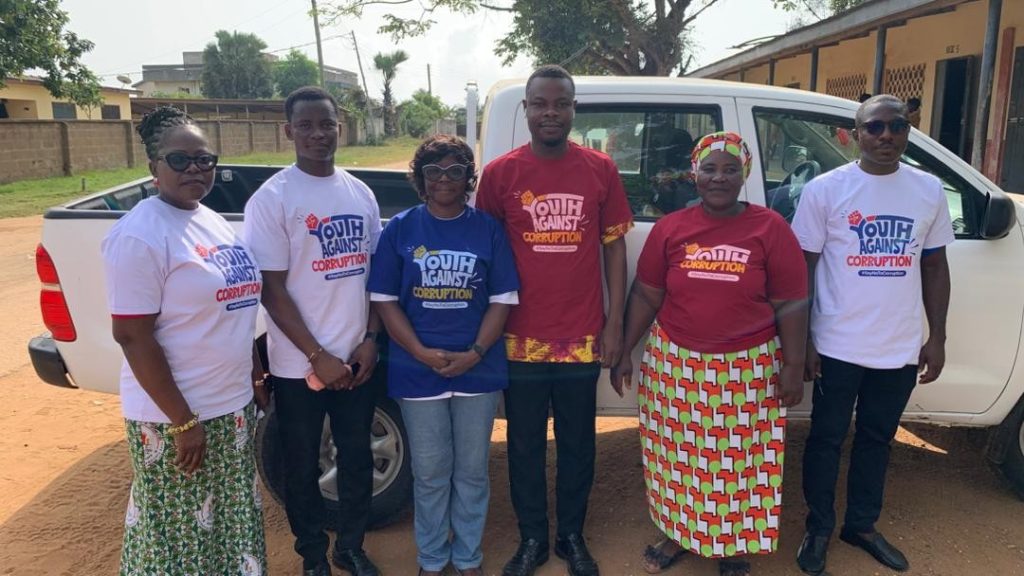
Madam Faustina Blewusi, also known as Mama Magbenya II, the NCCE District Director for Ada East, said children were being targeted because they remained the country’s future leaders, adding that instilling integrity in them from an early age would minimise their involvement in corrupt behaviours as adults.
She stated that pupils needed to recognise that corruption was not limited to political or leadership spaces, noting that acts such as cheating, taking what does not belong to them, or exchanging favours also undermined national progress.
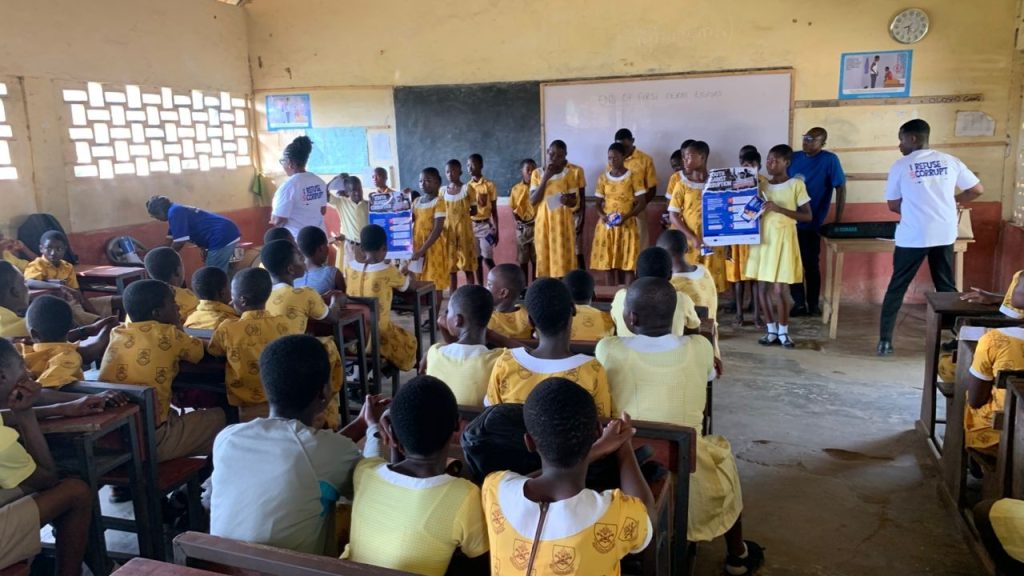
Madam Elizabeth Agyemang, CHRAJ District Director for Ada East and West, said integrity was central to national development and simplified it into three guiding principles: “Don’t cheat, don’t lie, and don’t steal.”
She stressed that corruption deprived communities of quality infrastructure and weakened essential service delivery, particularly when contracts for roads, schools, and health facilities were handled dishonestly.
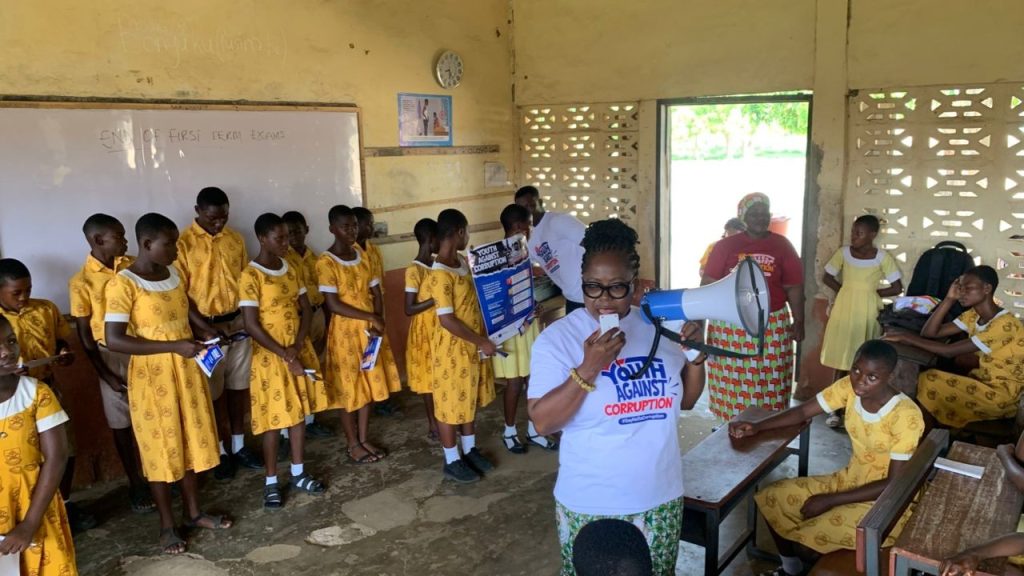
The programme formed part of broader efforts to promote anti-corruption education at the basic school level and to encourage young people to become agents of accountability within their communities.
GNA
Edited by Laudia Anyorkor Nunoo/Christabel Addo