By Anthony Adongo Apubeo
Tarikom (U/E), Dec. 18, GNA – Meta Foundation, a non governmental organisation in collaboration with the United Nations Development Programme (UNDP), has trained young people and women in mobile phone repairs and milk processing in the Bawku West District.
The initiatives were part of efforts to promote sustainable livelihoods and economic resilience among vulnerable communities, particularly women and young people within the border district.
The interventions, rolled out under the “Improving Economic Resilience of Host Communities for Peacebuilding in Northern Ghana” project, sought to empower refugees, asylum seekers, and host community members with employable skills to enhance self-reliance and promote peaceful coexistence.
The project is being funded by the Department of State of the United States of America through the International Organisation for Migration (IOM) and the UNDP.
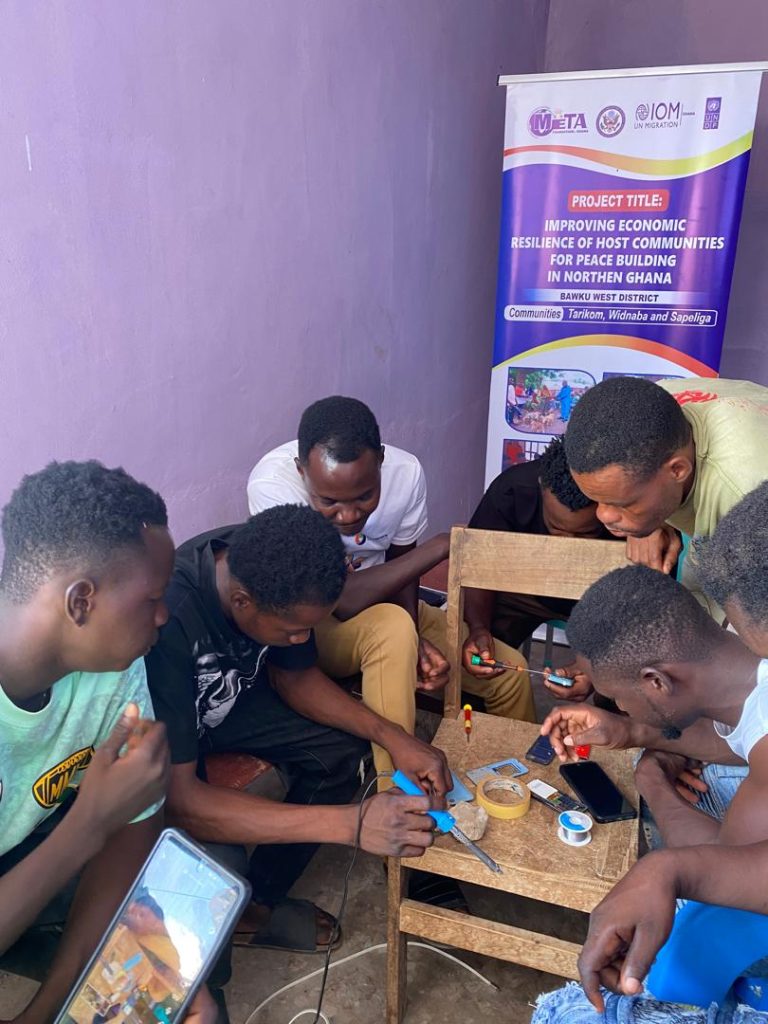
Under the project, nine young people in Tarikom were trained in mobile phone repairs to enable them to establish small businesses and generate income within their communities.
The training covered practical aspects of diagnosing and fixing common mobile phone faults.
At the end of the training, each participant received a set of tools to support the start-up of their own phone repair businesses.
Additionally, the intervention further trained 30 Fulbe women from Sapeliga, Widnaba, and Tarikom in milk processing, with a focus on degue production.
The women were taken through practical sessions on hygienic milk handling, degue production, and proper packaging to enable them to add value to their dairy products and improve their income levels.
The participants received packaging materials to support them in starting small-scale milk processing businesses in their respective communities.
Ms Ernestina Avariko, Communication Officer of Meta Foundation, said the initiative was designed to equip young people with practical skills to reduce unemployment and enhance their livelihoods.
“We believe that when young people have the skills and resources to work, they are less likely to engage in negative coping mechanisms. This intervention is therefore key to building peace and resilience within the communities,” she said.
Ms Avariko said the training, particularly the milk processing, targeted Fulbe women, who were traditionally engaged in dairy production, to help them improve product quality, reduce post-harvest losses, and access better markets.
“This training is helping Fulbe women to process and package milk more safely and attractively, which will increase their earnings and strengthen household incomes,” she said.
Some beneficiaries expressed appreciation for the training and the start-up kits, noting that the opportunity had given them renewed hope.
“I have always wanted to learn phone repairs but had no means. With this training and the tools I have received, I can now start my own business,” said Mr Francis Apiiga, one of the trainees during the phone repairs training.
“We now know how to add value to milk and package it properly for the market. This will help us sell more and make better profits,” said Ms Issaka Safura, one of the beneficiaries during the milk processing training.
GNA
Edited by Caesar Abagali/George-Ramsey Benamba