A GNA Feature by Agnes Boye-Doe
Accra, Dec. 28, GNA – In the Chinese spring paradise of Kunming, Journalists, media executives and content creators from across the world gathered from September 16 to 17 to discuss the media’s role in international cooperation for development and progress.
Also known as the “City of Eternal Spring” for its year-round pleasant weather, Kunming is the capital of Yunnan Province in southwestern China.
The 2025 Media Cooperation Forum on the Belt and Road Initiative (BRI) brought together experts from diverse backgrounds and marked a significant watershed in strengthening the role of the media as a key force in shaping global order, culturally and economically, beyond the physical infrastructure and trade routes that initially defined the initiative.
The forum underscored a growing recognition that narratives, values and cultural exchanges are increasingly as important as roads, ports and railways in advancing cooperation among nations.
The BRI, a global infrastructure and economic development strategy of the Government of the People’s Republic of China, aims to enhance trade connectivity and cooperation across more than 150 countries and international organisations, while strengthening China’s engagement in global affairs.
Held on the theme: “Shared Media Responsibility for Exchanges and Mutual Learning among Civilisations,” the forum was co-hosted by People’s Daily, the official newspaper of the Central Committee of the Communist Party of China (CPC), the Yunnan Provincial Committee of the CPC, and the Yunnan Provincial Government.
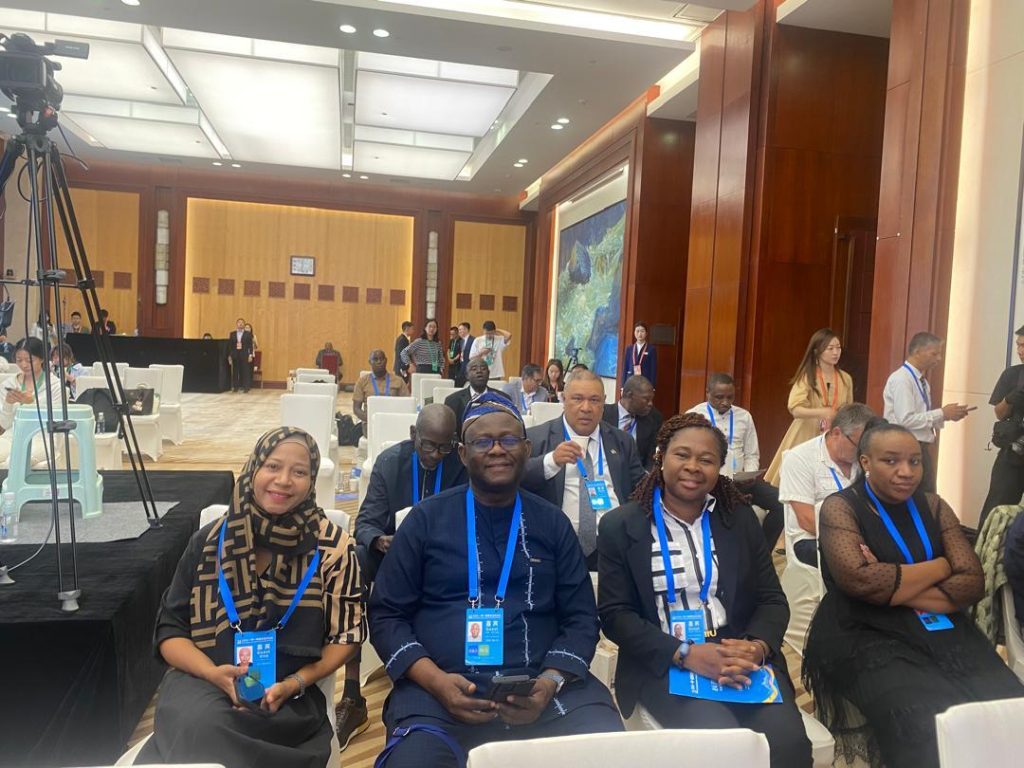
More than 200 foreign delegates from 87 countries, alongside representatives of 165 media organisations and institutions, participated in the forum, which was officially opened by Mr Zheng Jianbang, Vice Chairman of the Standing Committee of the National People’s Congress.
Simultaneous interpretation in at least nine languages – Chinese, English, Arabic, French, Japanese, Korean, Portuguese, Russian and Spanish – underscored the truly global nature of the dialogue.
The Kunming forum suggested a qualitative shift in how the Belt and Road Initiative is being positioned internationally: from an emphasis on infrastructure development to a broader investment in shared understanding, culture and storytelling.
From Infrastructure to People-to-People Ties,
Launched in 2013 by Chinese President Xi Jinping, the Belt and Road Initiative was initially associated with large-scale infrastructure projects, including roads, railways, ports and energy systems.
At the Kunming forum, however, participants emphasised that the BRI had expanded beyond physical connectivity to include people-to-people exchanges, cultural cooperation and media engagement.
Speakers noted that the initiative had “grown into a widely supported international public good and platform for global cooperation,” requiring narratives that reflect its diversity and human impact rather than focusing solely on statistics and construction milestones.
The choice of Kunming as host city was symbolic. Yunnan Province sits at the crossroads of China’s engagement with Southeast and South Asia and has historically served as a cultural and commercial gateway along ancient trade routes.
Surrounded by mountains, lakes, and gardens, Kunming’s stunning scenery, including the iconic Stone Forest and Dianchi Lake well expresses its natural beauty and serenity.
Participants observed that the location reinforced the BRI’s ambition to reconnect regions not only through transport corridors, but also through shared stories and mutual understanding.
Media Cooperation as a Strategic Focus
One of the forum’s central discussions focused on “Media Collaboration for High-Quality Belt and Road Cooperation.”
Participants explored ways that international and Chinese media could work together through joint reporting, co-productions and content exchanges that offer more nuanced, locally grounded perspectives on BRI-related cooperation.
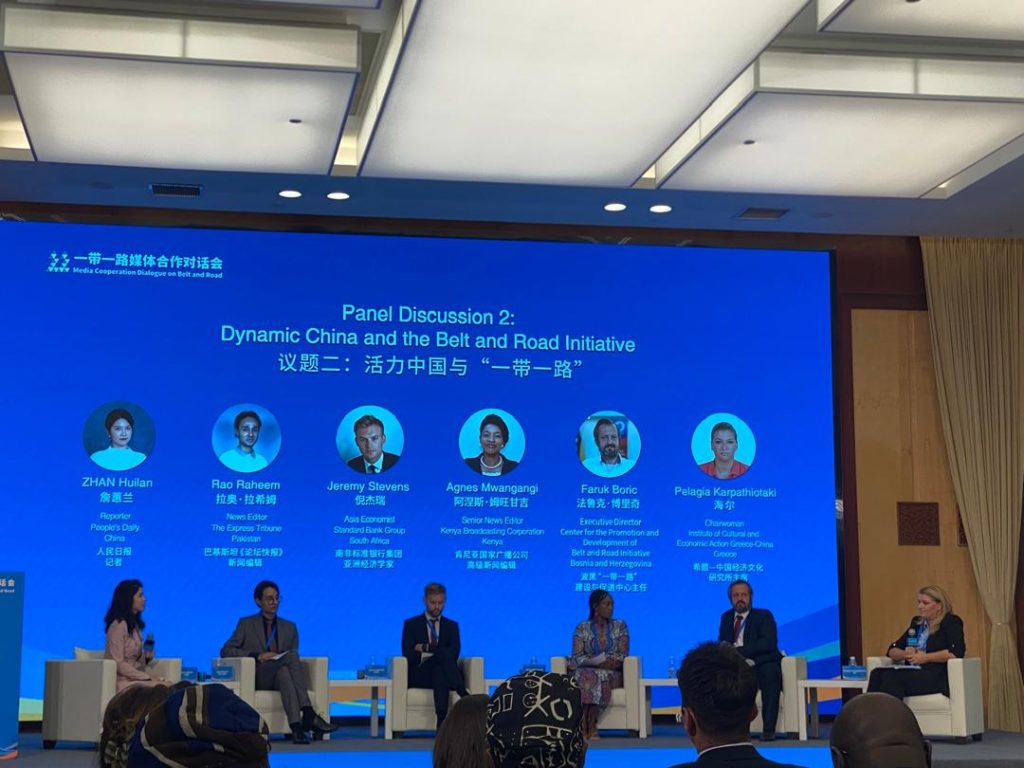
Another session, “Dynamic China and the BRI,” examined how China’s evolving economic and global role calls for new storytelling approaches capable of resonating across diverse cultural and political contexts.
With digital platforms reshaping global communication, a dedicated dialogue addressed the growing influence of creative short videos and social media in cross-cultural engagement.
Arguments were made for short-form content and that when thoughtfully produced, could help bridge cultural gaps and reach younger audiences across borders.
Throughout the discussions, organisers stressed the principle of mutual learning among civilisations, framing media cooperation as a two-way exchange rather than a one-directional flow of narratives.
Human Stories at the Centre
Beyond policy discussions, the forum highlighted individual stories that captured the human dimension of the Belt and Road cooperation.
Ms Jaruwan Udomsab, a Thai vlogger living in Yunnan, who runs the Facebook page “Yunnan Stories,” said the forum created unexpected connections among participants.
“We didn’t know each other before,” she said. “It’s this forum that brought us together, and loving Yunnan is our true feeling.”
At the second Silk Road Global News Awards, Kenyan documentary filmmaker, Ms Lali Mwamaka Sharifu, received a nomination prize for her work “The ‘Chinese Girl’ from Kenya,” a documentary tracing a personal journey shaped by China-Africa cooperation.
The documentary explores the outcomes of BRI cooperation through Sharifu’s personal experience of studying traditional Chinese medicine in China, weaving together centuries of friendly China-Africa exchanges.
Ms Sharifu described the recognition as an honour that had strengthened her belief in the power of media to tell authentic stories.
Professor Amin Alhassan, the Director-General of the Ghana Broadcasting Corporation, shared similar views, noting that China offered an example of solution oriented journalism.
“For us in Ghana and in Africa, we want to tell stories that reflect our hopes and aspirations, not only stories that invoke fear and frustration,” he said.
“We want stories that serve as a lighthouse, guiding our people to take their destiny into their own hands and work towards the development of our communities.”
Ms Sudruetai Lertkasem, Director-General of Thailand’s Government Public Relations Department, also emphasised the importance of the “human touch” in media practice.
She said as a bridge for civilisational exchanges, the media had a responsibility to disseminate accurate information, build trust and foster consensus.
“In a world that often feels fragmented, our role as media practitioners is not merely to report the news, but to build bridges of understanding, foster mutual respect and celebrate our shared humanity,” she added.
Linking Local Stories to Global Themes
Participants undertook media tours across Yunnan, including visits to Lincang’s macadamia nut processing industry, the Yunnan Flower Base and the historic Dali Ancient Town.
They also toured coffee and tea production centres, with brand varieties, showcasing Yunnan’s growing presence in both domestic and international markets.
These visits linked local development stories to broader BRI themes, illustrating how national and global initiatives intersect with community livelihoods.
One highlight was the visit to the Great Wall Motors Company Limited (GWM), a Chinese automobile manufacturer headquartered in Baoding, Hebei Province.
Named after the Great Wall of China, GWM produces sport-utility vehicles and pick-up trucks among others, and ranks among China’s top 10 automobile manufacturers, with 1.23 million vehicles sold globally in 2024.
Broader Implications
Observers say the forum reflects a deliberate effort by China to strengthen the BRI’s soft-power dimension by promoting cultural exchange and narrative-building alongside economic cooperation.
For international media organisations, the event opened opportunities for co-produced content and partnerships with Chinese outlets and local governments, potentially enabling deeper, on-the-ground reporting.
For participating countries, particularly in Africa, Asia and Latin America, the forum highlighted the possibility of shaping how their engagement with the BRI is portrayed, moving beyond infrastructure to culture, education and people-to-people ties.
Questions and Cautions
Despite the emphasis on cooperation and mutual learning, analysts note that important questions remain.
Critics ask, whose voices ultimately dominate the storytelling? and whether local perspectives, especially from smaller or less-resourced media organisations, will receive equal prominence.
Others caution that a focus on media and culture does not eliminate long-standing concerns about debt sustainability, financing models and local economic impact associated with some BRI projects.
Participants also raised questions about implementation, including whether partnerships announced at forums translate into sustained collaboration and if adequate mechanisms and resources would support long-term media cooperation.
A Narrative Turn in the BRI
The Kunming forum marked a qualitative shift in how the Belt and Road Initiative is being presented globally; from building roads, rails and ports to building connections of understanding, culture and narrative.
As host city, Kunming reinforced that message. Situated in a region historically linked to Southeast and South Asia, the city symbolised connectivity across both geography and civilisations.
For Ghana, which maintains strong diplomatic and economic ties with China, this evolving narrative presents both opportunities and questions for local media, policymakers and content creators.
Ghana formally signed onto the BRI in 2018, with cooperation spanning transport infrastructure, energy, industrial development and skills training.
It is hoped that this narrative turn will lead to more durable media partnerships and deeper storytelling on how such cooperations will benefit entire communities.
With a rich cultural diversity and heritage, there could not have been a better city to host a diverse group of people to discuss important issues that will lead to better understanding and cooperation among the various cultures of the world.
GNA
Edited by Samuel Osei-Frempong