By James Amoh Junior, GNA
Accra, Nov. 14- The 2025 edition of Exercise Grand African NEMO (GANO), the Gulf of Guinea’s largest multinational maritime security exercise, has been launched in Accra.
The opening of the exercise prompted renewed appeals for deeper regional cooperation to safeguard the highly strategic, though increasingly vulnerable, maritime corridor stretching from Senegal to Angola.
The annual exercise, jointly organised by the French Navy and the Yaoundé Architecture for Maritime Security (YAMS), brings together 25 nations, including all coastal states of the Gulf of Guinea and partner navies from Europe and North Africa.
This year’s edition runs from November 10 to 17 and will test joint response mechanisms to piracy, illegal fishing, illicit trafficking, maritime pollution, and search-and-rescue operations.
The Gulf of Guinea, which accounts for a major portion of West and Central Africa’s trade and energy transit, has long been threatened by what naval experts describe as “blue crimes”, piracy, armed robbery at sea, illegal migration, illicit trafficking of goods and persons, and environmental offences including pollution and destructive fishing practices.
Grand African NEMO, conducted under the Yaoundé Architecture, integrates national Maritime Operations Centres, zonal Multinational Maritime Coordination Centres, and regional information hubs in Abidjan and Pointe-Noire.
The 2025 edition follows several months of planning, including a final conference held in Accra in October, where participating countries finalised operational modules and simulation exercises.
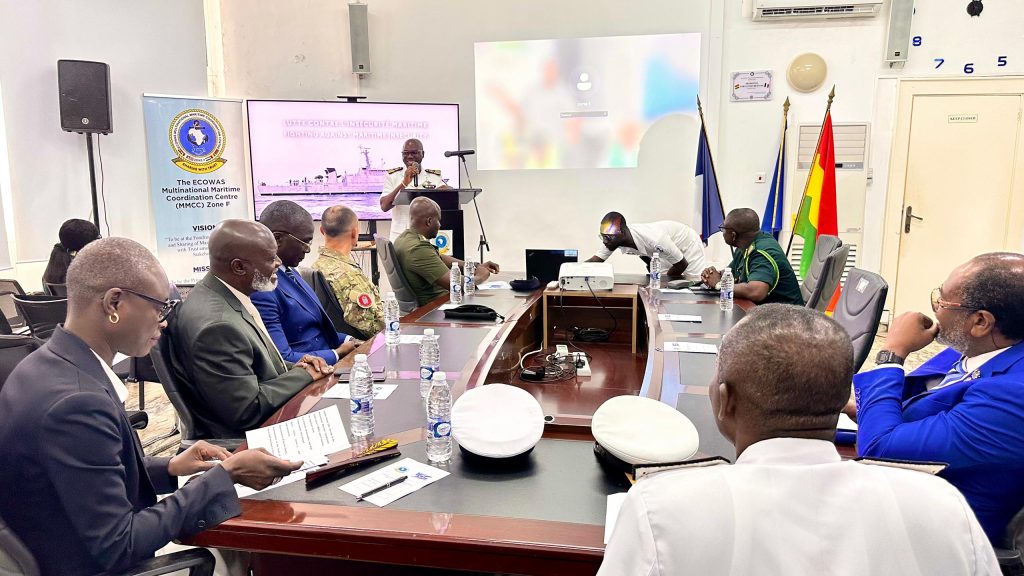
At a ceremony held at the ECOWAS Multinational Maritime Coordination Centre (MMCC) Zone F in Accra, there was a collective acknowledgement of the growing importance of multilateral maritime coordination and the need to maintain vigilance despite a significant decline in piracy incidents in recent years.
Captain Daniel Gnamiene Ehu, Director of the MMCC Zone F, described the launch as a reaffirmation of the region’s commitment to safeguarding its maritime domain.
He commended the French Navy for its sustained support since the inception of Grand African NEMO in 2018, noting its growth into the most extensive and influential maritime training exercise in West and Central Africa.
“For seven days, the Navies and Coast Guards will deploy vessels across our waters alongside the French and Spanish navies to practice real-time scenarios involving illegal, unreported and unregulated fishing, piracy, drug trafficking, human trafficking, and maritime pollution,” he said.
He cautioned that although threats such as piracy had declined considerably, stakeholders “must not lower our guard.”
He urged participating nations and partners to work together to create a safer maritime environment in Zone F and the wider Gulf of Guinea.
Lieutenant Commander Edem Komla Akati, Deputy Director of MMCC Zone F, underscored the strategic necessity of the exercise, referencing the early 2000s when the Gulf of Guinea rivaled the Horn of Africa as the world’s most piracy-prone region.
This prompted the United Nations Security Council resolutions and the adoption of the Yaoundé Code of Conduct in 2013.
He said GANO 2025 would help enhance information-sharing, interoperability, and harmonised standard operating procedures among navies and maritime agencies.
“Thankfully, over the past five years, we have seen a vast decline in piracy and maritime crime due to interventions such as enhanced training, increased acquisition of operational platforms, and exercises like these,” he stated.
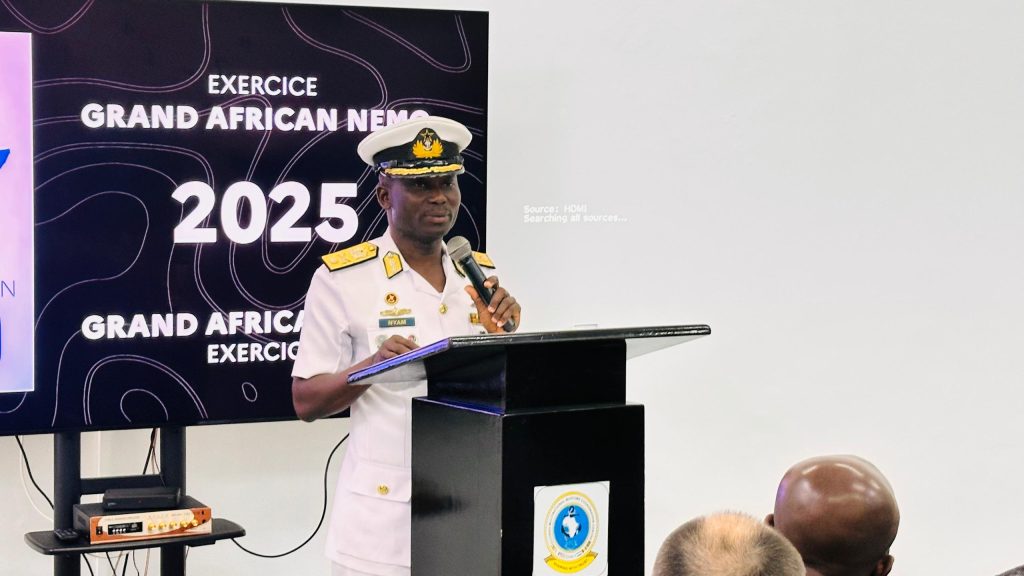
Rear Admiral Godwin Livinus Bessing, Chief of the Naval Staff of the Ghana Navy, whose remarks were delivered on his behalf by Commodore Stephen Billins Nyam, reaffirmed Ghana’s readiness to work with regional and international partners to secure the Gulf of Guinea.
He described the exercise as “a cornerstone of operational cooperation” and said Ghana’s participation reflected its commitment to maritime stability.
He highlighted President John Dramani Mahama’s recent discussions with French President Emmanuel Macron in Paris, where strengthening Ghana’s maritime security architecture was a key point of engagement.
“For the Ghana Navy, participation in GANO 2025 is more than an exercise. It is a reaffirmation of our commitment to regional solidarity and operational readiness,” he said, adding that no single nation could address maritime threats alone.
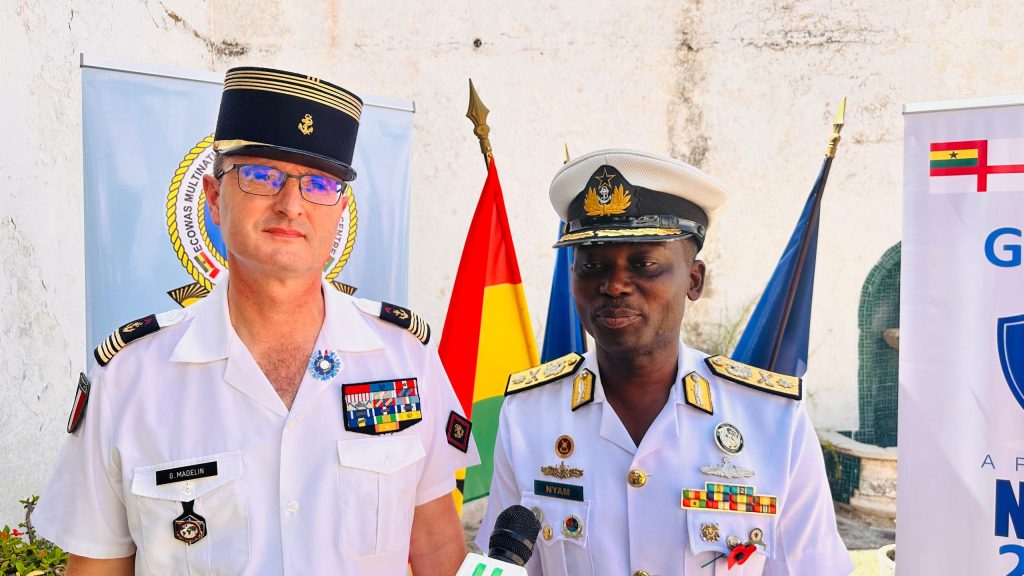
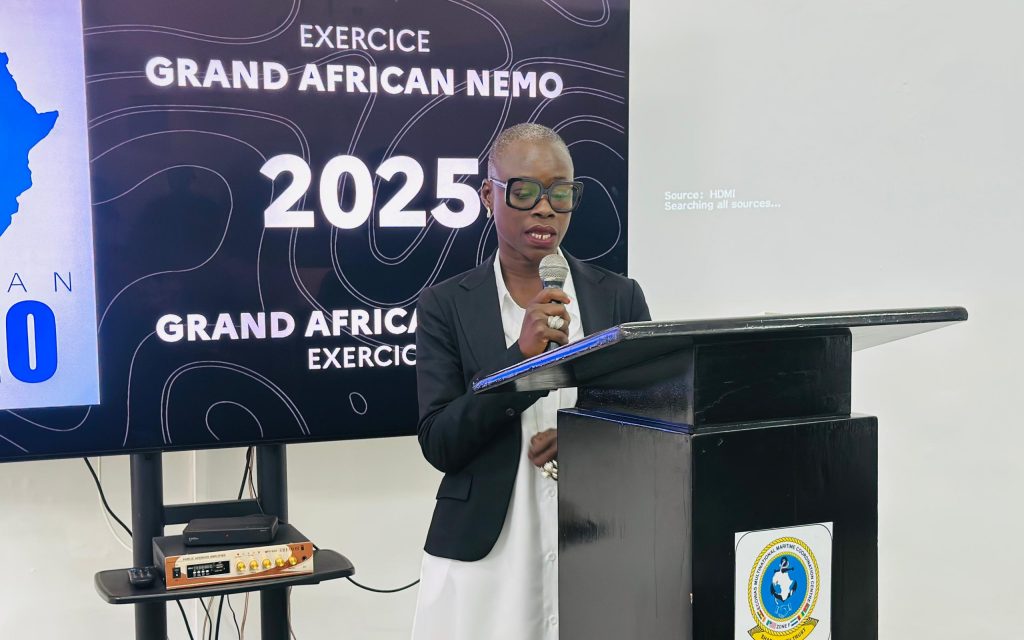
Amb. Diarra Dime Labille, the French Ambassador to Ghana, said France remained committed to supporting maritime security initiatives in West and Central Africa.
She noted that Grand African NEMO has become “more ambitious than ever” and a model of international cooperation, with the engagement of the French Navy, the Spanish Navy and support from European Union member states including Denmark, Portugal, Belgium, and Spain.
She commended the EU Delegation in Ghana for its contributions under the European Peace Facility, which supports maritime capability enhancement in the region.
The ambassador also referenced recent UK–France discussions on strengthening joint maritime efforts, affirming that both countries “remain fully committed to supporting Ghana in protecting its national interests.”
She emphasised the broader economic and environmental significance of maritime security, recalling Ghana’s recent fisheries conference where the preservation of marine resources and the fight against illegal fishing were highlighted as national priorities.
“We must reconcile economic development with the sustainable protection of our seas,” the Amb. noted.
GNA
Edited by Christian Akorlie