By Michael Foli Jackidy
Ho (V/R), Oct. 31, GNA – The University of Health and Allied Sciences (UHAS) has graduated 60 oncology nurses from 17 African countries under the second cohort of the Oncology Nurse Leadership Programme in Africa (ONLEP), aimed at strengthening leadership capacity and improving cancer care delivery across the continent.
The graduation ceremony, held in Ho on Friday, was on the theme: “Leading in a Dynamic Healthcare System.”
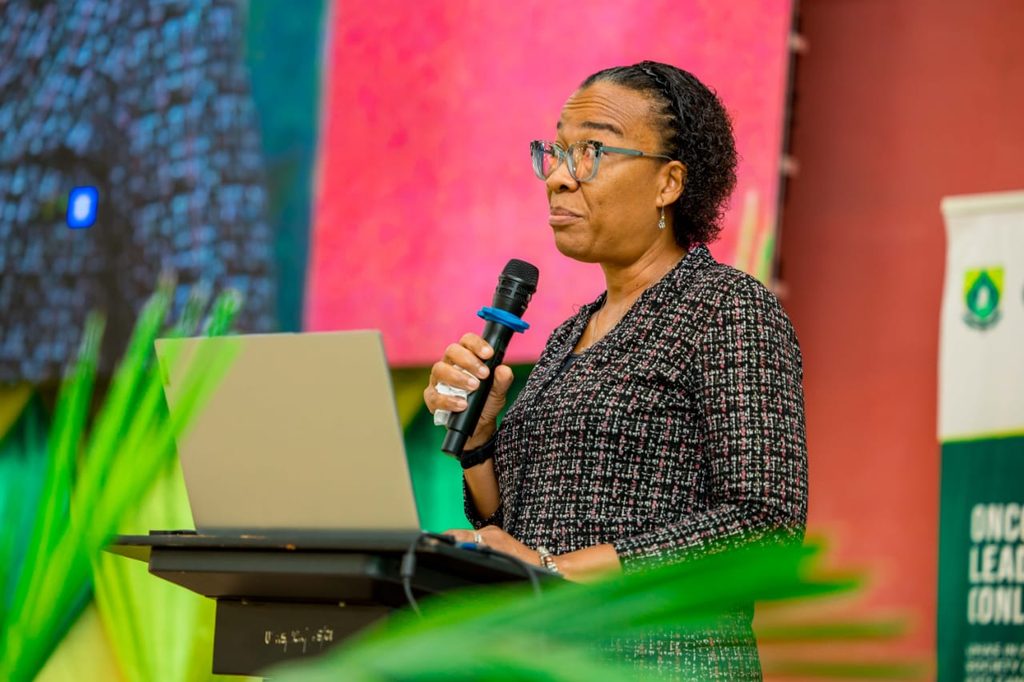
Professor Florence Dedey, a Consultant Surgeon at the Korle-Bu Teaching Hospital, who delivered the keynote address, urged the graduates to apply the knowledge and skills acquired during the six-month programme to improve patient outcomes and address the growing burden of cancer in Africa.
She said cancer remained a major public health challenge, particularly in low- and middle-income countries, where patients often faced late diagnosis, limited access to treatment and inadequate support services.
Prof Dedey encouraged the nurses to prioritise lifelong learning, research and innovation, multidisciplinary teamwork, holistic patient care and effective leadership to strengthen cancer services.
She urged them to generate research evidence from African healthcare settings to inform policies, clinical guidelines and treatment decisions, rather than relying solely on studies conducted elsewhere.
She also stressed the importance of collaboration among healthcare professionals, including doctors, pharmacists, laboratory scientists, psychologists, and other specialists, in providing coordinated and patient-centred cancer care.
Prof Dedey said oncology nurses must address the physical, emotional, social and spiritual needs of patients while supporting their families and safeguarding the well-being of healthcare workers to prevent stress and burnout.
She encouraged the graduates to use available resources efficiently, communicate effectively and lead with competence, compassion and integrity, even in settings with limited infrastructure and medical supplies.
Professor Lydia Aziato, Vice-Chancellor of UHAS, said the programme was designed to train 240 oncology nurses in leadership over five years.
She said the six-month postgraduate certificate programme was a collaboration among UHAS, City Cancer Challenge (C/Can), the International Society of Nurses in Cancer Care (ISNCC) and Amgen, which funded the initiative.
Prof Aziato said the programme combined online learning with face-to-face sessions and covered oncology nurse leadership, health services management, financial management, quality assurance, psycho-oncology, research, evidence-based practice, networking, policy and advocacy.
She said the second cohort attracted 210 applicants, with 103 candidates from 18 countries shortlisted and interviewed, before 60 participants from 17 countries were admitted.
The cohort comprised 44 females and 16 males, with Ghana recording the highest representation of 26 nurses, followed by Nigeria with nine. Kenya, Malawi and Rwanda had three representation each whiles Ethiopia, Lesotho, Eswatini, Botswana, Cameroon, Seychelles and the Gambia had one representation each. The Volta Region had the highest representation among Ghanaian regions, with six participants.
Prof Aziato said the participants also undertook leadership projects focusing on cancer screening and early detection, public awareness, chemotherapy safety, oncology emergencies, palliative care, psychosocial support and the development of standard operating procedures to improve cancer services.
She urged the graduates to continue learning, embrace teamwork, keep abreast of developments in oncology, and uphold the university’s values of excellence, integrity, innovation, service and care.
Professor Winnie So, former President of the International Society of Nurses in Cancer Care, underscored the importance of the partnership behind the programme and the critical role of nurses in cancer care. She encouraged the graduates to establish transformative professional networks, noting that they had progressed beyond being clinicians to becoming leaders and advocates in their respective institutions.
Dr Philomina Woolley, Acting Registrar of the Nursing and Midwifery Council, and Dr Eva Mensah, Director of Nursing and Midwifery at the Ghana Health Service, highlighted the importance of the programme in strengthening nurses’ leadership capabilities. They also emphasised the role of technology in modern healthcare delivery and commended the graduates for their commitment, dedication, and perseverance throughout the programme.
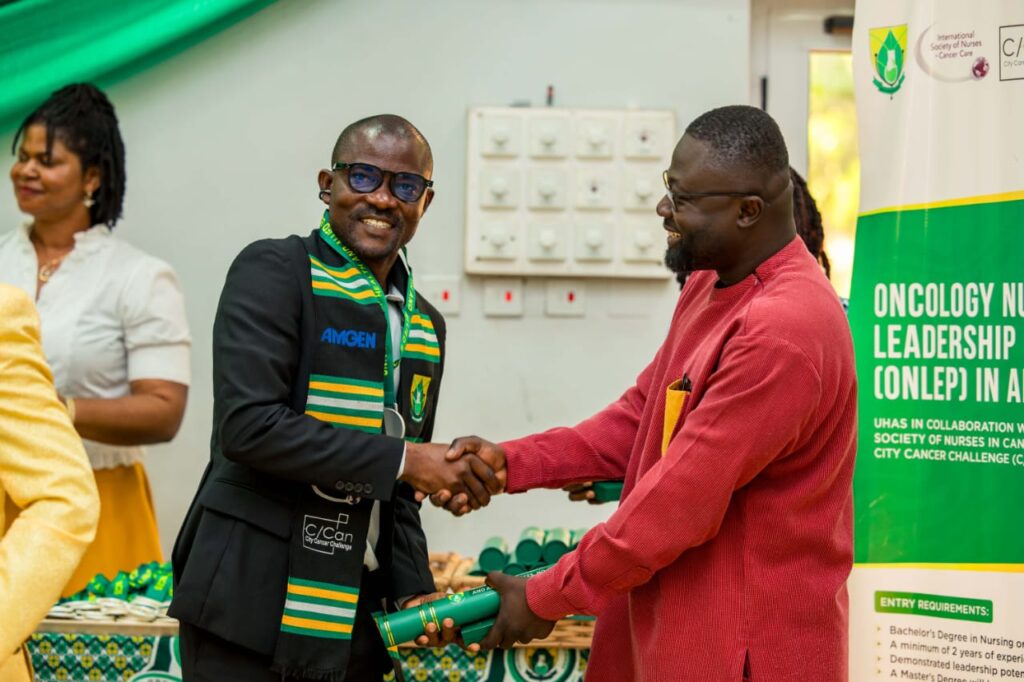
The overall best graduating participant, Amos Azure, an Oncology Nurse at the Tamale Teaching Hospital, speaking on behalf of participants, said the programme had positively influenced his professional practice and leadership capacity. He highlighted the importance of professional networking and expressed appreciation to the facilitators and partners for their guidance and support.
Other award recipients were Ampadu Gifty, Outstanding Female Graduating Participant; Igiraneza Pierre Celestine, Second Outstanding Male Graduating Participant; and Felister Musa Willium, Second Outstanding Female Graduating Participant.
The first cohort of 30 participants from seven African countries graduated on December 4, 2025.
The ONLEP initiative seeks to strengthen the oncology nursing workforce and improve cancer prevention, treatment and support services across Africa.
GNA
Edited By: Maxwell Awumah/Kenneth Odeng Adade