By Benjamin Adamafio Commey
Accra, Sept. 10, GNA – The Ghana WASH Journalists Network (GWJN) and WaterAid Ghana have called on the Government to increase public investment in water, sanitation and hygiene (WASH) to accelerate national development and address persistent water challenges across the country.
They said WASH must be placed at the centre of the national development agenda because progress in health, poverty reduction and climate resilience depended on access to safe water, sanitation and hygiene.
The two organistions made the call at a roundtable discussion on water, sanitation and hygiene held for editors from selected media houses in Accra on Tuesday.
Speaking at the meeting, Mr Ibrahim Musah, Head of Strategy, Policy and Campaigns Department at WaterAid Ghana, said over the years, various governments had paid little attention to WASH issues in the country.
He, however, explained that addressing water and sanitation issues were critical to the national development agenda.
“Water and sanitation is central to the national development agenda. Our call is simple: government must prioritise WASH in national development and, in particular, increase financing from the public purse for the execution of WASH programmes,” Mr Musah said.
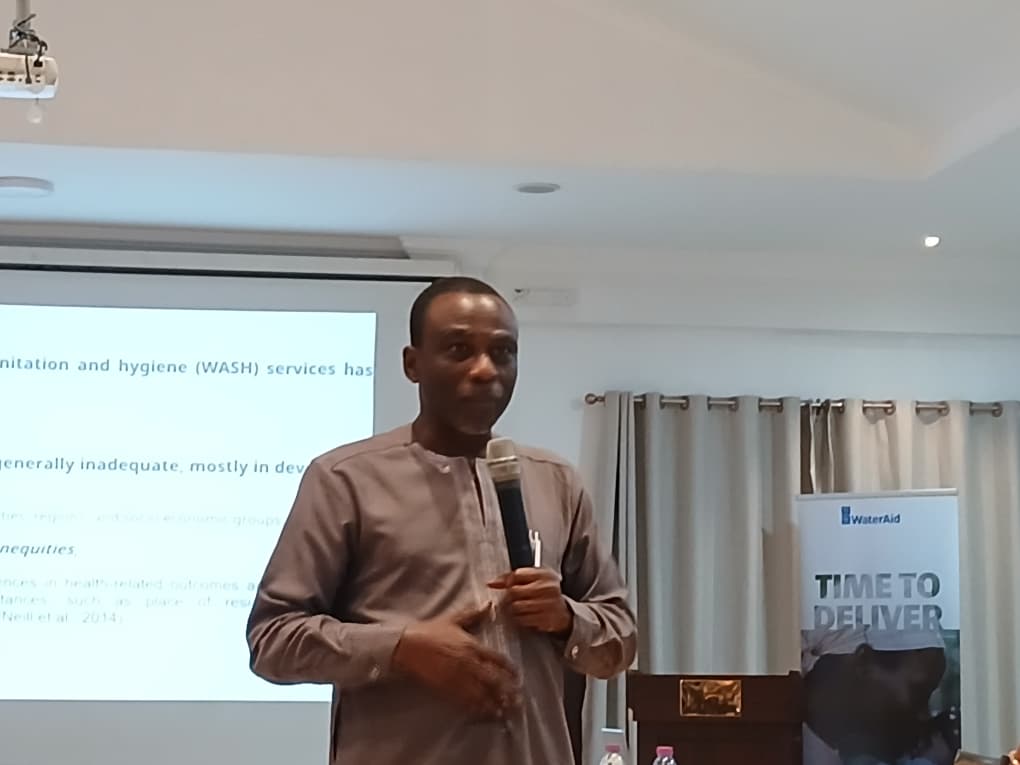
He said Ghana needed to mobilise about 1.7 billion dollars annually to meet its WASH investment requirements and urged the Government to reflect that commitment in the national budget.
He said budget tracking conducted by WaterAid showed that although government made allocations to the sector, actual execution remained between 50 and 60 per cent because funds allocated were not fully released for implementation.
“Government always releases between 50 to 60 per cent of investment requirements,” he said, stressing the need for predictable and adequate financing.
Mr Musah said increased investment in WASH should be viewed as an economic investment rather than charity, citing studies by the World Health Organisation and UNICEF indicating that every dollar invested in WASH could generate between six and 10 dollars in returns through improved productivity, health and wellbeing.
He noted that urban water challenges persisted in several cities, including Tamale, Ho and Cape Coast, and said climate change could worsen the situation if adequate investments were not made.
On sanitation, Mr Musah called for the establishment of a National Sanitation Authority to provide a clear institutional framework for coordination, enforcement and service delivery from the national to district levels.
He also advocated investment in waste transfer stations and other sanitation infrastructure to support compliance, improve waste management and promote a circular economy.
“Sanitation is no longer waste. Sanitation is wealth,” he said.
Mr Murtala Abdul-Mumin, a Senior WASH Monitoring and Financing Advisor at WaterAid UK, said Ghana’s WASH challenge was no longer only about building infrastructure but also financing services that were sustainable and accessible to all.
He said achieving Sustainable Development Goal (SDG) Six required the country to move from project-based financing to system financing, with increased domestic investment and stronger mechanisms to ensure value for money.

Mr Abdul-Mumin said sanitation remained significantly underfunded, despite requiring about 800 million dollars annually, nearly half of the estimated 1.7 billion dollars needed to finance the country’s WASH sector each year.
He said Ghana also faced challenges with donor dependence, weak asset maintenance and inadequate water quality monitoring, warning that infrastructure could quickly deteriorate when resources were not provided for operation and maintenance.
He called for greater private-sector participation and an enabling environment to attract investment into the sector.
“Government alone cannot do this. Addressing Ghana’s WASH financing gap requires the active participation of the private sector, development partners, communities and other stakeholders,” Mr Abdul-Mumin said.
“Government must create the enabling environment and mobilise public resources, but sustainable WASH services will require stronger partnerships and greater private-sector investment to meet the country’s growing needs.”
He said financing must also prioritise marginalised communities and ensure that every cedi invested delivered sustainable WASH services for future generations.
GNA
Edited by Kenneth Odeng Adade
Reporter: Benjamin Adamafio Commey