By Christiana Afua Nyarko
Accra, Aug. 16, GNA- Military leaders have been urged to anticipate emerging security threats and develop contingency plans for unexpected crises.
The changing global security environment requires the Armed Forces to prepare for threats beyond conventional warfare, including cyber-attacks and natural disasters.
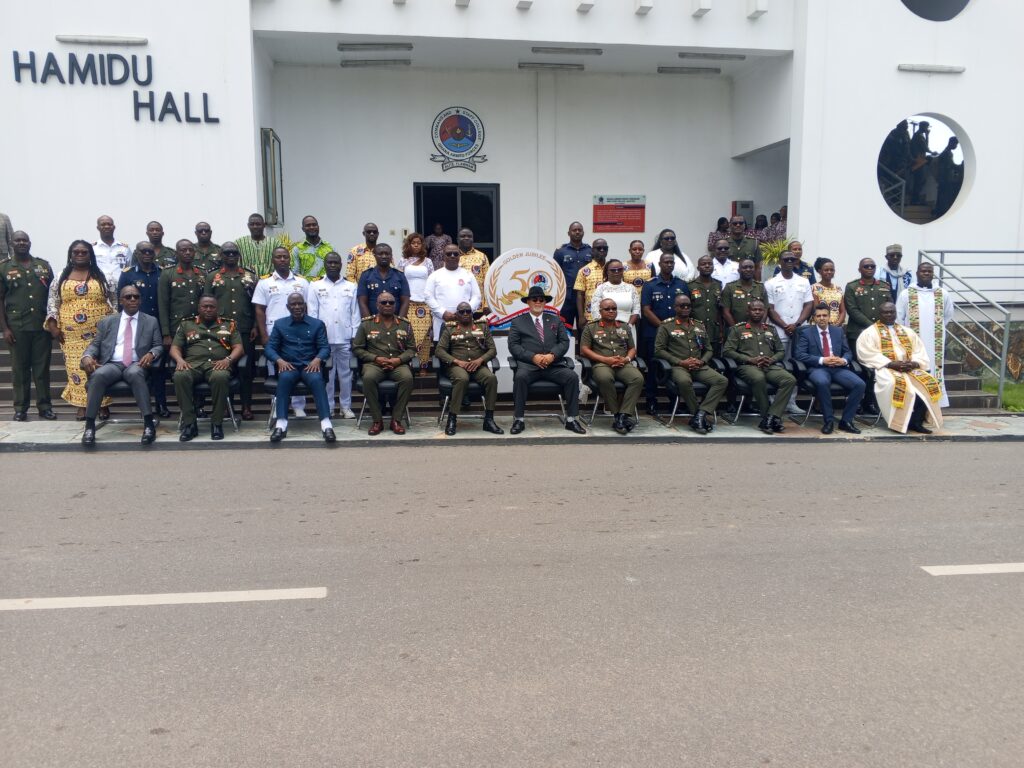
Mr Thomas Svanikier, Guest of Honour at the 50th Anniversary Thanksgiving and Graduation Religious Service of the Ghana Armed Forces Command and Staff College (GAFCSC), made the call in Accra on Sunday.
He said threats could arise from cyber-attacks, floods, epidemics, earthquakes and other disasters without warning.
Mr Svanikier, a businessman and Founder of Svani Group, said the military’s traditional mission of defending and protecting the nation remained unchanged.
He said, however, that the nature of security threats had changed significantly.
Mr Svanikier urged the graduating officers to strengthen intelligence-sharing and professional relationships with military counterparts in other African countries.
He said closer cooperation was necessary to identify and neutralise threats before they destabilised countries.
Mr Svanikier also cautioned commanders against allowing personal ego to prevent them from accepting ideas from subordinates.
He said leadership required humility to recognise and use better ideas, regardless of where they came from.
Mr Svanikier said command should be regarded as a responsibility held in trust, rather than personal property.
He explained that authority was attached to an office and appointment, which were not permanent.
“Leadership is therefore a blessing, a blessing which is held by you in trust. It’s never owned,” he said.
Mr Svanikier asked the graduates to lead with humility, courage, integrity and professionalism.
He said their training and knowledge imposed a responsibility on them to serve humanity and leave a positive legacy.
Mr Svanikier also challenged the College to remain ahead of developments in the global security environment.
He urged it to regularly review its preparedness for unforeseen events.
Mr Svanikier cited his experience in the private sector, where contingency planning and rehearsals enabled his bank to operate remotely during the COVID-19 pandemic.
He said institutions should always consider what would happen if their normal systems failed.
Mr Svanikier said military and national institutions should develop and test alternative plans to ensure continuity during major crises.
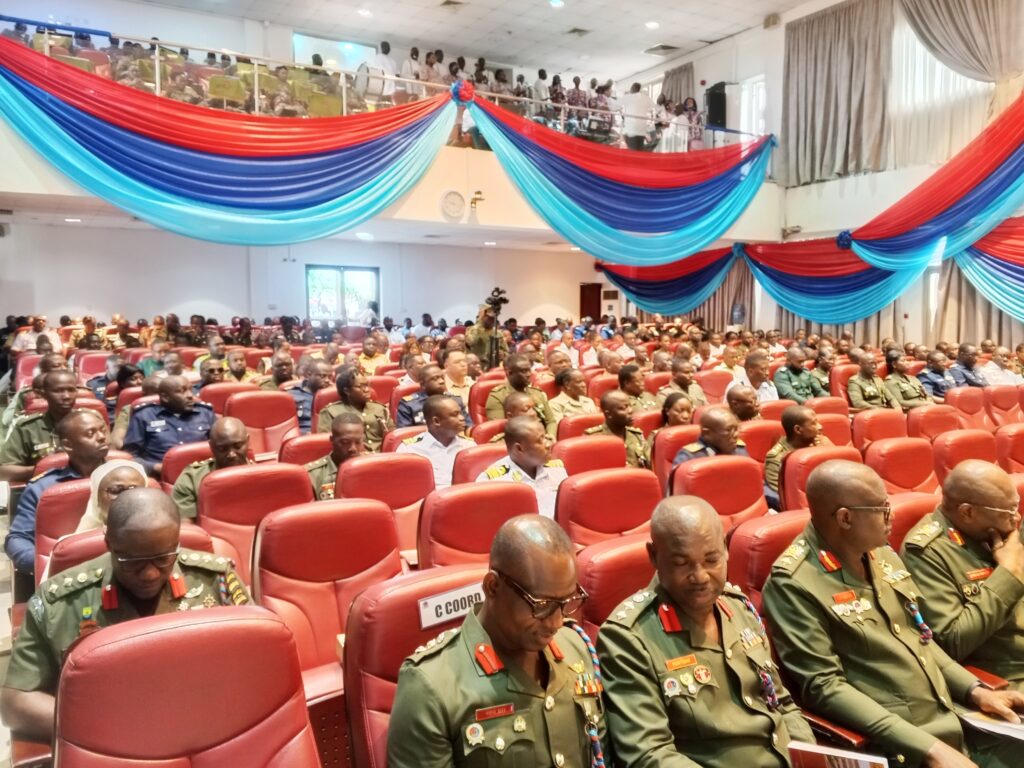
The service was held at Hamidu Hall under the theme: “Fifty Years of Equipping Officers for Professional Service,” with reference to Ephesians 2, verse 10.
It formed part of activities marking the College’s 50th anniversary and the graduation of participants of Senior Command and Staff Course 47.
It also marked the graduation of participants in the 2026 Master of Science in Defence and International Politics and Master of Science in Security Studies programmes.
Rev Commodore (Rtd) Paul Adjei-Djan, who delivered the Christian sermon, urged the graduating officers to demonstrate courage and build on the positive legacies of their predecessors.
Drawing lessons from the biblical account of Joshua’s succession to Moses, he said the officers would soon assume command.
He said they must understand leadership as a responsibility to fulfil the intent of their commanders and serve their people.
Rev Commodore Adjei-Djan said the history of GAFCSC represented a heritage built by successive generations of military officers and other personnel.
He urged the graduates to preserve that heritage and improve upon it.
Rev Commodore Adjei-Djan said commanders must apply sound judgement, analyse missions carefully, develop appropriate courses of action and issue clear instructions.
He also urged them to prioritise the welfare of personnel under their command.
Rev Commodore Adjei-Djan said the success of military leaders depended largely on the people who worked with and supported them.
He advised the graduates to remain humble and remember those whose sacrifices contributed to their success.
“Somebody starts, somebody continues, and somebody completes,” he said.
Rev Commodore Adjei-Djan urged the officers to add value to existing systems and leave them stronger for succeeding generations.
He also encouraged them to seek counsel and prayer in their leadership, and challenged commanders to aspire to be remembered for positive contributions to their units, communities and countries.
Imam Captain Abubakar Mohammed Sharabutu, who delivered the Islamic sermon, identified purpose, sacrifice and legacy as principles that should guide the officers.
He said the anniversary theme reminded officers that their training was not only about acquiring qualifications.
Imam Sharabutu said it was also about discovering and fulfilling their purpose of serving God and humanity.
He said professional service often required individuals to sacrifice personal comfort to fulfil their responsibilities.
Imam Sharabutu said the sacrifices involved in producing competent officers extended beyond the graduates.
They included instructors, facilitators, institutions and their families, whose support often remained unseen.
Imam Captain Sharabutu said the ultimate measure of leadership was the legacy an officer left behind.
He challenged the graduates to consider how they would be remembered as leaders.
Imam Sharabutu asked them to reflect on whether they would be regarded as arrogant or humble, autocratic or servant leaders.
He also urged them to consider whether their leadership would be approachable and beneficial.
Imam Sharabutu urged them to “begin with the end in mind” by considering the consequences and legacy of their decisions before taking action.
He encouraged the graduates to use their training and positions to create lasting benefits for their institutions, societies and future generations.
The Ghana Armed Forces Command and Staff College was established in July 1976 as a tri-service and joint institution.
It received support from the United Kingdom and Canada, following earlier efforts to develop indigenous staff training in Ghana.
Its first Senior Division course began in January 1977 with 28 Ghanaian officers.
The College has since developed into a regional centre for professional military education, training officers from Ghana and allied African countries.
GNA
Edited by Kenneth Sackey
Reporter: Christiana Afua Nyarko, GNA