By Edward Acquah
Accra, July 2, GNA – Climate scientists have rejected claims that the recent deadly floods in Accra were caused solely by climate change, citing urban planning and drainage deficiencies as key factors.
In seperate interviews with the Ghana News Agency in Accra, they said rainfall records do not support direct attribution of Monday’s floods to climate change, although rising temperatures may contribute to more intense rainfall events in future.
The scientist are Dr Martin Addi, Climate Scientist at the Remote Sensing and Climate Centre of the Ghana Space Science and Technology Institute, Ghana Atomic Energy Commission, and Professor Daniel Nukpezah, Director of the Institute for Environment and Sanitation Studies (IESS), University of Ghana.
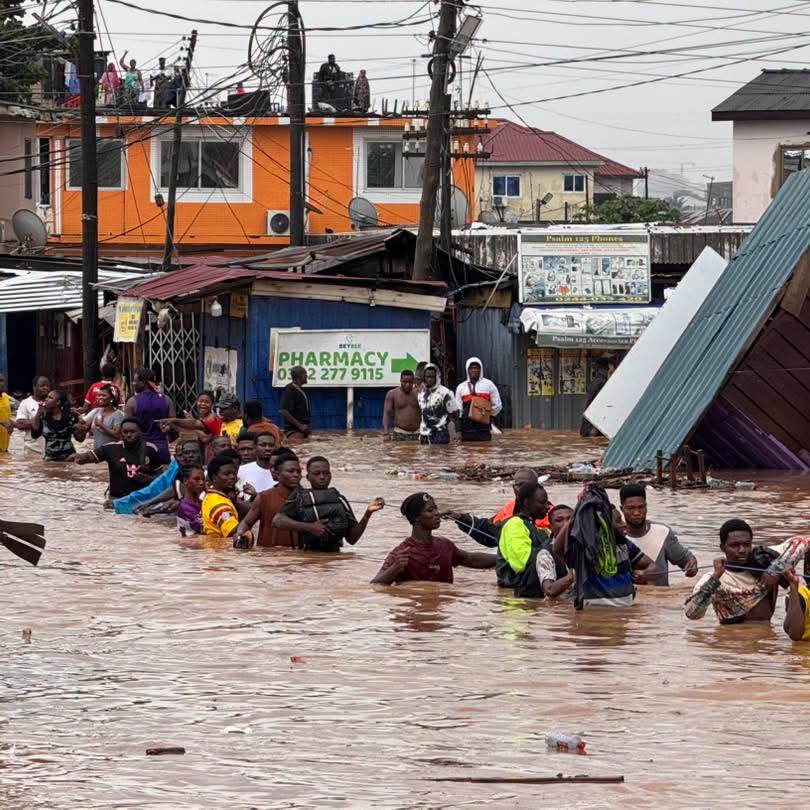
Their comments follow floods in Accra and Tema on Monday that left 12 people dead and displaced thousands after nearly 10 hours of rainfall.
The Ghana Meteorological Agency said the rains were triggered by a slow-moving storm system from Togo, which persisted into the afternoon, with heavier downpours along coastal areas before easing later.
Presenting a statement in Parliament on Tuesday, Alhaji Mohammed Mubarak Muntaka, Minister for the Interior, said Accra recorded 169 millimetres (mm) of rainfall on June 29 and a cumulative 593mm in June, describing it as the highest monthly rainfall on record since systematic observations began.
However, the scientists said while the monthly total was unprecedented if confirmed, the single-day rainfall event was not without historical precedent.
Dr Addi said analysis of Accra rainfall records from 1980 to 2024 showed the June 29 rainfall ranked among previous extreme events rather than representing a new phenomenon.
He said the highest daily rainfall recorded in Accra since 1980 was 243.9mm on July 3, 1995, followed by 212.8mm on June 3, 2015, and 182.5mm on June 9, 2016.
Dr Addi said the June 29, 2026 rainfall of 169mm ranked fourth over the period, exceeding several other extreme rainfall events, including 157.9mm recorded on May 2, 1988, and 157.2mm on July 14, 1991.
He said available records did not show a statistically significant upward trend in rainfall to support attribution of the floods to climate change.
“From the historical record, we cannot attribute it to climate change,” he said. “If we begin to do that, then we are not taking responsibility for the problem that we are facing as a country,” he said.
Dr Addi said rising temperatures could increase atmospheric moisture and rainfall intensity, but noted that Accra’s rainfall frequency had not shown a sustained long-term increase.
He attributed the floods mainly to inadequate drainage systems, poor maintenance of drains, encroachment on waterways, widespread concretisation of surfaces, limited rainwater harvesting and lack of stormwater detention infrastructure.
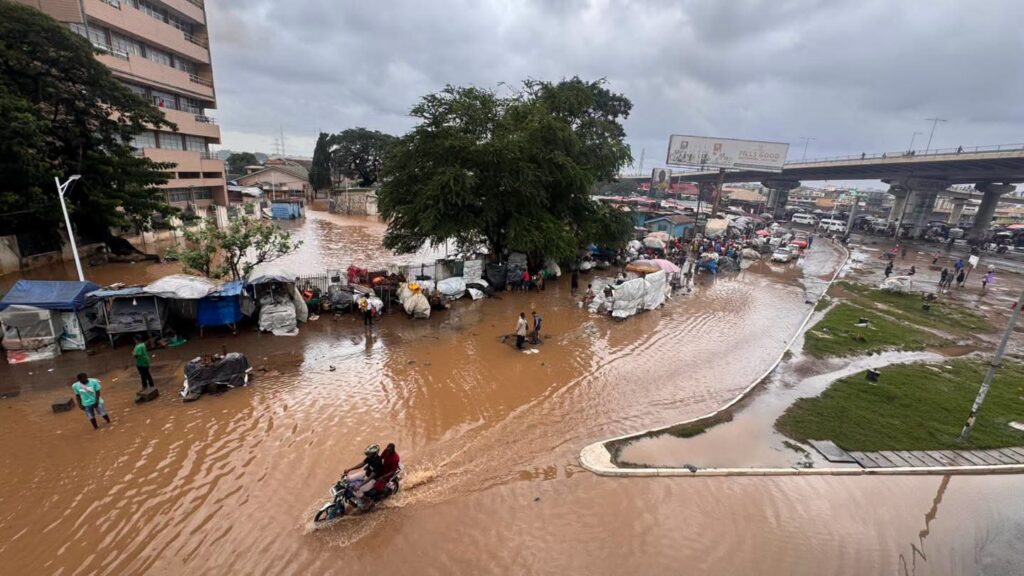
Prof. Nukpezah said climate change alone could not explain the scale of destruction.
“Climate definitely made a contribution, but you cannot put the blame on the doorstep of climate change alone,” he said.
Prof. Nukpezah said flooding becomes a disaster when exposure and vulnerability are high, citing weak enforcement of planning regulations, construction on waterways and poor waste management as contributing factors.
He urged metropolitan, municipal and district assemblies to use flood-risk maps and climate risk data to guide planning, strengthen early warning systems and direct infrastructure investments.
Prof. Nukpezah also called for stricter enforcement of building regulations, protection of waterways, improved waste management and dedicated funding for climate adaptation and disaster preparedness.
Both scientists said Ghana’s priority should be addressing structural and governance gaps in urban planning and drainage systems, alongside long-term climate adaptation measures.
GNA
Edited by Kenneth Sackey
Reporter: Edward Acquah
[email protected]