By Kamal Ahmed, GNA
Akosombo (E/R), July 18, GNA – The Ghana Federation of Disability Organisations (GFD) has trained members of the Organisations of Persons with Disabilities (OPDs) on the Right to Information (RTI) Act to strengthen advocacy, improve access to public information and deepen participation in governance.
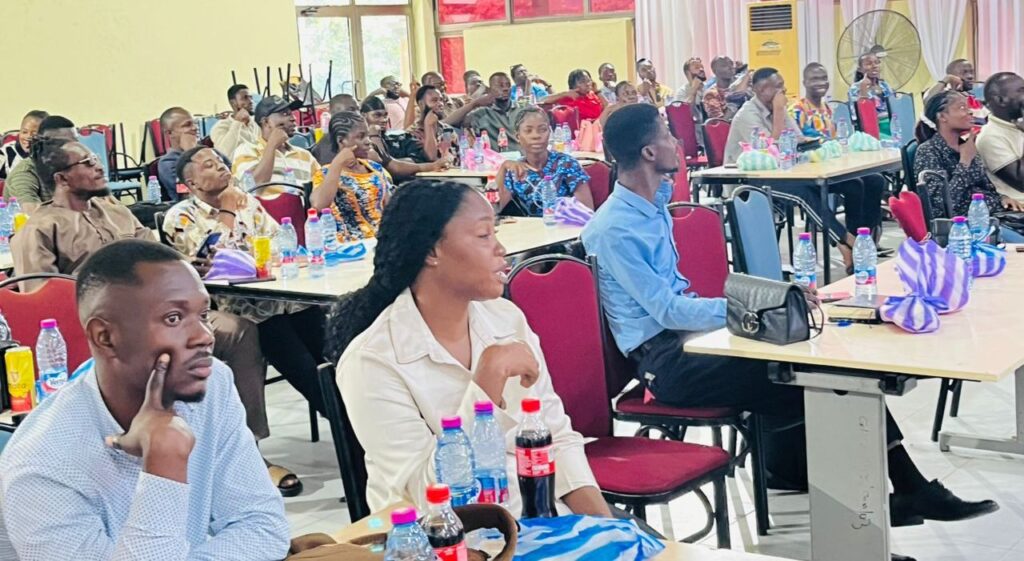
The two-day workshop, held in Akosombo, sought to equip participants with practical knowledge and understanding of the RTI Act, 2019 (Act 989), and its application in advancing disability rights and inclusion.
Held on the theme, “Strengthening the Capacity of Organisations of Persons with Disabilities in Ghana,” the workshop brought together members of the Ghana National Association of the Deaf, the Ghana Blind Union and other disability groups.
Speaking on the sidelines of the event, Mr Peter Anomah Kordie, the Executive Director of the Ghana Federation of Disability Organisations, told the Ghana News Agency that the training was designed to help participants deepen their knowledge to better understand the RTI Act and effectively use it in their advocacy work.
“As persons with disabilities and organisations of persons with disabilities, we always seek to understand the laws governing our rights so that we can actively participate in their implementation,” he said.
He explained that the training would enable participants to understand procedures for requesting accessible information from public institutions and managing such information for the benefit of their members.
Mr Kordie expressed confidence that the workshop would position participants to make informed information requests to support advocacy and protect their rights.
He urged participants to apply the knowledge acquired to advance disability rights and contribute to building a more inclusive society.
According to him, many disability organisations previously lacked adequate knowledge of the RTI Act, making it difficult to pursue information requests or challenge decisions when access was denied.
Mr Stephen Owusu, the Head of Legal at the Right to Information Commission, described access to information as a constitutional right and said the RTI Act provides the legal framework for citizens to exercise that right.
He encouraged citizens, including persons with disabilities, to use the law to promote transparency and accountability in public institutions.
“If you want information from your District Assembly or any public institution, use the RTI Act. Where access is denied, the RTI Commission is available to assist,” he said.
Mr Owusu stressed that accountability could only be strengthened when citizens actively sought information on the management of public resources.
He noted that the passage of the RTI Act in 2019 reinforced the obligation of public office holders to account for their stewardship.
He also highlighted provisions within the Act that protect persons with disabilities, including Section 75(2), which exempts them from paying fees for information requests, and Section 18, which promotes equal access to information.
Mr Owusu urged persons with disabilities to take advantage of the law to safeguard their rights and enhance their participation in national development.
Mr Evans Oheneba Mensah, Project Officer of the European Union-funded project at GFD, said the workshop formed part of a three-year project being implemented by the Federation in partnership with the Mental Health Society of Ghana and the Africa Disability Institute.
He said the initiative seeks to strengthen the institutional and advocacy capacity of organisations of persons with disabilities across the country.
According to him, the project is currently in its second year, following a first phase focused on advocacy interventions and capacity-building activities.
Mr Mensah described the workshop as timely, stressing that access to information remains a fundamental right that enables citizens to participate meaningfully in governance.
He observed that persons with disabilities often faced discrimination and other barriers that limited access to information, making targeted interventions necessary.
“Persons with disabilities have the same fundamental human rights as every other citizen, and access to information is one of those rights that must not be denied,” he said.
He called on public institutions to make information accessible to all citizens, irrespective of disability status, to promote inclusion and equal participation in national development.
GNA
Editing by D.I. Laar/.Benjamin Mensah
Reporting by Kamal Ahmed
Email: [email protected]