By Agnes Ansah, GNA
Accra, June 4 GNA– The Ministry of Health has inducted Ghana’s first cohort of professionally trained mortuary attendants and environmental health workers, urging them to uphold dignity, confidentiality, and professionalism.
The induction ceremony in Accra on Wednesday was accompanied by the launch of Death Care Week and Death Care Heroes, initiatives to deepen advocacy and honour professionals whose work often goes unseen.
Mr Kwabena Mintah Akandoh, Minister of Health, whose speech was read on his behalf, said death care was not only a private family matter but a public health responsibility requiring strict adherence to standards and ethics.
He urged mortuary workers to play a crucial role in infection prevention, environmental safety, and the preservation of human dignity, especially during disease outbreaks and national emergencies.
“Healthcare does not end when life ends. A responsible health system must preserve life where possible, but also ensure dignity in death, protect the living, support bereaved families, and uphold the values that bind us together as a society,” he said.
Mr Akandoh noted that embalming and mortuary attendance were matters of national importance linked to infection prevention, disease control, mental wellbeing, and environmental safety.
He encouraged workers to adhere to safety protocols to prevent health risks and enable families to grieve with dignity.
He pledged the Ministry of Health and the Mortuary and Funeral Facilities Agency’s (MoFFA) support in strengthening standards, providing logistics, and ensuring workers have adequate protective equipment.
Professor Titus Beyuo, the guest speaker, said the death care industry remained indispensable to public health and community wellbeing, though historically shrouded in secrecy and myths.
“Professionals in this field must treat every human body entrusted to their care with honour and respect, regardless of age, social status, or circumstances of death,” he said.
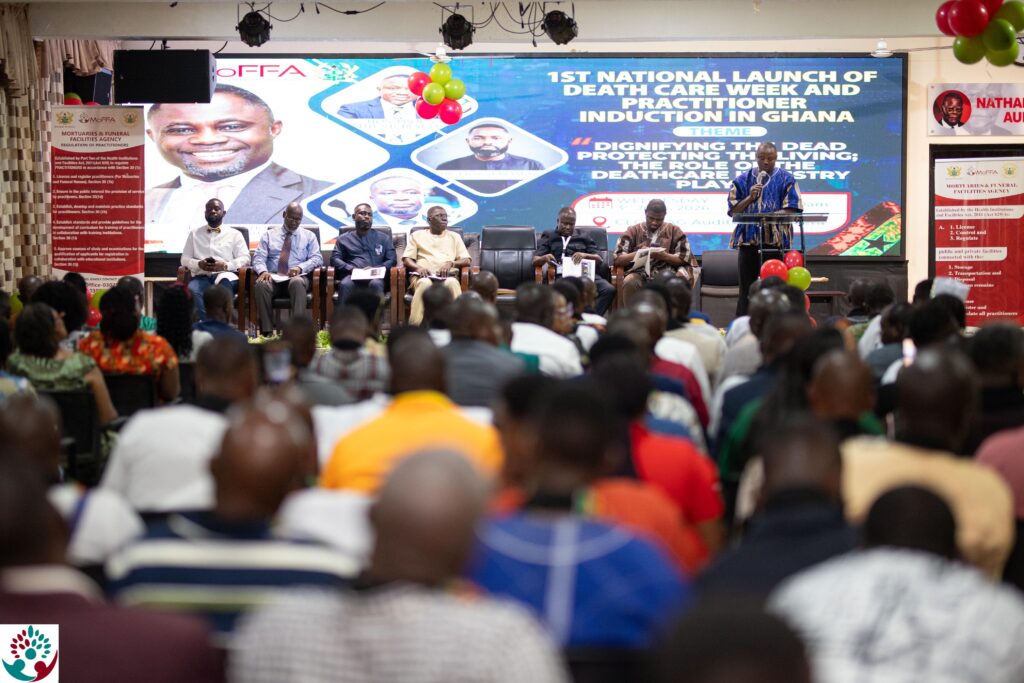
Dr Ernest Boakye, Board Chair of MoFFA, said the agency would establish standards, enforce compliance, and decentralise operations to regional and district levels.
He stressed the need for comprehensive guidelines on the management of human remains to prevent distressing incidents and safeguard public health.
GNA
Reporter: Agnes Ansah
Edited by Samuel Osei-Frempong