By James Amoh Junior, GNA
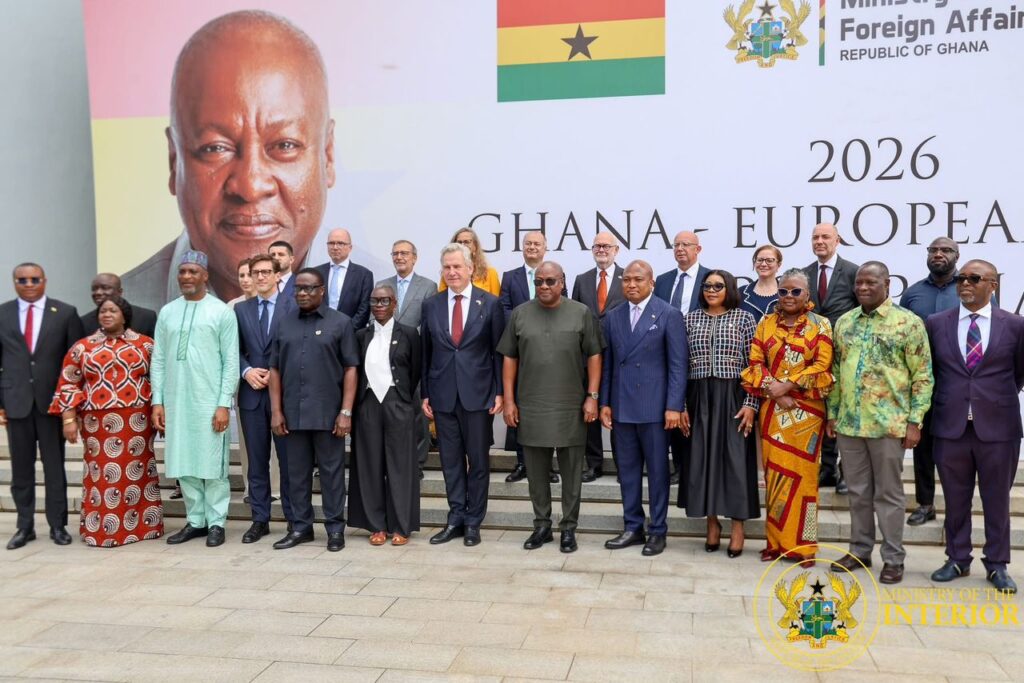
Accra, June 11, GNA – President John Dramani Mahama has called for a new phase in Ghana-European Union (EU) relations anchored on trade, investment, innovation and industrialisation and not traditional aid and development assistance.
He said while the Ghana-EU partnership had evolved significantly over the years, both sides must now work towards a more strategic and equitable relations that promote shared prosperity and sustainable development.
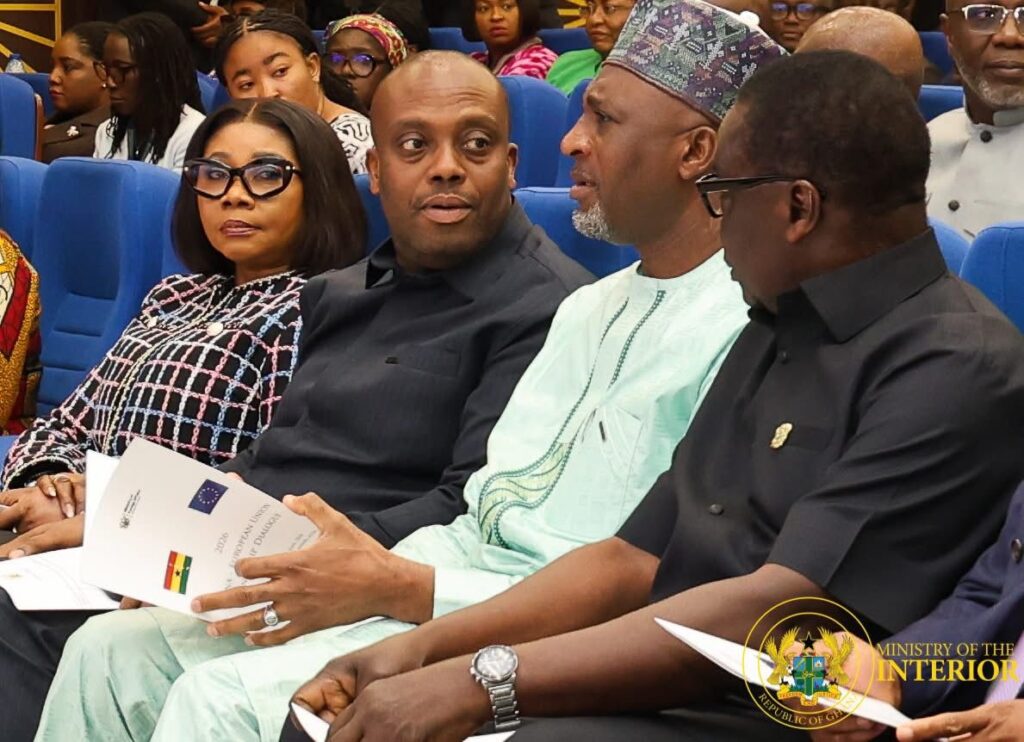
Speaking at the opening of the 2026 Ghana-EU Partnership Dialogue in Accra on Thursday, President Mahama said the changing global landscape, characterised by geopolitical tensions, economic uncertainty, climate change and technological disruption, made strong international partnerships more important than ever.
The Ghana-EU Partnership Dialogue serves as the principal platform for reviewing bilateral cooperation and setting priorities for future engagement.
This year’s dialogue focused on governance, trade and investment, security, climate action, migration, digital transformation and sustainable development as Ghana and the European Union seek to deepen cooperation amid evolving global challenges.
President Mahama stated: “Our objective should not be merely to maintain existing cooperation but to elevate it to a whole new level.”
The President said Ghana’s economic recovery was gaining momentum following one of the most difficult periods in recent history, citing declining inflation, improving foreign exchange reserves and renewed investor confidence as signs of resilience.
He said government was implementing reforms aimed at achieving fiscal stability, expanding social protection and promoting private sector-led growth.
President Mahama highlighted the Government’s flagship 24-hour economy initiative as a key driver of transformation, intended to boost productivity in agriculture, manufacturing, logistics, tourism, digital services and exports.
He invited European businesses to take advantage of opportunities in Ghana, describing the country as a strategic gateway to the African Continental Free Trade Area (AfCFTA), which provides access to a market of more than 1.4 billion people.
The President also called for stronger collaboration in critical minerals, renewable energy, digital technology and value-added manufacturing.
He stressed that Africa must move beyond exporting raw materials and instead focus on local processing and industrialisation.
On agriculture, President Mahama announced plans to introduce a new Cocoa Bill that would guarantee cocoa farmers 70 per cent of the world market price and reaffirmed government’s commitment to processing at least 50 per cent of Ghana’s cocoa beans locally.
The President praised the recently concluded Ghana-EU Security and Defence Partnership, describing it as an important step towards addressing violent extremism, organised crime and instability in the Sahel.
He noted, however, that security interventions must be accompanied by investments in education, jobs and social development to achieve lasting peace.
Mr Rune Skinnebach, the European Union Ambassador to Ghana, commended Ghana’s economic recovery and reaffirmed the EU’s commitment to supporting the country’s growth agenda.
He described the annual dialogue as a key platform for strengthening cooperation and noted that this year’s meeting coincided with the 50th anniversary of the EU’s presence in Ghana.
Mr Skinnebach said Ghana had exceeded several targets under the International Monetary Fund-supported Extended Credit Facility programme and demonstrated remarkable resilience despite recent economic challenges.
He said through the EU’s Global Gateway strategy, the bloc stood ready to support strategic infrastructure and industrial projects capable of creating jobs and accelerating sustainable economic growth.
The Ambassador, however, urged Ghana to address persistent challenges affecting the investment climate, including delays in permit acquisition, land registration, customs clearance and port operations.
He also expressed concerns about the recently introduced e-visa fees for non-African travellers, arguing that they could affect tourism and business travel.
Mr Skinnebach highlighted the significance of the Ghana-EU Security and Defence Partnership signed earlier this year, describing it as the first such agreement between the EU and an African country.
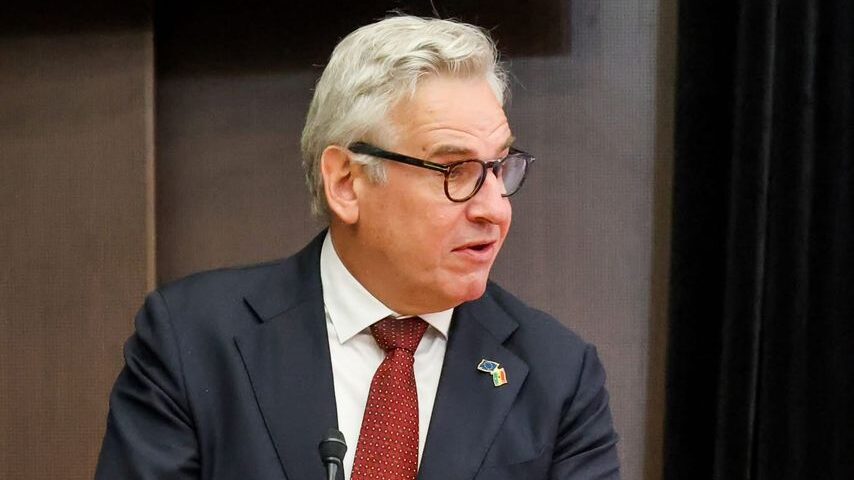
He said the partnership had already facilitated support worth more than €100 million in equipment, training and programmes aimed at preventing the spill-over of violent extremism from the Sahel into Ghana and the wider region.
The Ambassador reaffirmed the EU’s readiness to engage Ghana on issues related to reparatory justice and the legacy of slavery following the adoption of a United Nations resolution championed by Ghana.
For his part, Mr Samuel Okudzeto Ablakwa, Minister of Foreign Affairs, described Ghana-EU relations as being at an “all-time high” and praised President Mahama’s personal commitment to strengthening the partnership.
He said Ghana had achieved several historic milestones during the period under review, including becoming the first African country to formalise a security and defence partnership with the EU and the first in Africa to secure the Forest Law Enforcement, Governance and Trade (FLEGT) licensing certification for sustainable timber exports.
Mr Ablakwa said trade between Ghana and the EU had increased by more than US$1 billion over the past year, reinforcing the bloc’s position as one of Ghana’s most important economic partners.
He also highlighted growing cooperation between Ghana and several European countries on reparatory justice, including commitments to the return of cultural artefacts and support for initiatives addressing the legacy of slavery.
GNA
Edited by George-Ramsey Benamba
June 11, 2026
Reporter: James Amoh Junior
Email: [email protected]