Accra, June 2, GNA – Judges have been urged to ensure that the quality of justice they dispense and the soundness of their decisions shape public confidence in Ghana’s constitutional system.
Justice I.O. Tanko Amadu, a Justice of the Supreme Court, said every ruling and act of judicial conduct either strengthened or eroded public trust in the judiciary.
“Independence and integrity are not ideals to be admired from a distance. They are lived realities expressed in daily courtrooms across the country, and you are the custodians,” he said.
Justice Amadu said this at the opening of a two-day training on the Rule of Law and Independence of the Judiciary for 20 selected High Court, Circuit Court judges and Magistrates in Accra on Monday.
The training is spearheaded by the Scuola Superiore Sant’Anna of Pisa, Italy, in partnership with Ghana’s Ministry of Justice and the Judicial Training Institute (JTI), with support from the Italian Ministry of Foreign Affairs and International Cooperation.
Participants will examine the constitutional foundations of the rule of law, the role of the judiciary in safeguarding constitutional order, and systems that guarantee judicial independence at both institutional and individual levels.
Justice Amadu, who is also a Director of the JTI, said the rule of law remained the bedrock of public confidence and governance.
It ensured that power was exercised according to law, rights were protected without fear or favour, and justice was administered impartially, he said.
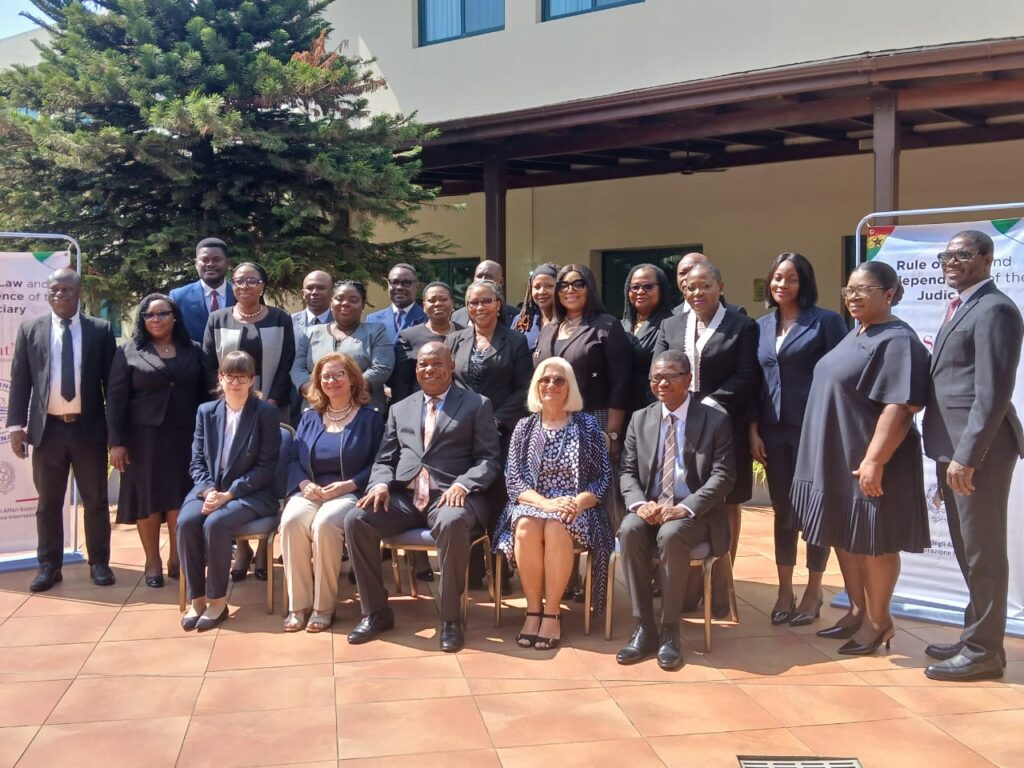
Justice Amidu noted that Ghana’s 1992 Constitution established the rule of law as a foundational principle and positioned the judiciary as a co-equal arm of government responsible for interpreting and enforcing the Constitution.
On judicial independence, Justice Amadu said it was a constitutional guarantee owed to the people and not a privilege for judges.
“It protects litigants, minorities and the state itself by ensuring that judicial decisions are guided solely by law and conscience, free from external pressure or improper influence,” he said.
“A judge who is not free cannot deliver justice.”
Justice Amadu noted that judicial independence must go hand in hand with accountability, including transparent recruitment, performance evaluation, discipline, and continuous judicial education.
The training would also consider standards of recruitment, ethics, performance assessment, and international human rights systems, supported by case studies and disciplinary procedures.
He said the programme was designed as a platform for exchange, allowing participants to learn from different judicial systems while remaining faithful to Ghana’s constitutional tradition.
Justice Amadu said despite differences across jurisdictions, the courts faced common challenges such as rising caseloads, increasing public scrutiny, and attempts to influence judicial outcomes.
He noted that continued judicial education reflected a confident judiciary committed to excellence on the bench.
Justice Amadu said cooperation between Ghana and Italy in the justice sector strengthened democratic governance and the protection of human rights, adding: “The rule of law is not confined to borders; it is a common aspiration of all free people.”
Madam Laura Ranalli, the Italian Ambassador to Ghana, said the separation of powers was fundamental to Italy’s Constitution.
She said collaboration in judicial education remained an important tool in strengthening cooperation between Ghana and Italy.
GNA
Reporter: Joyce Danso