By Francis Ntow
Accra, June 25, GNA – Experts have called for Ghana to adopt broader development indicators beyond Gross Domestic Product (GDP) to better capture citizens’ quality of life and inclusive growth.
They said reliance on GDP alone failed to reflect informal economic activity, unpaid work, inequality and environmental conditions that shaped real living standards.
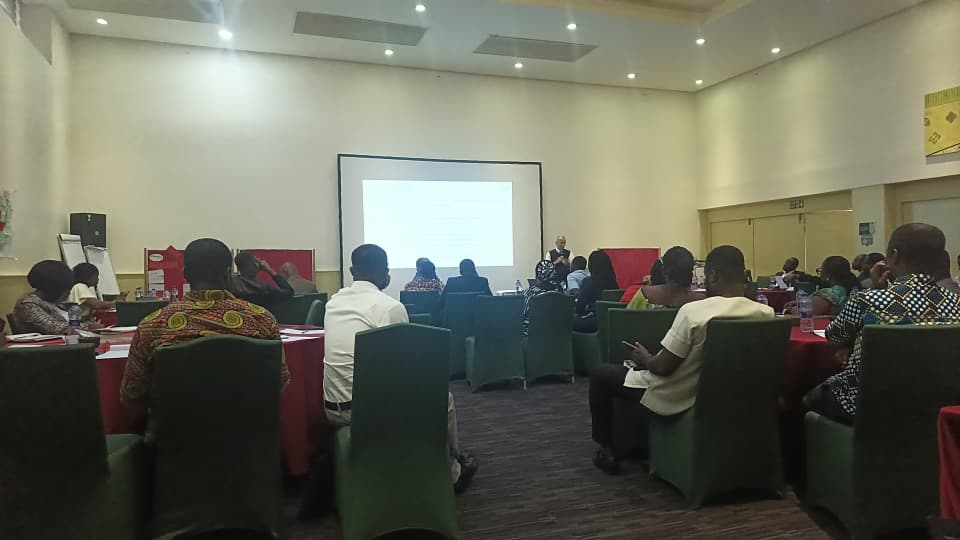
The experts made the call at a convening on “Measuring What Matters in Ghana: Inclusive and Sustainable Growth Beyond GDP,” held in Accra on Wednesday.
The event was organised through a partnership between the International Institute for Sustainable Development (IISD), the Ghana Statistical Service (GSS) and the University of Ghana, bringing together policymakers, academics and development practitioners.
Professor László Pintér, Senior Fellow at IISD, said moving beyond GDP would help prevent development pathways that imposed high environmental costs or deepened social inequality.
“By moving beyond GDP, we will not end up with development that creates very high environmental risk and costs, or lead to social inequity, because we have a more wholesome metric that pays attention to those dimensions,” he said.
Prof. Pintér said IISD would support Ghana in strengthening methodological capacity to measure indicators excluded from GDP, including unpaid household work and the state of natural ecosystems.
Dr Adu Sarkodie, Senior Lecturer at the Department of Economics, University of Ghana, said GDP figures often do not reflect the lived realities of citizens.
He said although household consumption accounts for more than 70 per cent of Ghana’s GDP, it does not necessarily translate into improved living conditions.
“If the Finance Minister announces a GDP of about US$130 billion, the person on the street wants to ask questions about their life! Am I able to afford? Am I able to get to school,” he said.
Dr. Sarkodie said quality-of-life indicators must complement traditional economic measures to make policy more responsive, citing Norway, Luxembourg, Qatar, Mauritius and Cabo Verde as examples Ghana could learn from.
He, however, commended Ghana’s social intervention programmes, including the Free Senior High School policy, the National Health Insurance Scheme, the Livelihood Empowerment Against Poverty programme, school feeding initiatives and capitation grants.
Dr Sarkodie called on the Ghana Statistical Service to expand its publication of quality-of-life data and urged educational institutions to update curricula to reflect evolving development measurement approaches.
Prof. Austin Dziwornu Ablo of the University of Ghana’s Department of Geography said GDP failed to capture the scale of informal sector activity, which remained central to Ghana’s economy.
“Sectors such as second-hand clothing, street vending, and other informal enterprises employ large numbers of people yet are invisible in national accounts. When we move beyond GDP, we begin to account for all these sectors of the economy,” he said.
Prof. Ablo said beyond GDP indicators would also help address inequality, access to services, gender disparities and other social dimensions of development.
The workshop is expected to develop a roadmap for Ghana to adopt broader development metrics combining both quantitative and qualitative indicators, in line with global efforts supported by the United Nations High-Level Expert Group on Beyond GDP metrics.
GNA
Edited by Kenneth Sackey
Reporter: Francis Ntow