By Edward Acquah, GNA
Accra, June 9, GNA – Fairtrade Africa Network has launched a farmer-led cocoa farm rehabilitation programme aimed at restoring ageing farms, improving productivity and reducing pressure on forest reserves amid declining cocoa yields and falling producer prices in Ghana.
The initiative, launched during an EU Deforestation Regulation (EUDR) Farmer Sensitisation Durbar at Goaso, forms part of the Partnership for Deforestation-Free Cocoa Supply Chains in Ghana Project.
The project is funded by the International Climate Initiative (IKI) on behalf of Germany’s Federal Ministry for Economic Affairs and Climate Action (BMWK), in cooperation with the Federal Ministry for the Environment, Nature Conservation, Nuclear Safety and Consumer Protection.
Unlike conventional rehabilitation programmes that often require the complete replanting of farms, the new approach allows farmers to rehabilitate farms in phases while retaining some productive trees for continued income as newly planted seedlings mature.
The intervention seeks to rehabilitate 200 hectares of ageing and poorly managed cocoa farms in Suhum, Offinso, Goaso and Kukuom by 2027, while promoting sustainable production practices and preventing the expansion of cocoa cultivation into forest areas.
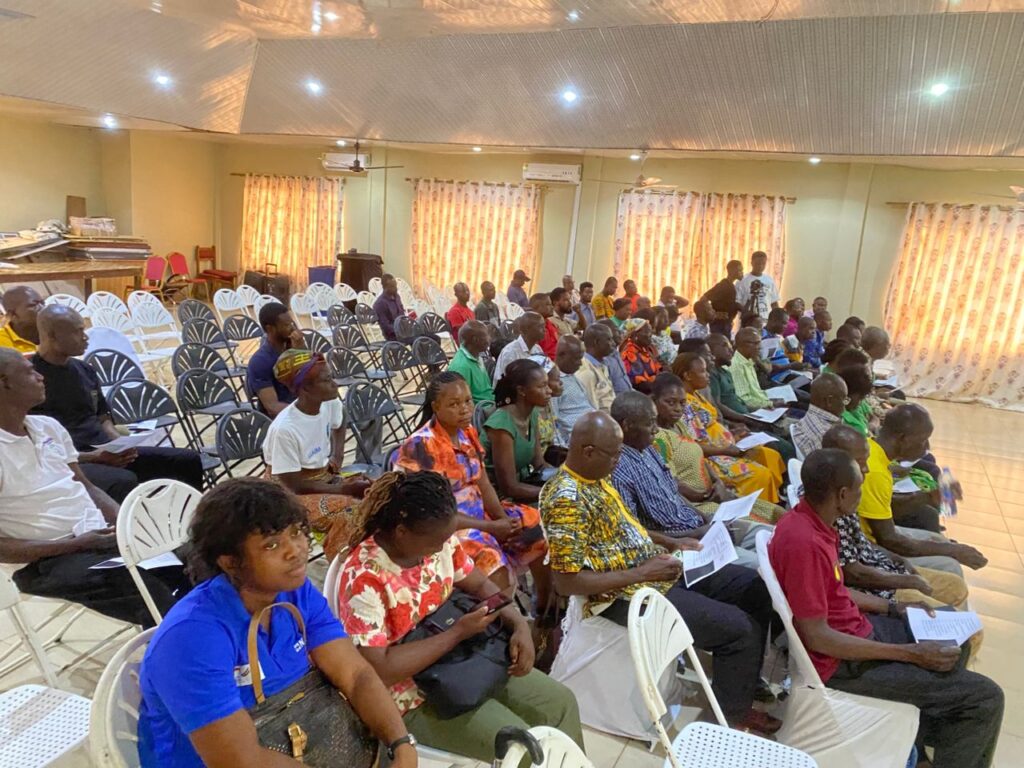
The programme comes at a time when Ghana’s cocoa sector is facing declining productivity due to ageing farms, diseases, climate-related challenges and illegal mining activities.
The difficulties have also been compounded by declining international cocoa prices.
In February this year, Government reduced the producer price of cocoa from GH¢51,660 to GH¢41,392 per tonne, equivalent to GH¢2,587 per bag, citing a sharp fall in global market prices.
Dr Philip Neri Zuobog, Programme Manager of the Partnership for Deforestation-Free Cocoa Supply Chains in Ghana Project at Fairtrade Africa, said low productivity remained one of the key drivers of deforestation in cocoa-growing areas.
“We observed that when farmers have low productivity, they are often inclined to expand into new production areas.
This programme is intended to help them maximise production within their existing farm holdings,” he said.
He explained that the project would rehabilitate more than 100 hectares this year, with the remaining hectares completed by 2027.
Dr Zuobog said the rehabilitated farms would serve as demonstration sites for more than 14,000 cocoa farmers to learn and replicate sustainable rehabilitation practices through peer-to-peer learning.
The durbar also sensitised farmers on the EUDR, Human Rights and Environmental Due Diligence (HREDD) requirements and emerging United Kingdom deforestation regulations, which are increasingly becoming prerequisites for access to premium international cocoa markets.
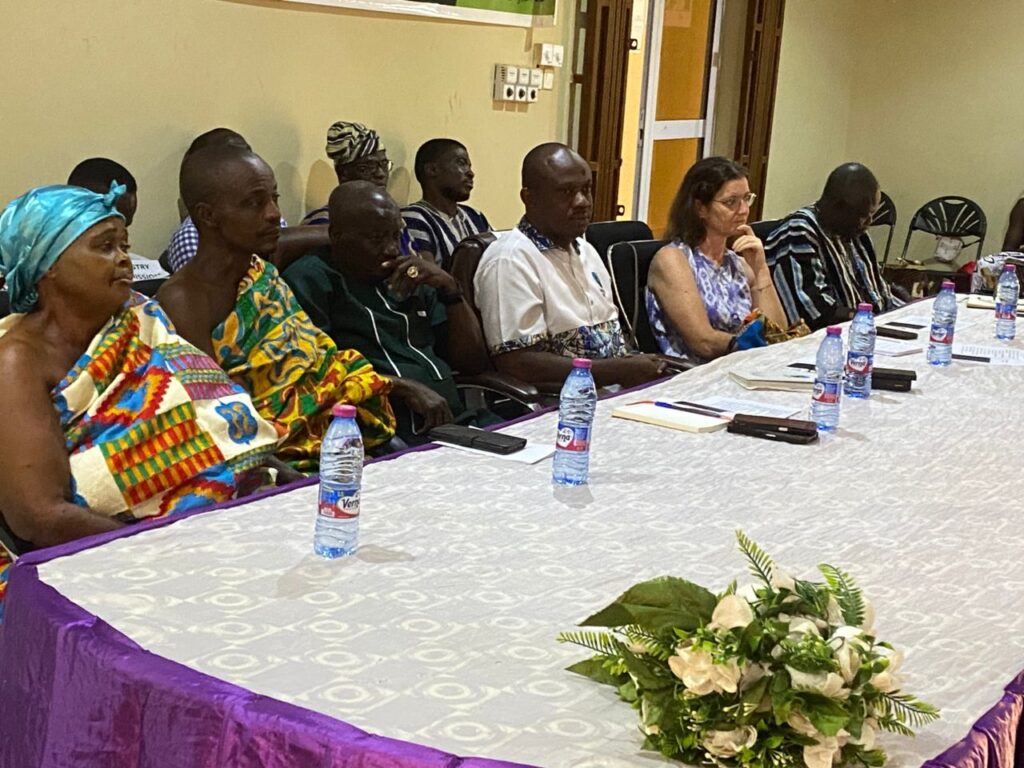
In attendance were key stakeholder organisations, including the European Forest Institute (EFI), GIZ, the International Cocoa Initiative (ICI), SOCODEVI, district heads of the Cocoa Board Seed Production Division, the Cocoa Health and Extension Division, the Forestry Commission, the Department of Food and Agriculture, and representatives of the Goaso Traditional Council.
Dr Zuobog urged cocoa farmers not to abandon their farms in spite of the ongoing challenges.
“Cocoa is the green gold. It is not about how large your farm is, but how well it is managed,” he said, adding: “If your farm is old, the time to restore it to productivity is now.”
He also encouraged farmers to adopt sustainable farm management practices and mobilise younger people to provide labour services to ageing farmers to improve productivity and safeguard their livelihoods.
Addressing participants, Mr Edward Akapire, Fairtrade Africa’s Head of Region for West Africa, said the organisation was strategically focused on promoting sustainable and resilient farming systems that empower producer organisations to strengthen their governance structures and improve access to markets.
He urged farmers to embrace sustainable production practices to enhance productivity and secure long-term livelihoods.
Mr Akapire also called on the leadership of the cooperative and traditional authorities to support efforts to curb illegal mining, which continued to threaten cocoa production in the country.
GNA
Edited by George-Ramsey Benamba
Reporter: Edward Acquah