A Feature by Lydia Kukua Asamoah
Accra, May 31, GNA – Across Northern Ghana, where farming depends heavily on the timing and reliability of rainfall, a quiet but significant innovation is taking shape—one that could transform how smallholder farmers manage climate risk.
The TEMBO Africa Project is piloting a Germination Index Insurance (GII) product designed to protect farmers against one of the most critical and uncertain phases of crop production: seed germination.
In many farming communities, inconsistent early-season rains often lead to poor germination, forcing farmers to replant – —an additional cost that many can scarcely afford. The GII product seeks to address this challenge through a data-driven insurance solution that removes the need for traditional loss assessments.
Unlike conventional agricultural insurance, which requires physical verification of losses, the GII model relies on objective rainfall data. Using predefined thresholds, payouts are triggered automatically when rainfall during the germination period falls below required levels.
To introduce this concept, the project, being implemented by the Ghana Agricultural Insurance Pool (GAIP) under the Ghana Insurers Association (GIA) together with the Delft University of Technology (TU Delft) in the Netherlands, the University for Development Studies in Tamale, the Trans-African Hydro-Meteorological Observatory (TAHMO), and other partners in Europe and Africa including Farmerline Ghana and GMet, including the KTH Royal Institute of Technology (KTH), Volta Basin Authority (VBA) and the University of Energy and Natural Resources (UENR), Sunyani, began with extensive community sensitisation across selected districts.
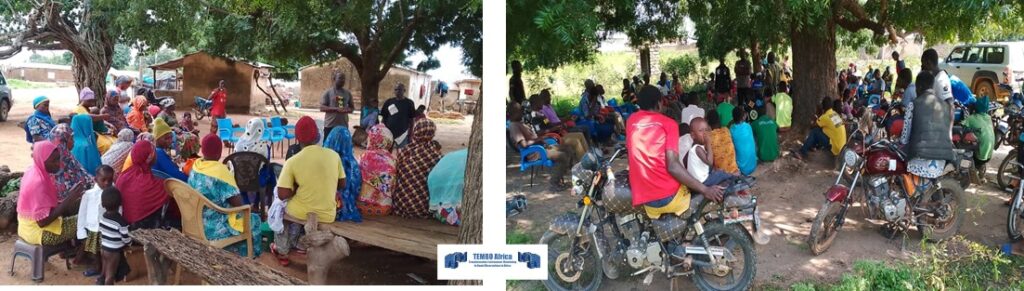
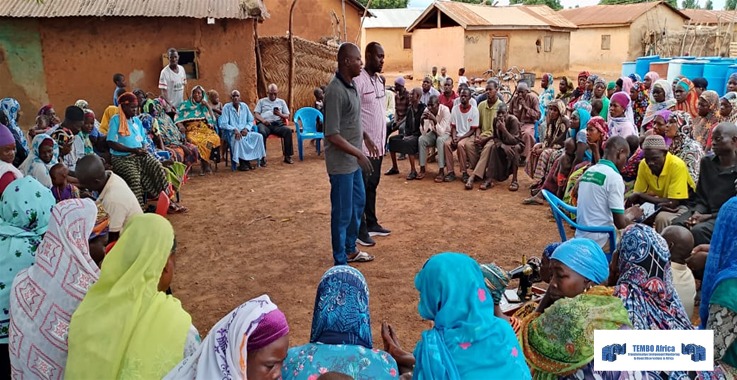
Farmers were engaged through local meetings, where they were taken through how index insurance works, its advantages, and its limitations.
These interactions were not only about education but also about trust-building—an essential factor in insurance adoption.
In total, over 2,0001 farmers across 29 communities participated in the sensitisation programme, gaining insight into how climate data can be translated into financial protection.
The pilot then progressed to implementation, targeting regions most vulnerable to rainfall variability, including the Upper West, Northern, Savannah, and Northeast regions.
However, due to early rains in some communities, many farmers planted ahead of the enrolment period, highlighting a key operational challenge. So only about 10 per cent of the
As a result, only 160 farmers across five communities in Saboba, Sissala East, and Sissala West districts were enrolled in the first pilot.
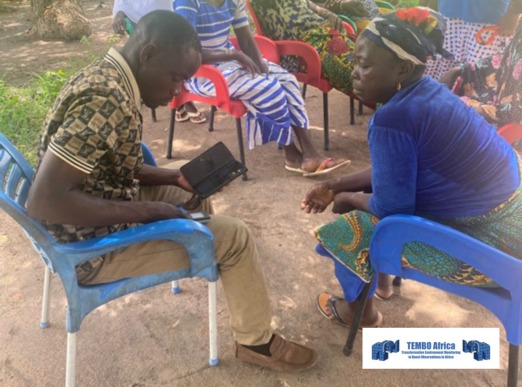
Despite this setback, the implementation introduced important technological innovations. The Farmerline MERGDATA mobile application platform was used to digitally register farmers, capturing demographic details, farm locations, and production characteristics. This digital approach enhanced data accuracy while demonstrating the potential for scaling in rural environments.
At the core of the GII product is a sophisticated system that integrates multiple rainfall data sources, including Automatic Weather Stations from GMet and TAHMO, TAMSAT, and Trans-African Hydro-Meteorological Observatory (TAHMO) satellite datasets. These data streams were used to monitor rainfall accumulation during the first 21 to 25 days after planting—the period most crucial for seed germination.
The system, developed by the GAIP under the TEMBO Africa partnership, continuously analysed rainfall levels amounts against established thresholds to determine whether insurance payouts were warranted.
Dr Kingsley Kwesi Kwabahson Chief Executive Officer (CEO) Ghana Insurers Association and the Acting General Manager of Ghana Agricultural Insurance Pool, explained to the Ghana News Agency that the GII was developed with the aim to piloting it and upscaling it to other farmers all over the country, stressing its importance as a mitigating measure against the impact of climate change on farming.
“The germination index insurance works like this: you buy the product, and sow the seed, between when the seed geminate, if within 21 days the seed does not germinate then the product kicks in, then it means you have a challenge so we have to pay the premium. It could either be because they did not have the rains or there was an excessive rains.”
But if it geminates within the period of 21 days then we move on, Dr Kwabahson added.
He said prior to planting the seed, risk assessment is done and farmers among others, are educated on the quality of seed they should buy and plant.
According to Dr Kwabahson, about 10 insurance companies under a consortium, including, Unique Insurance, Enterprise Insurance, Hollard Insurance, Vanguard Insurance, Star Assurance, Prime Insurance and Sanlam Alliance Insurance have come together to underwrite the risk- pay the claims to farmers.
He said to validate the effectiveness of the model, a comprehensive monitoring and evaluation framework was implemented. This included field observations, farmer interviews, and focus group discussions to assess both technical performance and farmer perceptions.
The project implementers said the results were encouraging as analysis revealed a strong correlation – —over 95 per cent – —between the rainfall index and actual germination outcomes on farms.
This high level of accuracy indicates minimal “basis risk,” a common concern in index insurance where measured data may not reflect real conditions on the ground.
Equally important were farmers’ responses. Many participants demonstrated a growing understanding of the product and expressed willingness to participate in future cycles, signalling increasing trust in the system.
Interestingly, no payouts were triggered during the pilot phase, as rainfall conditions remained generally favourable, and also because farmers were taught to plant right.
However, this outcome does not diminish the success of the pilot; rather, it reinforces the functionality and transparency of the system under real conditions.
The experience also provided important lessons. The mismatch between rainfall onset and enrolment timing underscored the need for better alignment with local agricultural calendars.
It also highlighted the importance of incorporating seasonal climate forecasts into planning and designing more flexible enrolment processes.
Looking ahead, the project recommends intensified farmer education, expansion of weather data infrastructure, and stronger collaboration among stakeholders to support scaling.
The Germination Index Insurance pilot under the TEMBO Africa Project demonstrates how the integration of climate science, digital technology, and financial innovation can provide practical solutions to the challenges faced by smallholder farmers.
As climate variability continues to threaten agricultural livelihoods, such innovations could play a critical roles in building resilience – —ensuring that farmers are better equipped not only to withstand shocks, but also to plan confidently for the future.
Dr Kwabahson emphasised on the need for farmers to embrace the GII, and all other agricultural insurance being rolled out in the country as a means of adapting and mitigating the impact of climate change in the phase of changing weather patterns.
Food security is a national risk issue and the role and the importance of agriculture in our economy is crucial, hence the need of agricultural insurance to cushion farmers in case of any eventualities, Dr Kwabahson added.
GNA
Edited by Benjamin Mensah
Reporter: Lydia Kukua Asamoah