By James Amoh Junior
Accra, June 20, GNA – The Kofi Annan International Peacekeeping Training Centre (KAIPTC) has called for stronger partnerships among governments, development partners, academia, civil society organisations and security institutions.
This, they believe will address the increasingly complex peace and security challenges confronting West Africa and the broader African continent.
The Centre said emerging threats such as violent extremism, unconstitutional changes of government, climate-induced insecurity, misinformation and disinformation, as well as the security implications of technological advancements, required coordinated responses grounded in evidence-based research and innovation.
Brigadier General Zibrim Ayorrogo, Deputy Commandant of KAIPTC, made the call at a Partners’ Meeting organised by the Centre’s newly established Department of Applied Research and Innovation in Peace and Security (DARIPS) in Accra.
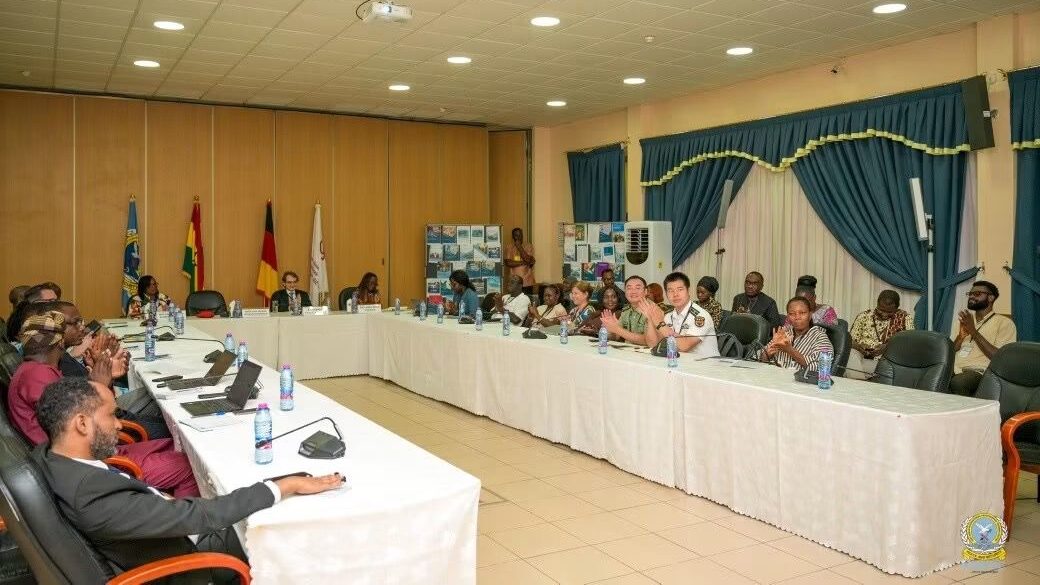
The meeting brought together representatives of diplomatic missions, development partners, state institutions, civil society organisations, researchers and peace and security practitioners to explore opportunities for collaboration and strengthen engagement on emerging security concerns.
Addressing participants, Brig. Gen. Ayorrogo said the meeting marked a significant milestone in the evolution of the Centre as it sought to reposition itself to respond to the changing peace and security landscape across Africa.
He explained that under KAIPTC’s Strategic Plan for 2024-2028, the former Faculty of Academic Affairs and Research had been restructured into two separate entities, a standalone Academic Faculty and a dedicated research department known as the Department of Applied Research and Innovation in Peace and Security.
According to him, the move was intended to deepen the Centre’s research footprint, enhance the policy relevance of its work and ensure that research outputs directly informed decision-making processes at national, regional and continental levels.
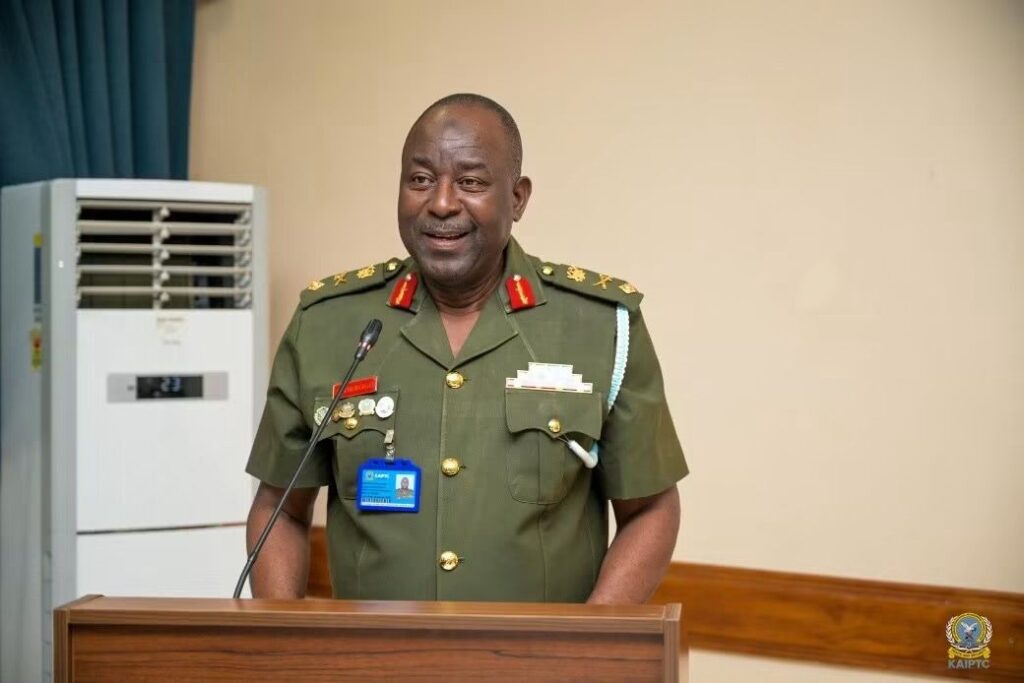
“It is against this backdrop that KAIPTC’s role as an ECOWAS Centre of Excellence takes on renewed significance,” Brig. Gen. Ayorrogo said.
He noted that West Africa was currently contending with a complex and evolving threat environment, including the continued expansion of violent extremism from the Sahel towards coastal states, governance challenges arising from unconstitutional changes of government, and deepening humanitarian pressures.
“These are not abstract concerns confined to security briefings; they are realities that affect the lives and livelihoods of millions of our people and they call for responses that are as agile and as well-grounded as the threats themselves,” he said.
The Deputy Commandant stressed that while training remained a critical component of peace and security interventions, it was no longer sufficient on its own.
“Training alone, however well delivered, is no longer sufficient. It must be matched by rigorous, applied research that translates lived realities on the ground into evidence that can inform policy and guide decision-making at the national and regional levels,” he stated.
The establishment of DARIPS forms part of KAIPTC’s efforts to strengthen its role as a leading centre of excellence in peace and security research, training and policy engagement in Africa.
The newly reconfigured department hosts four programmes designed to respond to evolving peace and security dynamics. These are Conflict, Governance and Leadership; Technology and Security; Climate Security and Migration; and Peace Operations, Stabilisation and Peacebuilding.
Mr. Jannis Neubert, Representative of the German Embassy in Ghana, commended KAIPTC for the decision to establish a standalone research department, describing it as a strategic step towards strengthening evidence-based responses to regional security challenges.
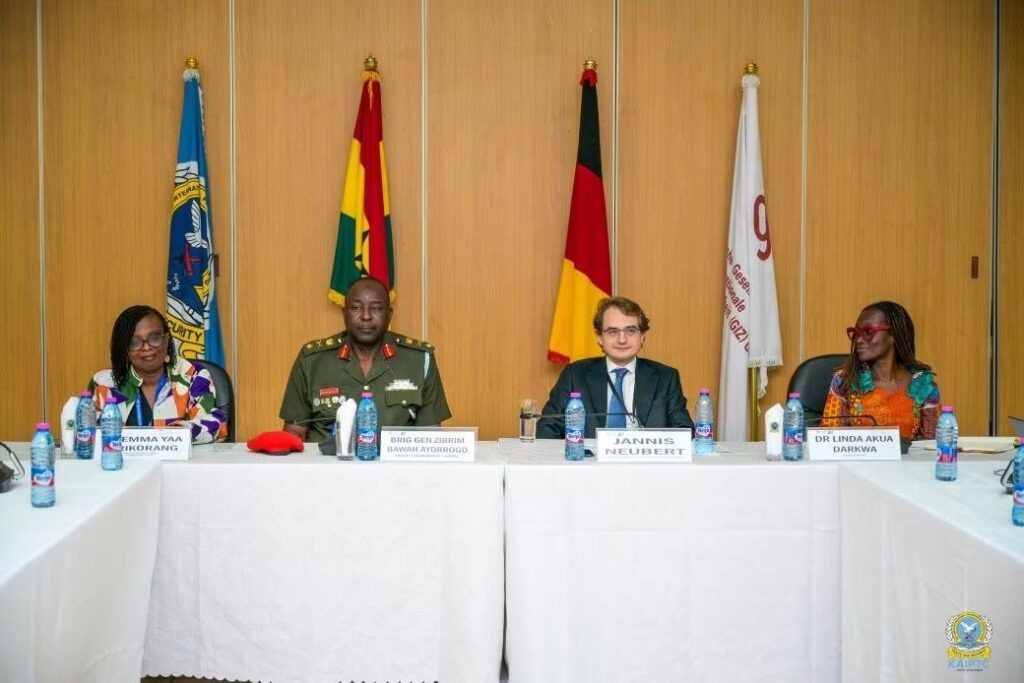
He said Germany had, through its longstanding partnership with the Centre, witnessed KAIPTC’s commitment to positioning research as the foundation of its work in training, academic programmes and initiatives relating to women, youth, peace and security.
“It is very commendable that under the current strategic direction, the Centre has taken steps to decouple the research department in order to stand as a single department,” he said.
Mr. Neubert expressed confidence that DARIPS would develop into an internationally recognised hub for cutting-edge and policy-relevant research capable of influencing decision-making within the region and beyond.
He observed that the fluid nature of contemporary peace and security issues made it imperative for policy interventions to be informed by realities on the ground and supported by credible research findings.
According to him, the Department’s decision to engage partners in identifying research priorities would help ensure that policy and practice interventions remained responsive to emerging challenges.
“Such engagements from our perspective are important to ensure policy and practice interventions are grounded on research outcomes,” he said.
The German diplomat highlighted the Department’s collaborative approach, which had seen it work closely with institutions such as the National Defence College, the ECOWAS Commission and other partners on joint research initiatives.
Dr Emma Birikorang, Director of DARIPS, said the creation of the department was a deliberate response to the rapidly changing peace and security environment facing West Africa.
She explained that the restructuring was not merely administrative but aimed at enabling the Centre to generate timely and policy-relevant research capable of responding to emerging threats.
Dr Birikorang noted that peace and security challenges ranging from violent extremism to governance pressures and humanitarian concerns were evolving more rapidly than traditional research and training cycles had been able to accommodate.
She therefore called on partners to engage the Department and contribute to shaping its research agenda.
“I encourage you as our partners to challenge us, point us to areas that are already underway, areas that are of interest to you, so that we can collectively address the peace and security challenges that we face in our region,” she said.
The meeting featured thematic discussions aligned with the Department’s four programme areas, enabling participants to identify priority issues, map ongoing initiatives and expertise, explore opportunities for collaboration and highlight critical gaps requiring attention.
It was supported by the German Government through the Deutsche Gesellschaft für Internationale Zusammenarbeit (GIZ).
GNA
Edited by George-Ramsey Benamba
June 20, 2026
Reporter: James Amoh Junior
Email: [email protected]