By Yussif Ibrahim
Kumasi, May 19, GNA – Mr. Rune Skinnebach, the European Union (EU) Ambassador to Ghana, has underscored the critical role of skills development in attracting investments and driving Ghana’s economic growth.
He said improving the skills base of the workforce remained essential for positioning Ghana as an attractive destination for investment across various sectors of the economy.
Speaking during a lecture at the Kwame Nkrumah University of Science and Technology (KNUST) as part of the EU-Ghana Pact for Skills Development Programme, organised by the KNUST Career Services Centre, Mr. Skinnebach noted that investors were more likely to invest in countries with highly skilled human resources.
“Skills is a major factor when it comes to attracting investments in all sectors. The better skilled labour available, the more likely the investment,” he stated.
The Ambassador stressed the need for systematic review of educational curricula to align academic training with the developmental needs of the country and the demands of the job market.
“I think all curricula need to be reviewed systematically to respond to the needs of the country,” he noted.
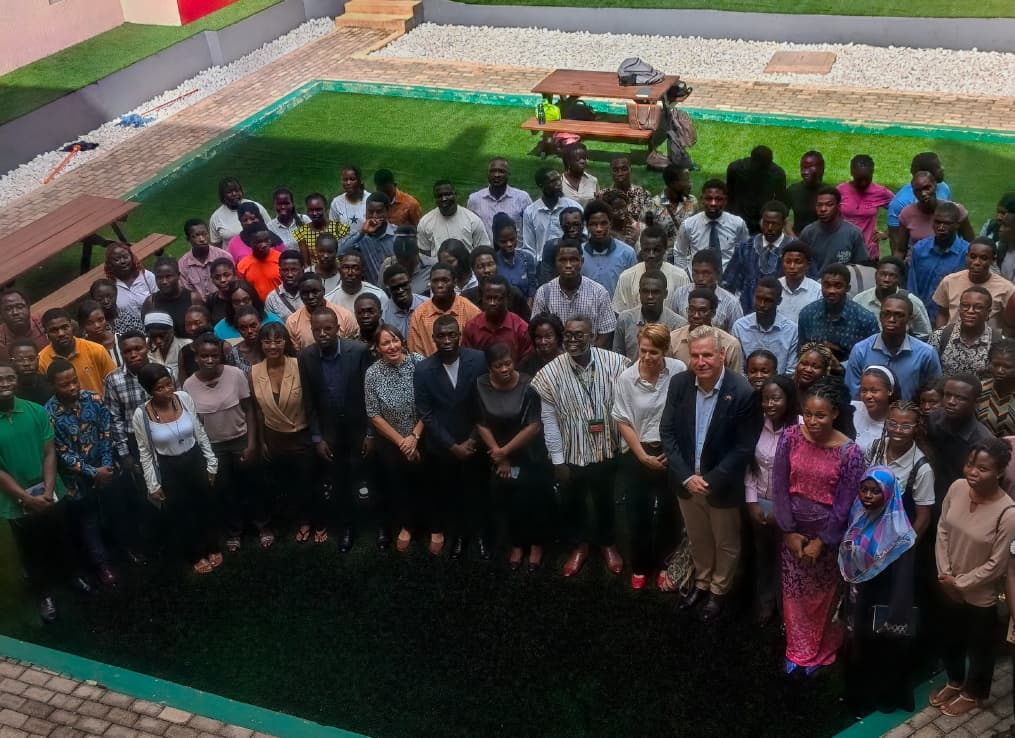
Mr. Skinnebach, however, cautioned against focusing exclusively on programmes perceived to be commercially profitable, saying disciplines that encouraged critical thinking and creativity were equally important for national development.
“Philosophy is not really profitable, but it is important to have people who can think outside the box, who can be creative and do other things,” he explained.
Touching on the growing trend of young Ghanaians seeking opportunities abroad, the Ambassador said the desire to travel and study overseas should not necessarily be viewed negatively, as many young people returned home with valuable skills and experiences that contributed to national development.
According to him, the EU annually offered scholarships to about 1,000 Ghanaians to study in Europe, with the majority returning to Ghana to apply the expertise acquired abroad towards the country’s progress.
“Young people by definition want new adventures,” he said, adding that international exposure could help equip the youth with competencies needed to support Ghana’s development agenda.
Mr. Skinnebach further encouraged students to pursue their fields of study seriously, indicating that the ability to acquire complex skills in one discipline could easily be transferred to other sectors of work.
“What you learn while studying is useful, but it is not necessarily what you apply when you start working,” he said.
The EU-Ghana Pact for Skills Development Programme seeks to strengthen skills training and improve employability among the youth to support sustainable economic transformation.
GNA
Edited by Benjamin Mensah
Reporter: Yussif Ibrahim
Email: [email protected]