A GNA feature by Christiana Afua Nyarko
Accra, May 11, GNA – The Ghana Armed Forces (GAF) has long been recognised for its primary constitutional responsibility of safeguarding Ghana’s territorial integrity and protecting the country from external threats.
Yet beyond its traditional national defence mandate, the military has steadily evolved into a powerful force for national development.
From engineering projects to humanitarian interventions, civic engagement, and global peace support operations, Ghana’s military has become an indispensable partner in socio-economic transformation. One of its most visible contributions centres on infrastructural development.
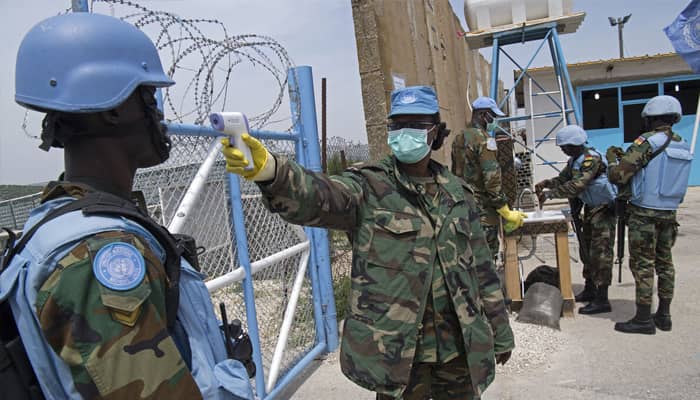
Colonial Origins: From the Gold Coast Constabulary to the Ghana Regiment
The roots of the modern Ghana Armed Forces trace back to the colonial era. In 1879, the British colonial administration established the Gold Coast Constabulary, a paramilitary force initially tasked with internal security and frontier control. By 1901, it was reorganised into the Gold Coast Regiment of the Royal West African Frontier Force (RWAFF).
Recruited largely from northern Ghana, the regiment served in both World Wars under British command. Gold Coast soldiers fought in East Africa, Burma, and Ethiopia, earning a reputation for discipline and resilience.
After WWII, the regiment returned to focus on internal security and infrastructure support in the colony.
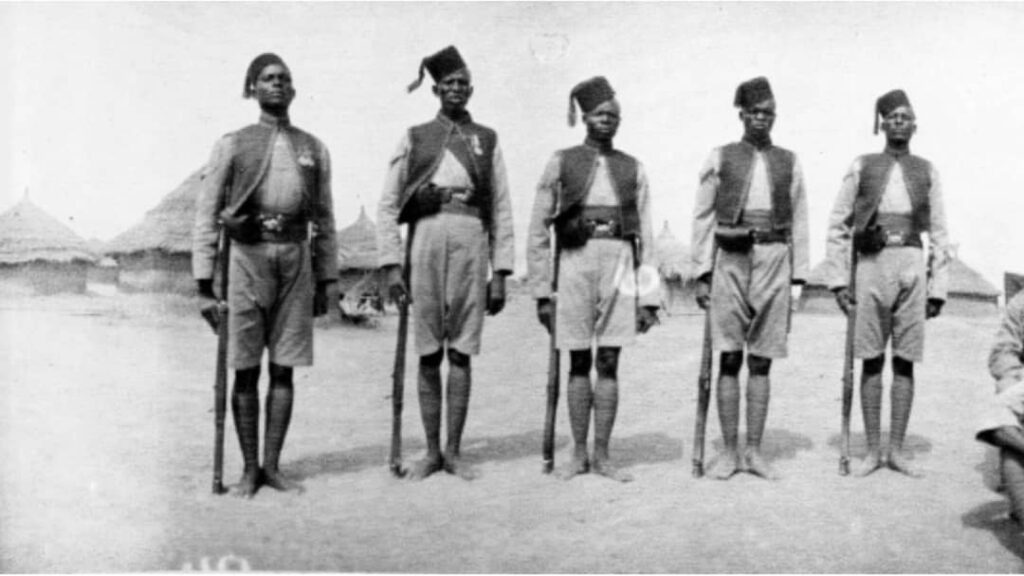
At independence in 1957, the Gold Coast Regiment was renamed the Ghana Regiment, forming the core of the newly established Ghana Army.
Dr Kwame Nkrumah expanded its role beyond defence, positioning the military as an instrument of nation-building. That legacy of “soldiers as builders” has persisted through successive governments.
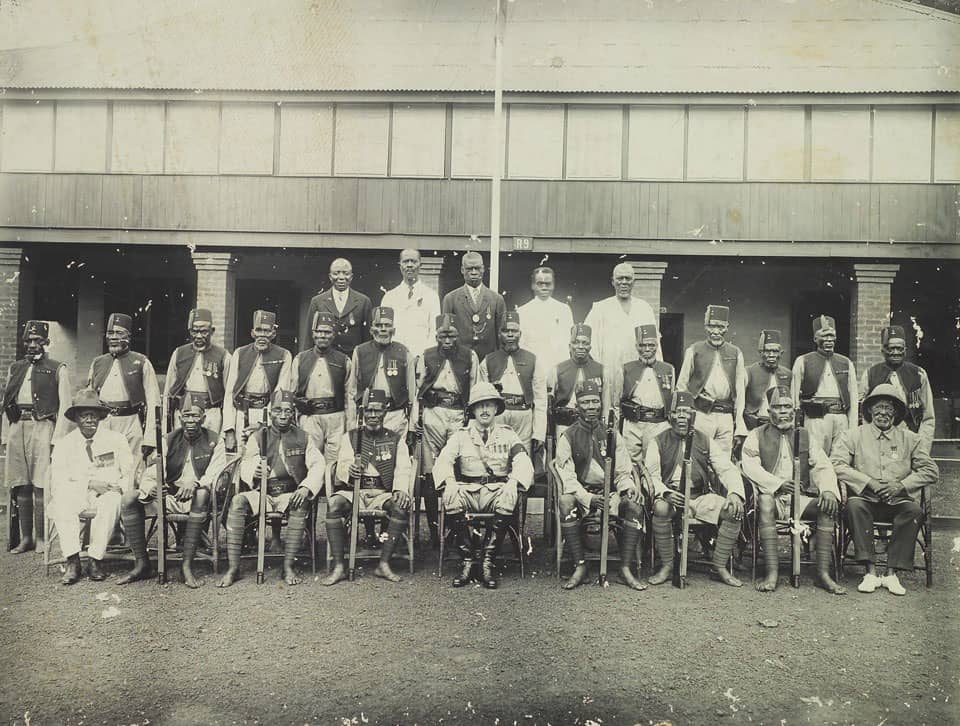
A Complex Legacy: Coups and Civil-Military Relations
The relationship between the military and Ghanaian civilians has not been linear. Between 1966 and 1981, Ghana experienced four military coups: the overthrow of Nkrumah in 1966, the 1972 coup against Busia government, the 1979 uprising by the Armed Forces Revolutionary Council, and the 1981 coup that brought the Provisional National Defence Council to power.
During these periods, some civilians reported abuses, including arbitrary arrests, detentions without trial, seizure of property, and physical assault, particularly during curfews and political crackdowns.
The 1979 and 1981 eras saw the execution of former heads of state and senior officers, events that remain sensitive in public memory. Civil society reports and the 2004 National Reconciliation Commission documented cases of human rights violations attributed to military actors in those years.
For many Ghanaians who lived through those periods, the experience left a legacy of distrust toward military intervention in politics. The phrase “soldier come, soldier go” entered common use to express wariness of instability.
At the same time, other citizens recall that some interventions were initially welcomed as responses to economic mismanagement and corruption, reflecting the mixed perceptions that persist today.
Since Ghana’s return to constitutional rule in 1993, the GAF has operated under civilian oversight and has publicly committed to upholding human rights and the constitution. Successive governments and military leadership have emphasized professionalization, training in civil-military relations, and accountability mechanisms to prevent a recurrence of past abuses.
From Independence to Infrastructure: A Historical Role
In the past and present, military engineering units have repeatedly assisted government in constructing roads, bridges, and public facilities, particularly in hard-to-reach communities. Typical examples include the government’s 2025 announcement of plans for the military to take a leading role in reconstruction of the strategic Awaso–Takoradi bauxite corridor and supporting road works on the Accra–Kumasi expressway.
The move showcases the military’s engineering expertise in large-scale national infrastructural projects. Earlier initiatives saw the military’s engineering regiments collaborating with the Ministry of Roads and Highways to build and rehabilitate thousands of steel bridges across rural areas to improve transportation and economic activity.
Strategic Response in Times of Crisis
Beyond building infrastructure, GAF has consistently served as a reliable force during disasters and emergencies. Over the decades, military personnel have been deployed to rescue stranded residents during floods in northern Ghana, assist in evacuation efforts, and restore damaged access routes.
The armed forces have also supported national emergency responses during industrial accidents such as the 2017 gas explosion at Atomic Junction in Accra and the 2022 Appiatse explosion in the Western Region, where military engineers assisted in medical evacuation and reconstruction planning.
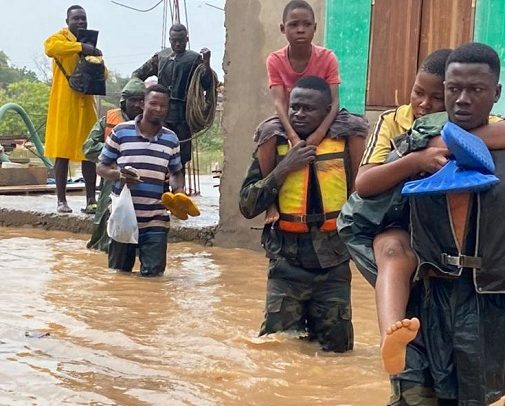
Strategically, this dual-use capability reflects a deliberate policy choice. With civilian disaster agencies often stretched, maintaining an engineering-capable military provides Ghana with rapid-response capacity without duplicating expensive civilian infrastructure.
Former UN Secretary-General Kofi Annan once remarked that disciplined national militaries play a “critical role in humanitarian response when civilian institutions are overwhelmed.”
Civic Engagement, Peacekeeping, and Looking Ahead
Equally important is the military’s role in civic engagement and community development. Across Ghana, military units frequently support the construction of schools, clinics, and community facilities while organising medical outreaches and water distribution for vulnerable communities.
Military installations nationwide often serve as community hubs. Educational facilities within the military environment, such as those in Burma Camp, Accra, support thousands of students from both military and civilian families.
Ghana’s peacekeeping record remains one of its most internationally recognised contributions. Since the 1960s, Ghanaian troops have served in Lebanon, Liberia, Sierra Leone, Sudan, South Sudan, Rwanda, and the DRC.
Former UN Secretary-General Ban Ki-moon described Ghana as “one of the pillars of UN peacekeeping in Africa.”
Security experts argue that Ghana’s democratic stability has been strengthened by a military that increasingly embraces developmental roles alongside its constitutional mandate.
The story of the Ghana Armed Forces is therefore one of defence, development, and a contested history that continues to shape civil-military relations today.
As Ghana reflects on its national progress in its birth month, the words often attributed to President Kwame Nkrumah resonate profoundly: “The forces that defend the nation must also serve the nation.”
In that enduring spirit of service, the Ghana Armed Forces remain not only guardians of sovereignty but also architects of national development.
GNA
Reporter: Christiana Afua Nyarko [email protected]
Edited by Samuel Osei-Frempong