By Albert Futukpor, GNA
Nyankpala (N/R), June 01, GNA – Barely two years after its release, many farmers in the country have embraced the genetically modified cowpea variety; Songotra-T, as a result of its high yields, reduced production costs, and resilience to climate change.
Accounts shared by some farmers and a scientist showed that Songotra-T’s popularity expanded rapidly with more than 5,000 kilograms of seed sold for multiplication in 2025 alone after all seeds produced by the initial seed companies were exhausted.
Mr Abdallah Mohammed, a farmer, who cultivated Songotra-T cowpea variety at Nyankpala in the Tolon District of the Northern Region, in an interview with the Ghana News Agency (GNA) at Nyankpala, said the variety had transformed his farming activities and prompted many farmers in the district to switch from conventional cowpea varieties to the new variety.
Mr Mohammed said Songotra-T required fewer pesticide applications because of its resistance to pests and diseases adding, “With the previous varieties, we used to spray many times. Sometimes, up to six times but with Songotra-T, you only spray about two or three times before harvesting.”
He said this had reduced his cost of production, emphasising that “for the past two years, I have concentrated on Songotra-T because it gives me more yields than the other varieties.”
He said he convinced his older brother to cultivate the variety last year, and after he harvested in mid-July, he planted the beans again within the same farming season.
He said, “many farmers saw that my older brother benefited twice within the season and in view of that a lot of them came this year requesting for the seeds to plant.”
Mr Mohammed said the variety had become increasingly important as climate change continued to affect rainfall patterns saying, “These days, because of climate change, we do not know when the rains will come but this short-duration variety helps us to harvest even when the rains are short.”
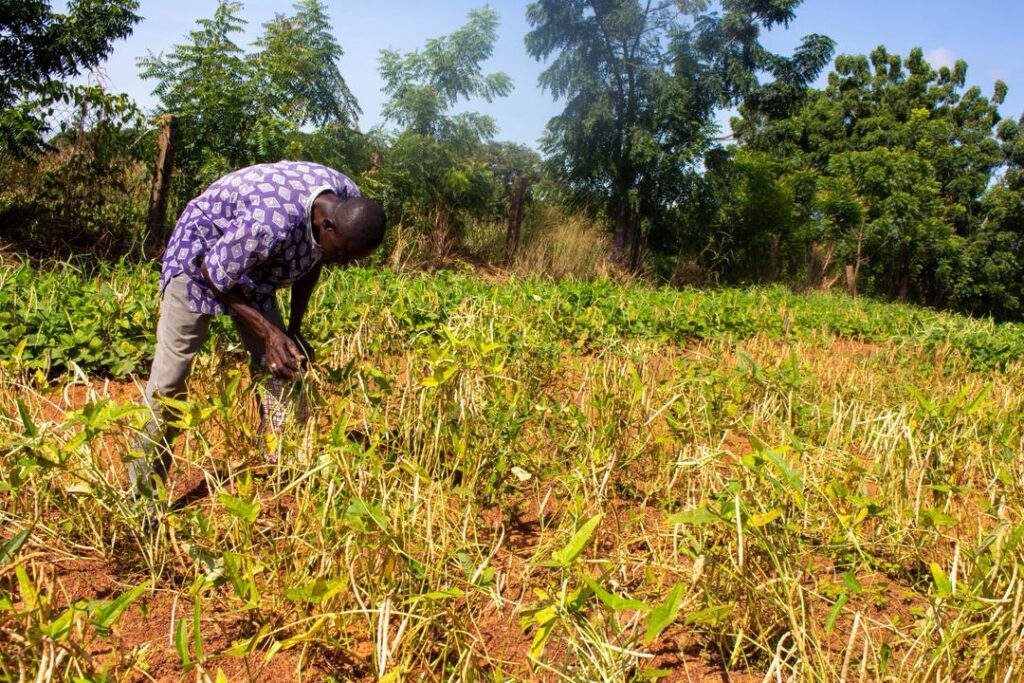
Madam Suweiba Abdallah, another farmer at Nyankpala, also told the GNA that she decided to cultivate Songotra-T after observing her brother’s success with the variety.
She said, “I saw my brother planting it. So, I asked him to give me the seeds to try and see whether it would be good for me too.”
She said she cultivated two acres and recorded what she described as very good yields, a result that had convinced her to embrace the variety.
The experiences of the farmers are supported by data from the Council for Scientific and Industrial Research-Savanna Agricultural Research Institute (CSIR-SARI), which developed the variety.
Dr. Jerry Nboyine, a Research Scientist at CSIR-SARI, told the GNA that Songotra-T had recorded rapid uptake amongst farmers and seed companies since its release in July 2024.
Dr Nboyine said immediately after the release, 800 kilograms of seed were distributed to eight seed companies for multiplication with each company receiving 100 kilograms to cultivate 10 acres.
He said the variety demonstrated its value during the dry spell that affected especially the northern parts of the country in 2024.
He said while many conventional cowpea varieties suffered significant losses, Songotra-T farmers were able to obtain appreciable yields because the crop matured within 60 to 65 days. a situation which subsequently increased demand across the country.
Dr. Nboyine said by the beginning of the 2025 farming season, all seed produced by the initial seed companies had been sold out, while additional seed companies and farmers from Volta and Eastern Regions purchased foundation seeds for multiplication.
He said more than 5,000 kilograms of seed were sold through official channels in 2025 alone, which were enough to support cultivation on over 500 acres using the standard planting rate of 10 kilograms per acre.
He described the figures as remarkable for a variety that was commercialised only two years ago.
The Songotra-T was developed by scientists at CSIR-SARI after nearly 10 years of both confined and on-farm trials in collaboration with an international network of organizations across Western Africa, Australia, the USA, and was coordinated by the African Agricultural Technology Foundation.
The variety has a short maturity period of up to 65 days, resistant to pests, which means that it is sprayed fewer times, and it gives higher yields.
GNA
Edited by Eric K. Amoh/ Kenneth Odeng Adade
Name of Writer: Albert Futukpor
Writer’s Email: [email protected]