By Iddi Yire, GNA Special Correspondent, London
London, June 1, GNA – President John Dramani Mahama says Ghana’s diplomatic relations with South Africa remain strong despite recent xenophobic attacks that have forced the evacuation of some Ghanaian nationals.
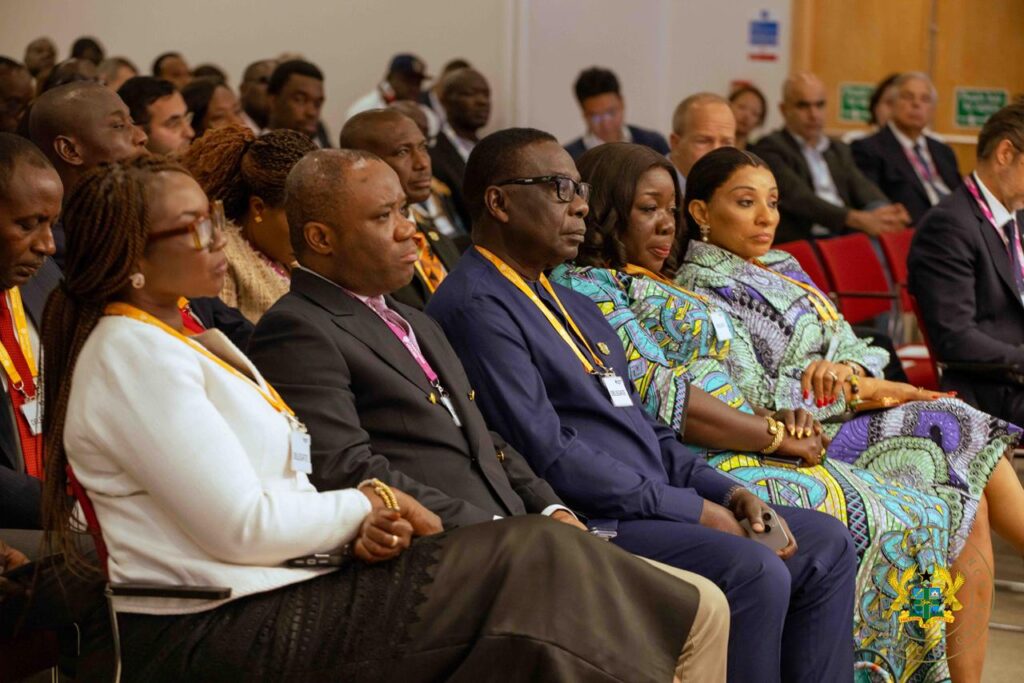
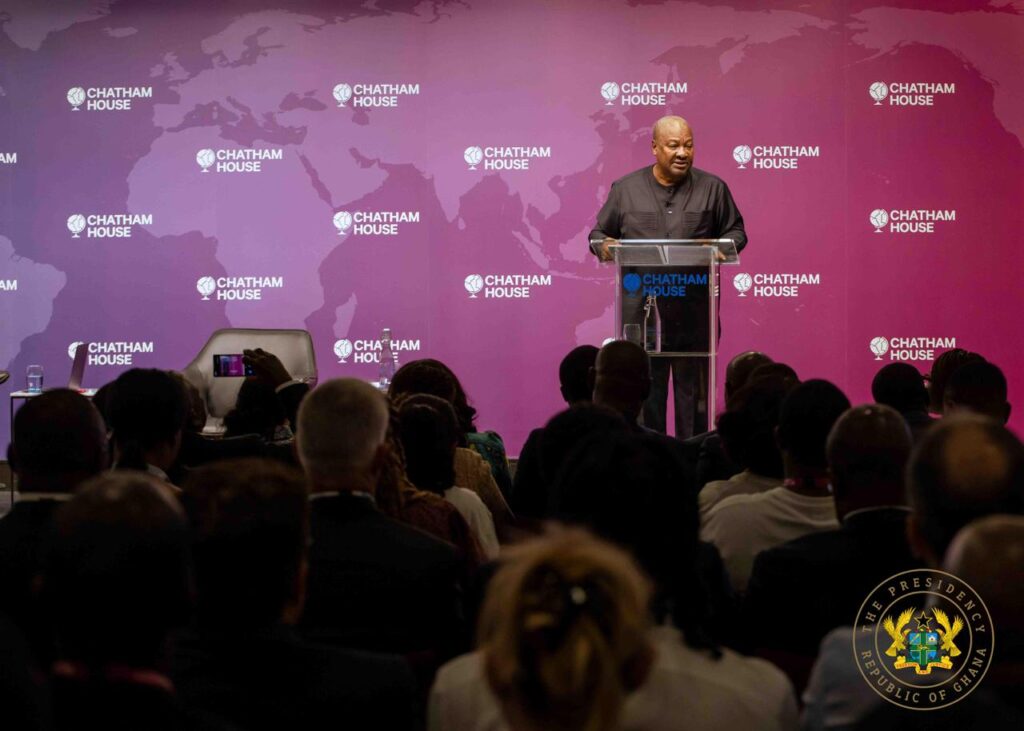
Speaking at Chatham House, a leading policy institute in London, during his five-day official visit to the United Kingdom, President Mahama described the attacks as unfortunate and expressed disappointment over the growing hostility towards foreign African nationals.
“We do not have any breach in our diplomatic relations. What happened was that it’s not the first time there have been these xenophobic attacks in South Africa,” he said in response to a question on Ghana-South Africa relations.
“They say we shouldn’t call it xenophobia. I don’t know what else or the name you can give it. But there have been these surges in anti-foreign attacks.”
The President said previous incidents had mainly affected nationals from neighbouring countries such as Mozambique, Malawi, Zimbabwe and Nigeria, but the latest attacks had increasingly targeted Ghanaians.
“Lately, Ghanaians have gotten involved. This is the first time we’ve really had Ghanaians getting a part of the direction of attacks,” he said.
President Mahama explained that worsening security conditions and attacks on foreign-owned businesses created circumstances that compelled the Government to organise voluntary evacuations for citizens who felt unsafe.
He said many Ghanaians living in South Africa worked as skilled professionals and entrepreneurs, particularly in barbering, hairdressing, nail care, beauty services and other small businesses that contributed to local economic activity.
According to him, shops belonging to foreigners were locked during the attacks, while many migrants feared moving freely because they could be identified and assaulted.
The situation worsened with reports of raids on health facilities.
“And if you were not South African, you were asked to leave the hospital. Even if you were ill, it created a very toxic atmosphere,” he said.
President Mahama said many displaced Ghanaians from Durban and other communities sought refuge at Ghana’s High Commission in Pretoria.
“At this point we had nearly 200 of our citizens in our embassy,” he said.
The President noted that the Government decided to evacuate citizens after concerns grew over their safety and the apparent inability to contain the attacks quickly.
“It didn’t look like the South African authorities were doing anything to try to quell what was happening and also to provide protection to those who had been displaced,” he said.
“And so we did the first evacuation flight. We’re going to do two more to take those who want to leave. It is voluntary. We asked, do you want to stay or you want to leave? And many of them say they feel threatened. And so they want to leave.”
President Mahama said the incidents underscored the need for African countries to deepen cooperation and address obstacles to continental integration.
He emphasised that migration remained an important driver of development and that African economies benefited significantly from the movement of people, skills and investments across borders.
“I think it’s unfortunate what is happening in South Africa. We need to drill down to what causes these flare-ups in terms of xenophobia,” he said.
President Mahama said African countries must empathise with South Africa and support efforts to address the underlying economic and social conditions that fuel periodic outbreaks of anti-foreign sentiment.
He noted that reducing unemployment and tackling inequalities inherited from the apartheid era were critical to finding a lasting solution to the problem.
“And so all of us must empathize with South Africa or must sympathize with South Africa,” he said.
“And we must help South Africa to be able to drill down and find out what it can do to reduce unemployment rates amongst the black populations.”
The President suggested that some of the tensions might stem from structural challenges dating back to the apartheid era, including persistent unemployment among sections of the black population.
He called on African leaders and policymakers to help address the root causes of the violence and challenge perceptions that migrants were responsible for economic hardships.
“After the last fellow African leaves, is it going to change unemployment among blacks in South Africa?” he asked.
“After the last shop has been closed and everybody has left, is it going to change unemployment in South Africa?”
President Mahama reiterated that migration benefited both host countries and migrants, citing the contributions of Ghanaian professionals abroad and other African nationals working in Ghana.
He noted that Ghanaian doctors, nurses, academics, entrepreneurs and skilled workers had made valuable contributions to economies across the continent, including South Africa, just as South Africans, Nigerians and Sudanese continued to contribute to Ghana’s development.
“And everybody brings some advantage. They either bring their knowledge or they bring investments,” he said.
“And I think we should get over this fear of foreigners coming into our countries.”
The first batch of 300 Ghanaians evacuated from South Africa arrived in Accra on Wednesday, May 27.
GNA
Edited by Beatrice Asamani Savage