By Edward Dankwah, GNA
Accra, April 01, GNA – The Cancer Care Africa Foundation (CanCAF) has been officially launched, with a call to strengthen cancer care systems and improve patient outcomes across Africa.
At the launch, the Foundation introduced its flagship initiative, the Cancer Genetic Counselling Certificate Programme for Oncology Nurses in Africa (CGCP-ON AFRICA), aimed at equipping nurses with specialised skills to support early detection, prevention and precision treatment of cancer.
It was delivered in partnership with the West African Genetic Medicine Centre (WAGMC) on the theme, “Transforming Cancer Care: Empowering Oncology Nurses through Genetic Counselling and Precision Oncology,” in Accra.
Mrs Naomi Oyoe Ohene Oti, the Executive Director of CanCAF, said the initiative was established to address urgent gaps in cancer care delivery on the continent.
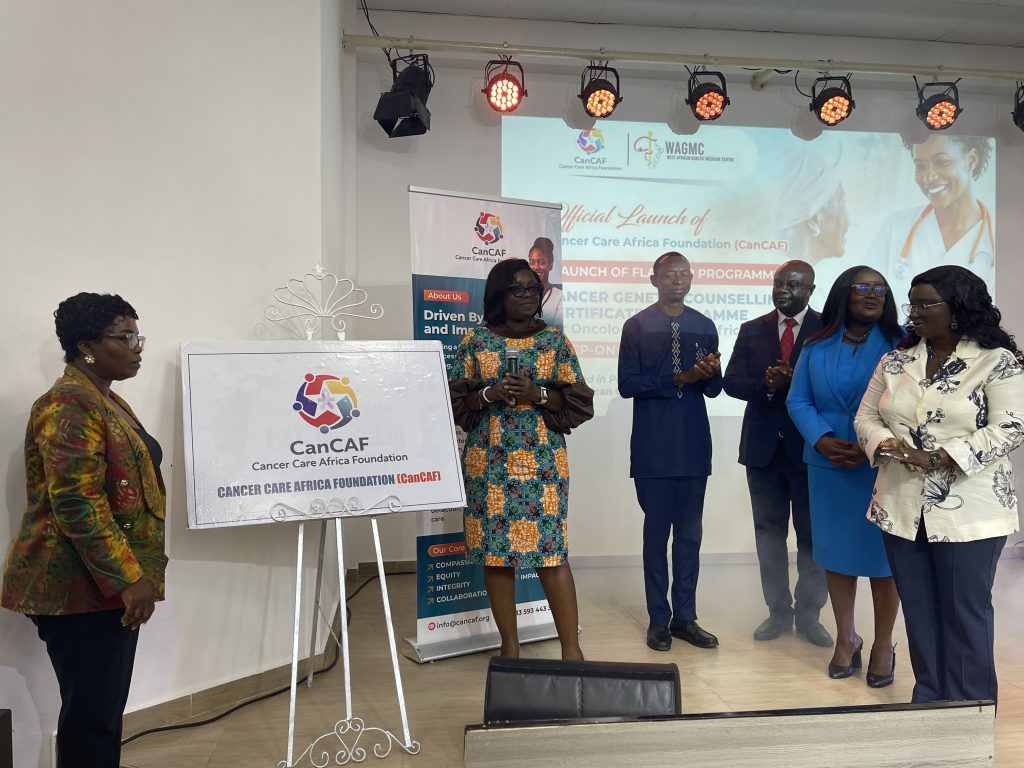
She explained that the Foundation’s vision was to ensure that no African, particularly Ghanaians, were denied quality cancer care because of their location.
Mrs Ohene Oti, who doubles as the 2025 Aster Guardians Global Nursing Award winner, noted that cancer remained a growing public health challenge in Africa, with over one million new cases and more than 700,000 deaths recorded annually.
“In Ghana, over 24,000 new cases are diagnosed each year, with more than 15,000 deaths, and nearly 80 per cent of patients present at advanced stages,” she added.
She identified late detection, limited awareness and critical workforce shortages as key systemic challenges affecting cancer care.
She said the flagship programme would train oncology nurses across Africa over the next two years, bringing life-saving knowledge closer to communities.
“About five to 10 per cent of cancers are inherited, and through genetic counselling, we can identify high-risk individuals early and shift from late-stage intervention to prevention,” she said.
She said CanCAF’s broader strategy was built on three key pillars: developing an African Cancer Nursing Competency Framework, investing in capacity building through training and mentorship, and empowering nurses to play leadership roles in cancer policy and advocacy.
The Executive Director emphasised that addressing cancer in Africa required collective action and sustained collaboration among stakeholders to build resilient health systems and improve outcomes across the continent.
Mr Kwabena Mintah Akandoh, the Minister of Health, in a speech read on his behalf by Dr Hafez Adam Taher, the Director, Technical Coordination, reaffirmed the government’s commitment to strengthening cancer care.
He said cancer had become one of the leading causes of death in Ghana, affecting thousands of families annually and placing increasing pressure on the health system.
The Minister noted that more than 70 per cent of cancer cases in the region were diagnosed at advanced stages, making treatment more complex and reducing survival rates.
“These numbers are not just statistics; they represent real people and families, and as a government, we feel a deep responsibility to ensure access to care, support and hope,” he added.
He said the government had made cancer control a national priority through the National Cancer Control Plan, with interventions focused on expanding screening programmes, improving diagnostic services, enhancing treatment infrastructure and increasing public awareness.
Mr Akandoh stressed that infrastructure alone would not solve the challenge, highlighting the need for innovation, data-driven approaches and a highly skilled workforce.
He said Ghana must adopt and adapt approaches, including genetic risk screening, personalised treatment and the development of genomic databases to guide research and care.
The Minister described the launch of the CanCAF and CGCP-ON AFRICA as a significant step towards building a modern and responsive cancer care system.
GNA
Edited by Christabel Addo