By D.I. Laary
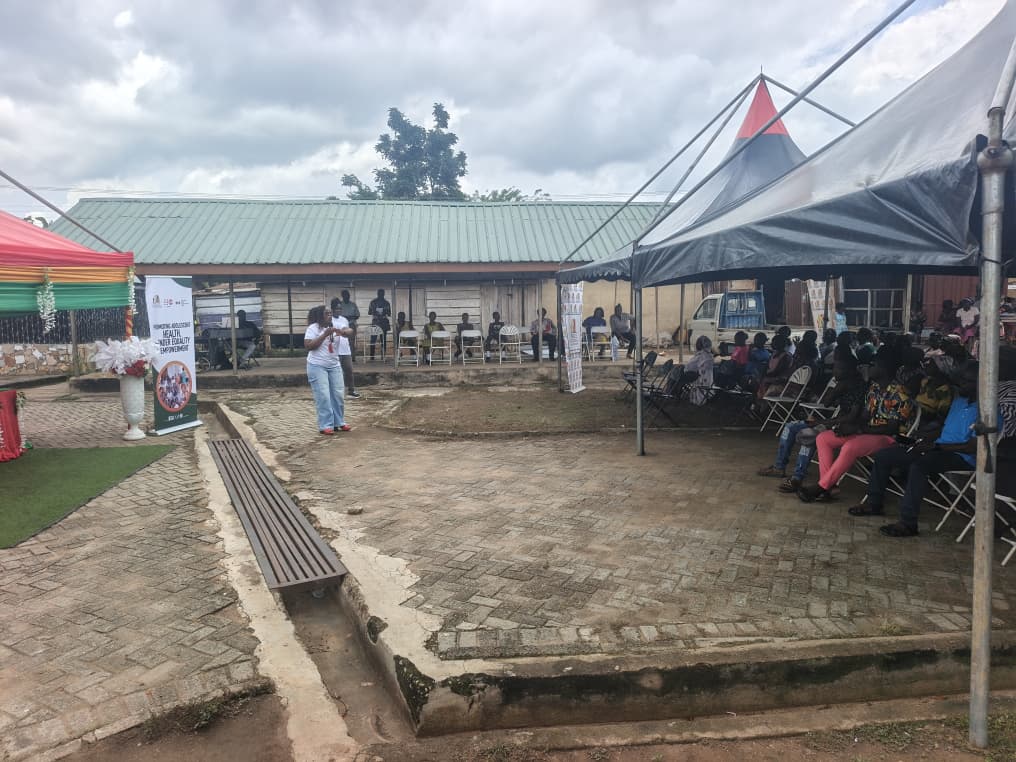
Ajumapo (E/R), June 23, GNA – The National Commission for Civic Education (NCCE) has intensified efforts to address teenage pregnancy, domestic violence and adolescent reproductive health challenges in Ajumapo in the New Juaben North Municipality through community education and stakeholder engagement.
The outreach, organised under the Adolescent Girls Programme in partnership with the United Nations Population Fund (UNFPA) and supported by Global Affairs Canada, brought together health professionals, civic educators, security personnel and community members to promote positive behavioural change and strengthen protection for adolescents.
Ms Lucille Hewlett Annan, Commission Secretary of the NCCE, said the programme sought to increase awareness of adolescent reproductive health, sexual and reproductive health rights, and gender-based violence while encouraging greater parental and community support for young people.
“We came to educate the people of Jumapo on their adolescent reproductive health issues and domestic violence,” she said.
Ms Annan explained that the engagement also aimed at challenging misconceptions surrounding menstruation and encouraging parents to openly discuss reproductive health issues with their children.
“We demystified menstruation and talked to parents that menstruation is a natural thing. It is not a taboo. It is not something that is embarrassing,” she added.
She urged boys and girls to support their peers rather than stigmatise them, particularly when girls experience menstrual challenges in school.
The programme further highlighted the role of boys and men in preventing gender-based violence and promoting mutual respect and responsible behaviour within families and communities.
In an interview with GNA, Ms Lawrencia Obeng, a Public Health Nurse at the Jumapo Health Centre, expressed concern about the neglect of some adolescents and its impact on their well-being.
“We’ve realised that some of the children are being neglected, and it has landed them into teenage pregnancies,” she said.
She explained that adolescence was a critical stage of physical, emotional and cognitive development, requiring active parental guidance and support.
According to her, inadequate communication between parents and children often leaves adolescents vulnerable to misinformation, risky behaviours and exploitation.
She encouraged parents to discuss issues such as menstruation, emotional stress and reproductive health with their children and seek professional support when necessary.
Detective Inspector Ms Joyce Nyarko of the Domestic Violence and Victim Support Unit (DOVVSU) of the Ghana Police Service indicated that drug abuse among some young people remained a growing concern.
“Some of the criminal activities we come across are drugs. The youth take drugs, and this is affecting them because they become dropouts. It results in teenage pregnancies and other issues,” she said.
She called on parents and guardians to remain vigilant and pay close attention to the activities and associations of their children.
Organisers said the outreach formed part of broader efforts by the NCCE and its partners to strengthen community awareness, promote positive social norms and mobilise collective action against adolescent health challenges and gender-based violence.
GNA
Reporter: D.I. Laary
Reporter’s email: [email protected]