By James Amoh Junior, GNA
Accra, March 20, GNA – Professor Takahiro Morio, a renowned Japanese scholar, says Manga, long perceived by some as mere comic entertainment, holds “infinite possibilities”.
He says it is a powerful educational and cultural tool capable of shaping societies and expanding global creative industries.
Manga is a style of storytelling from Japan that uses illustrated panels (comics or graphic novels) to tell stories across a wide range of genres and audiences.
At its core, manga combines art and narrative, using drawings, dialogue, and visual pacing to communicate ideas, emotions, and action.
Speaking in an interview with the Ghana News Agency ahead of his public lecture on Saturday at the University of Ghana, Legon, Prof Morio stressed that Manga must be understood not only as art but as a dynamic medium for learning, cultural exchange, and innovation.
“Manga can represent anything. It is a medium loved by all, suited to all tastes, and has infinite possibilities,” he said, drawing inspiration from the “Manga Manifesto” by legendary Japanese artist, Shotaro Ishinomori.
The lecture, on the theme: “Learning from Manga, Learning with Manga, Learning about Manga,” forms part of a cultural outreach initiative organised in collaboration with the Embassy of Japan, the Ghana Association of Japanese Studies, and the Ghana Association of Japanese Language Teachers.
Prof. Morio noted that misconceptions about Manga, particularly the view that it was childish or harmful, continued to limit its potential in education and research across many parts of the world, including Africa.
Manga in Japan had evolved into a sophisticated storytelling medium that spanned genres such as science, history, politics, health education and social commentary, making it relevant to both young and adult audiences.
“In Japan, Manga is used in classrooms, in professional training, and even in public communication. It simplifies complex ideas and makes them accessible without losing depth,” he said.
Japan’s Manga industry, according to global publishing reports, is valued in billions of dollars annually and forms a central pillar of the country’s creative economy, alongside anime, gaming and film, with growing global influence across education and digital storytelling.
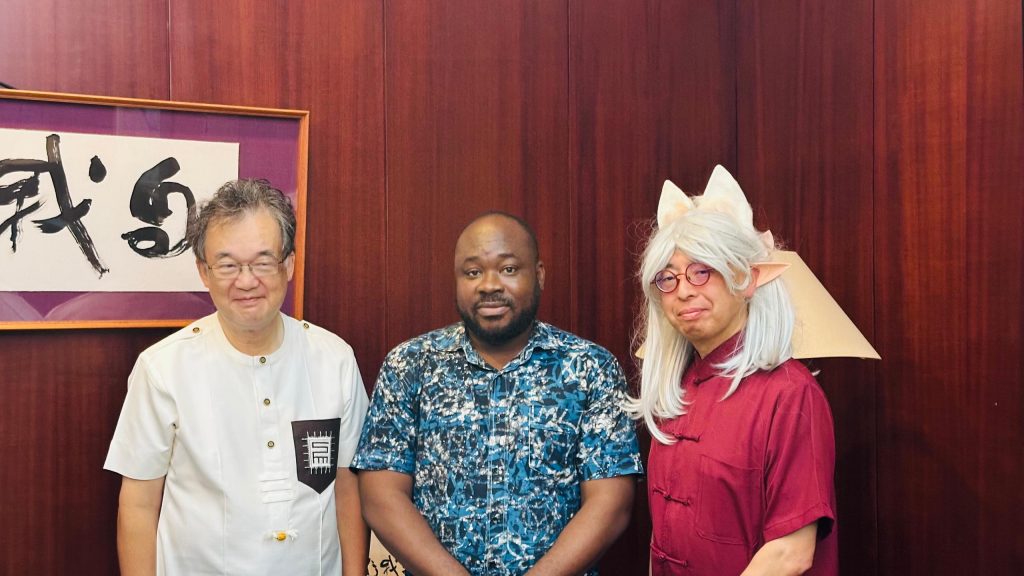
Prof Morio emphasised three core dimensions of his lecture: learning from Manga, learning about Manga, and learning with Manga.
He explained that “learning from Manga” explores the life lessons, ethics and cultural insights embedded in stories, which often reflects societal values such as resilience, teamwork and innovation.
“Learning about Manga” focuses on academic inquiry into the medium itself, addressing critical questions about its definition, structure, and role in modern knowledge systems.
The third dimension, “learning with Manga,” highlights how storytelling techniques from Manga can be applied practically to solve real-world problems, including social issues, education gaps and youth engagement.
Prof Morio, who serves at the University of Tsukuba’s Office of Global Initiatives, and has extensive experience in Africa, including work with the Japan International Cooperation Agency (JICA), said there was a strong opportunity for Ghanaian creatives to contribute to the global Manga ecosystem.
He underscored the importance of co-creation, encouraging local artists and storytellers to adapt Manga techniques to reflect African narratives and perspectives.
“There is an opportunity to develop local creators who can contribute to Manga culture globally. This is not about copying Japan but expanding the possibilities through local stories,” he said.
He described that approach as part of a broader effort to decolonise creative expression by empowering local voices to use global mediums like Manga to tell their own stories.
Mr Hiroshi Yoshimoto, the Japanese Ambassador to Ghana, said the lecture formed part of the “Heart of Japan” Storyteller Dispatch Project, which sought to deepen understanding of Japanese culture beyond its surface appeal.
Regarding the project, he said: “This initiative aims to disseminate the charm of Japan and improve favourability, familiarity and trust, while promoting a deeper understanding of the philosophies, values and aesthetics that underpin Japanese culture.”
He noted that the project placed emphasis on explaining not just the outward appeal of Japanese culture, but also the ideas and ways of thinking embedded within it.
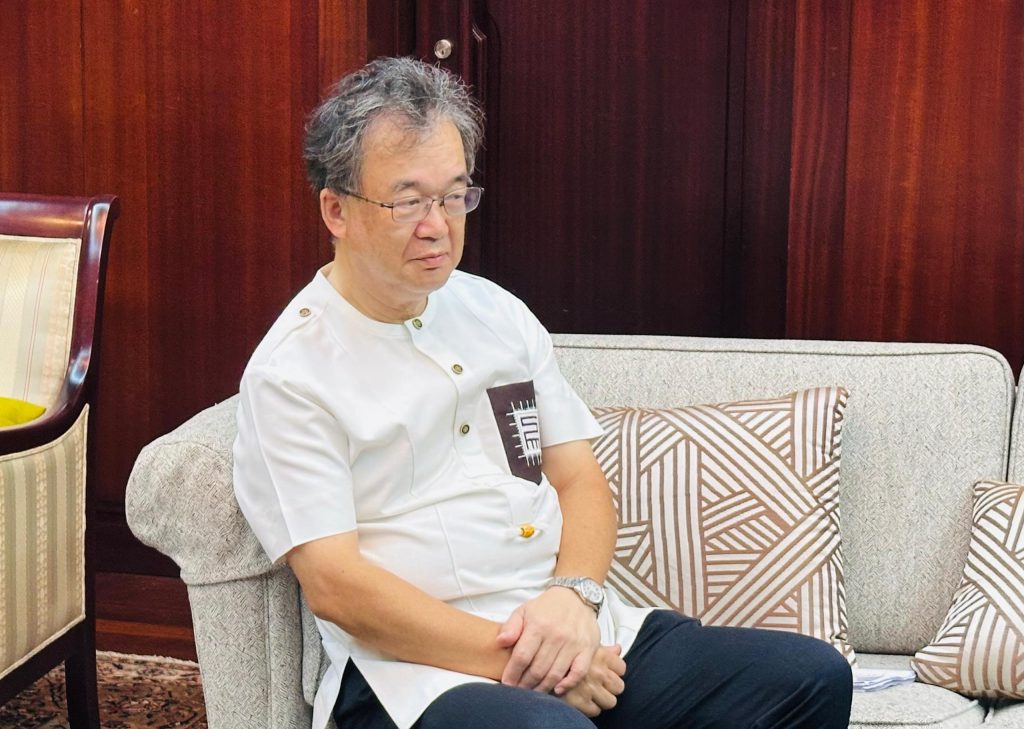
Ambassador Yoshimoto said the initiative was particularly significant as Ghana and Japan prepared to mark key milestones in 2027, including 70 years of diplomatic relations, 50 years of the dispatch of JICA Overseas Cooperation Volunteers to Ghana, and 100 years since Dr. Hideyo Noguchi’s visit.
“We are using this year to build momentum towards these milestones, and this project is the first step in that process,” he said.
The ambassador also highlighted the growing popularity of Japanese pop culture in Ghana, noting that more than 1,000 anime enthusiasts attended a screening of the globally acclaimed series “Demon Slayer” last year.
“We hope this lecture will serve as an entry point for many Ghanaians to engage more deeply with Japanese culture, moving from anime and Manga into a broader appreciation of Japan’s perspectives and ways of thinking,” he added.
He emphasised the need for Manga to be seen beyond an entertainment tool to a valuable educational resource capable of enhancing learning across disciplines.
Following the lecture, activities such as the 30th Japanese Speech Contest are expected to further promote cultural exchange and deepen understanding of Japan among Ghanaian participants.
Prof Morio is expected to deliver lectures at the Kwame Nkrumah University of Science and Technology (KNUST) in Kumasi and the University of Ghana, Legon, engaging students, academics and the public on the evolving role of Manga in education and society.
For many Ghanaian students and creatives, the lecture presents a rare opportunity to engage directly with a leading scholar at the intersection of education, culture and creative industries.
GNA
Edited by Agnes Boye-Doe