By Eric Appah Marfo
Accra, Oct. 21, GNA – Dr Zanetor Agyeman-Rawlings, Minister of Environment, Science and Technology, has called for stronger human oversight and safeguards in the development and use of artificial intelligence (AI), particularly in journalism and the music industry.
She said the rapid advancement of AI required society to consider how the technology should be governed to protect human judgement, professional accountability, and the integrity of creative work.
Dr Agyeman-Rawlings made the call on Friday at the closing ceremony of the 2026 UK Media Excellence for Emerging Technologies (UK MEET) Fellowship in Accra.
She said AI was advancing at a pace that could allow systems to perform tasks in seconds that previously took people years, raising concerns about the ability of existing safeguards to keep pace with technological development.
The Minister urged stakeholders to consider appropriate rules and human oversight to prevent the misuse of AI, particularly in sensitive areas where errors or failures could have serious consequences.
She also highlighted the need for a broader public discussion about the responsible use of AI, including transparency about how content was produced and the role humans should retain in decisions affecting people.
The Minister raised concerns about AI’s growing ability to perform tasks traditionally undertaken by journalists and other professionals, saying the implications for journalism required careful consideration.
In the music industry, she proposed that AI-generated songs should be clearly labelled as such, allowing audiences to distinguish them from works created by human musicians.
Dr Agyeman-Rawlings also suggested considering separate charts for AI-generated music to help protect the recognition and visibility of human artists.
Professor Eric Opoku Mensah, Vice-Chancellor of the University of Media, Arts and Communication (UniMAC), said journalists reporting on AI and other emerging technologies should look beyond promotional claims and examine the evidence, limitations and possible consequences of their use.
He urged reporters to establish who funded the development of a technology, who stood to benefit from it and who might bear the risks.
Professor Opoku Mensah said questions of data privacy and accountability were especially important when AI systems were used in ways that could affect individuals or public services.
He said journalists should explain technological developments accurately without exaggerating their capabilities, adding that reporters should distinguish between what a system had demonstrated and what its developers claimed it could achieve.
The Vice-Chancellor also highlighted the importance of editorial independence and public accountability in technology reporting, urging journalists to investigate whether innovations delivered their promised benefits and how they affected different groups.
He said journalists did not need to become scientists or technology specialists but needed sufficient understanding to ask critical questions and consult reliable experts.
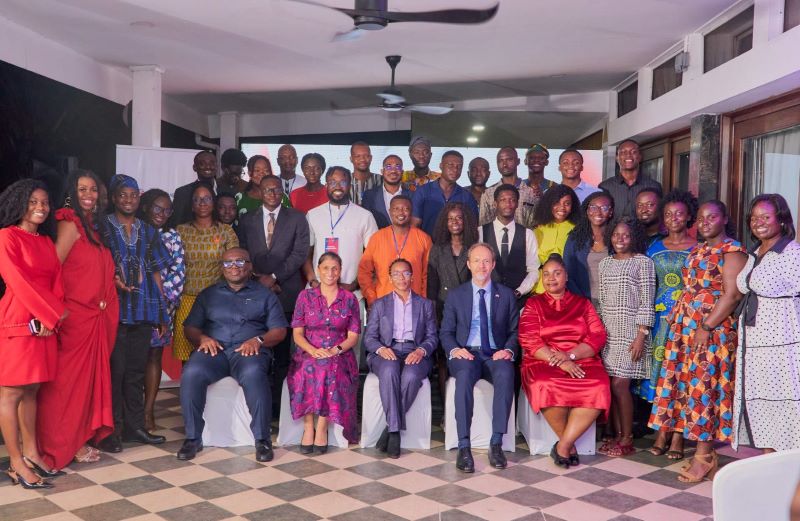
The 2026 UK MEET Fellowship, which brought together 30 Ghanaian journalists and content creators for training in reporting on science, technology and emerging innovations.
The fellowship, delivered by Imperial College London through Imperial Global Ghana in partnership with the British High Commission in Accra and the UK in Nigeria, with support from the UK Foreign, Commonwealth and Development Office, covered AI, climate change and resilience, biomedical innovation and public health, and electronic waste and the circular economy.
Through workshops, masterclasses, editorial clinics and engagements with researchers, participants were trained to scrutinise technology claims, verify information, and communicate complex scientific developments in ways that audiences could understand.
GNA
Edited by Kenneth Odeng Adade
Reporter: Eric Appah Marfo
[email protected]