By Eric Appah Marfo, GNA
Accra, Oct. 21, GNA – Dr Christian Rogg, British High Commissioner to Ghana, has urged journalists to prioritise science, technology and innovation reporting to improve public understanding of research and inform policy discussions.
He said journalists needed to investigate scientific claims, explain complex issues in accessible language, and highlight innovations capable of addressing societal challenges.
Dr Rogg made the call at the closing ceremony of the 2026 UK Media Excellence for Emerging Technologies (UK MEET) Fellowship in Accra on Friday.
He said strong science and technology journalism was a public service that enabled citizens to understand issues affecting their lives, evaluate evidence and participate meaningfully in public debates.
“It really is a public service that you are providing,” he said, urging journalists to develop original stories that answered important questions, addressed misunderstandings and engaged audiences.
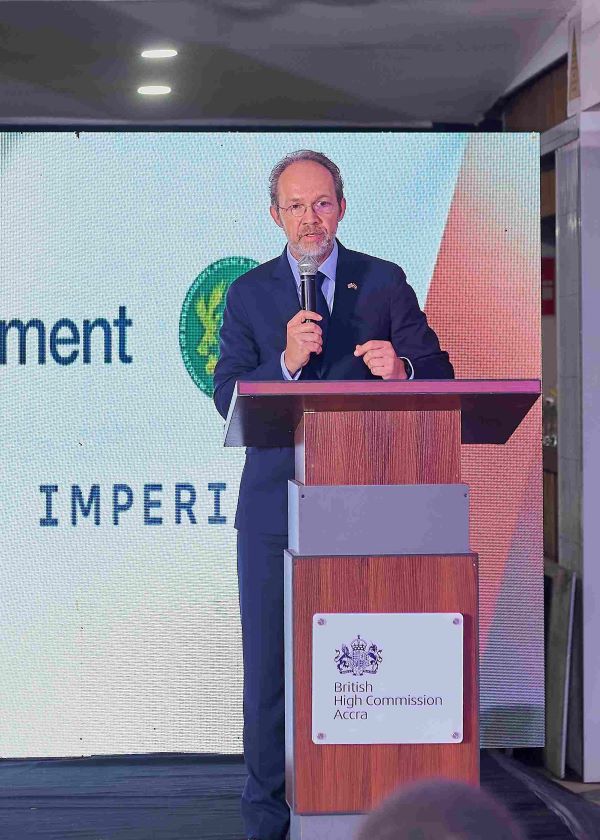
Dr Rogg said the fellowship, now in its fourth year, had supported more than 70 journalists over the previous three years, some of whom had produced impactful reports on health, climate and technological innovation.
He cited reporting by previous fellows on biodegradable plastics developed in the United Kingdom and the impact of microplastics on human health and the environment as examples of how journalism could stimulate policy interest and public engagement.
He said one of the programme’s alumni had presented work on microplastics at the World Conference of Science Journalists, demonstrating how locally relevant investigations could contribute to international discussions.
Dr Rogg said such reporting showed that the fellowship’s impact extended beyond training to connecting scientific research with public understanding, policy discussions and potential solutions to societal problems.
He said the programme also provided opportunities for journalists to establish lasting relationships with researchers, experts and fellow journalists across Ghana and West Africa.
Dr Rogg noted that reporting on emerging technologies had become increasingly demanding as information travelled rapidly across borders and artificial intelligence continued to transform content production and influence other fields, including health and climate science.
He urged media organisations to give greater attention to science and technology stories, despite the competition for audience interest from politics, sports and other traditional news topics.
The High Commissioner said the fellowship’s selection process had prioritised original story ideas, clearly defined questions and issues requiring further investigation.
He congratulated the participants on completing the week-long residential programme and announced that 10 fellows had been selected for a knowledge-exchange visit to the United Kingdom later in the year.
Dr Rogg encouraged them to make the most of the opportunity to engage with researchers and experts and gain first-hand insights into scientific research and innovation.
Madam Rebecca Ekpe, Vice-President of the Ghana Journalists Association said initiatives such as the fellowship were important for strengthening professional capacity and journalistic excellence amid the changing media landscape.
She said continuous learning and knowledge-sharing were essential as misinformation, disinformation, artificial intelligence and digital threats increasingly shaped journalism.
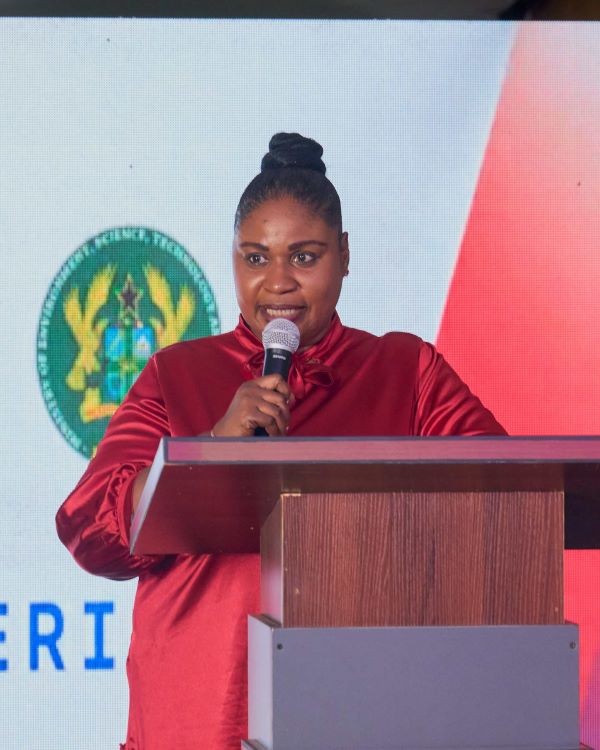
Madam Ekpe urged journalists to uphold accuracy, fairness, ethics and responsibility in their reporting, adding that professional development programmes should translate into practical improvements in newsrooms and communities.
She said partnerships between Ghanaian media stakeholders and international institutions could strengthen journalism through knowledge exchange, innovation, professional development and support for media sustainability.
Madam Ekpe highlighted the importance of public trust and democratic accountability, saying journalists helped citizens make informed decisions, hold institutions accountable and amplify voices that might otherwise go unheard.
She urged participants to extend their coverage beyond politicians to include scientists, researchers, university communities and innovators contributing to national development.
Madam Ekpe said the programme’s impact would ultimately depend on how participants applied their new knowledge in their newsrooms, improved their communities and contributed to public discourse.
The UK MEET Fellowship brought together journalists and content creators to strengthen reporting on science, technology and emerging innovations.
The 2026 Ghana cohort comprised 30 journalists who participated in virtual orientation sessions on October 6 and 8 before a residential programme in Accra from Sunday, October 11 to Saturday, October 17, 2026.
The programme covered artificial intelligence, climate change and resilience, biomedical innovation and public health, and electronic waste and the circular economy through masterclasses, practical storytelling workshops, editorial clinics and engagements with researchers.
Participants were equipped to scrutinise scientific claims, verify information, interrogate technological developments and translate complex research into accurate and accessible reports.
The fellowship is delivered by Imperial College London through Imperial Global Ghana, in partnership with the British High Commission in Accra and the UK in Nigeria, with support from the United Kingdom’s Foreign, Commonwealth and Development Office.
It forms part of broader UK-Ghana cooperation in science, technology and innovation, with the aim of strengthening links between journalism, research and public understanding.
GNA
Edited by Kenneth Odeng Adade
Reporter: Eric Appah Marfo
[email protected]