By Caleb Kuleke,
Ho, March 9, GNA – Ms Cynthia Djokoto, Director of Small and Medium Enterprises (SME) at the Ministry of Trade, Agribusiness and Industry, says deliberate action is required for Ghana to achieve inclusive and sustainable growth.
She said the country must continue to break barriers that limit women’s participation in traditionally male-dominated sectors, particularly in circular economy initiatives, science, technology, agribusiness and manufacturing.
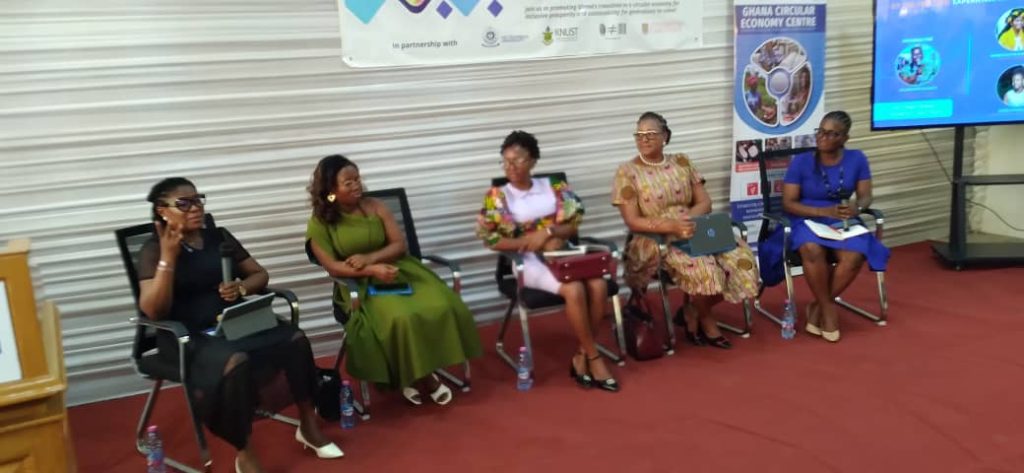
Ms Djokoto was speaking at a programme organised by the Ghana Circular Economy Centre and hosted by Ho Technical University to commemorate this year’s International Women’s Day.
The event was held on the theme: “Women Leading the Circular Future: Driving Inclusive and Sustainable Growth in Ghana.”
Ms Djokoto said International Women’s Day was not only a celebration of the resilience and achievements of women but also recognition of their critical role in shaping a more sustainable and inclusive economy.
She noted that women entrepreneurs continued to make significant contributions to the micro, small and medium enterprises sector, particularly in trade, agribusiness, industry and services.
Ms Djokoto emphasised the need for increased investment in mentorship, policy support and capacity building to ensure that no woman was left behind.
“Let us continue to work together to empower women entrepreneurs to lead confidently and contribute meaningfully to Ghana’s sustainable development,” she said.
She noted that the transition to a circular economy presented new opportunities for women to lead in areas such as value addition, waste reduction, sustainable production and green innovation.
Ms Djokoto said supporting women in these areas was essential to building a resilient and sustainable economy, stressing that women’s leadership and contributions were invaluable and transformational.
She added that the Ministry remained committed to promoting policies and programmes that enhanced access to finance, business development support, technology and markets for women-led enterprises.
During a dialogue session, panelists highlighted the many opportunities available to women across various economic sectors, including agriculture.
However, they identified funding as a major challenge facing women-owned businesses and urged government to establish comprehensive systems to address the issue.
They also appealed to traditional authorities to support women in accessing land for business activities, noting that land acquisition remained a significant obstacle for many women entrepreneurs.
GNA
Edited by: Maxwell Awumah/Audrey Dekalu