By Yussif Ibrahim
Kumasi, Feb. 09, GNA – Stakeholders at an advocacy and dissemination engagement in Kumasi have raised concerns over limited access to information and the exclusion of Metropolitan, Municipal and District Assemblies (MMDAs) in the implementation of projects awarded at the national level.
They argued that sidelining local authorities and community actors often leads to poor-quality work, as local stakeholders lack the mandate and information needed to effectively monitor projects or hold contractors accountable when defects become apparent.
The situation is further compounded, they noted, by the frequent absence of project information signposts, denying community members basic details about project scope, cost, timelines, and funding sources.
The concerns were raised during discussions on findings from a monitoring exercise conducted on selected petroleum revenue-funded projects in the Ashanti Region.
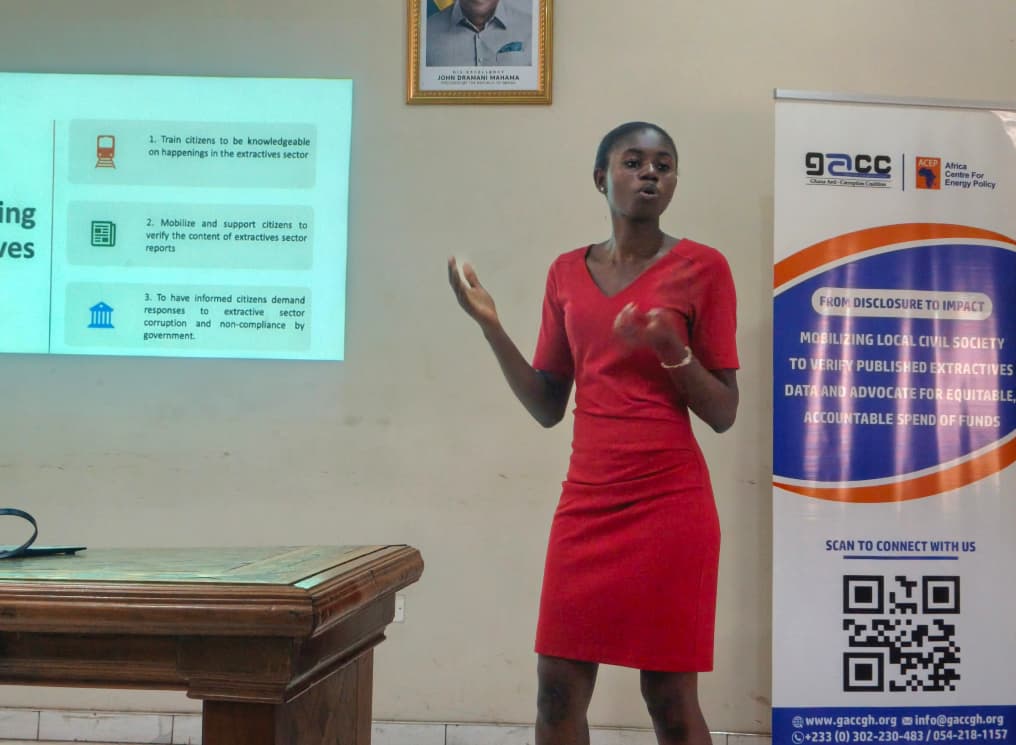
The exercise was carried out by the Ghana Anti-Corruption Coalition (GACC), in collaboration with Abak Foundation, its local partner.
It sought to mobilise and empower citizens to verify information contained in extractive sector reports and to demand accountability for corruption and non-compliance in the management of extractive revenues.
The project, dubbed “From Disclosure to Impact – Mobilising Local Civil Society to Verify Published Extractives Data and Advocate for Equitable, Accountable Spend of Funds,” is funded by the Africa Centre for Energy Policy (ACEP).
It is being implemented in Asante Akim Central, Nzema East, Sekondi-Takoradi, Ho, and Tamale Metropolis.
Findings on the 35 projects monitored across the five Municipal and Metropolitan Assemblies showed that seven could not be traced, 12 had been completed, nine were ongoing, and two had been abandoned.
Stakeholders attributed these challenges largely to the lack of involvement of local authorities, traditional leaders, and beneficiary communities in project planning and execution.
Participants took turns to express dissatisfaction with the situation and called on the government to address the gaps to ensure transparency, accountability, and value for money in the use of public funds.
Ms Dorcas Affum Tenkorang, the Assistant Programme Officer at GACC, explained that the initiative focused on monitoring the utilisation of the Annual Budget Funding Amount (ABFA) derived from petroleum revenues.
She noted that although the Ministry of Finance publishes information on ABFA-funded projects, it was critical for citizens to follow up and verify whether such projects were actually implemented as reported.
“This year, we are focusing on advocacy engagements with stakeholders, based on issues identified during our field monitoring, to ensure they are well informed and can demand accountability,” she said.
Ms Tenkorang pointed out that, with ABFA resources now earmarked for the government’s “Big Push” agenda, it was imperative that past implementation lapses were addressed to prevent a recurrence.
She stressed the need for greater involvement of sub-structures at the local level and beneficiary communities in project implementation to promote transparency, enhance monitoring, and improve the quality of work delivered.
GNA
Edited by Kwabia Owusu-Mensah/ Christabel Addo