By Yussif Ibrahim
Manso Nkwanta (Ash), Jan. 27, GNA – Madam Aba Oppong, the Executive Director of Rights and Responsibilities Initiatives Ghana (RRIG), has called for stronger public education and institutional support to encourage children, especially girls, to report sexual abuse and exploitation.
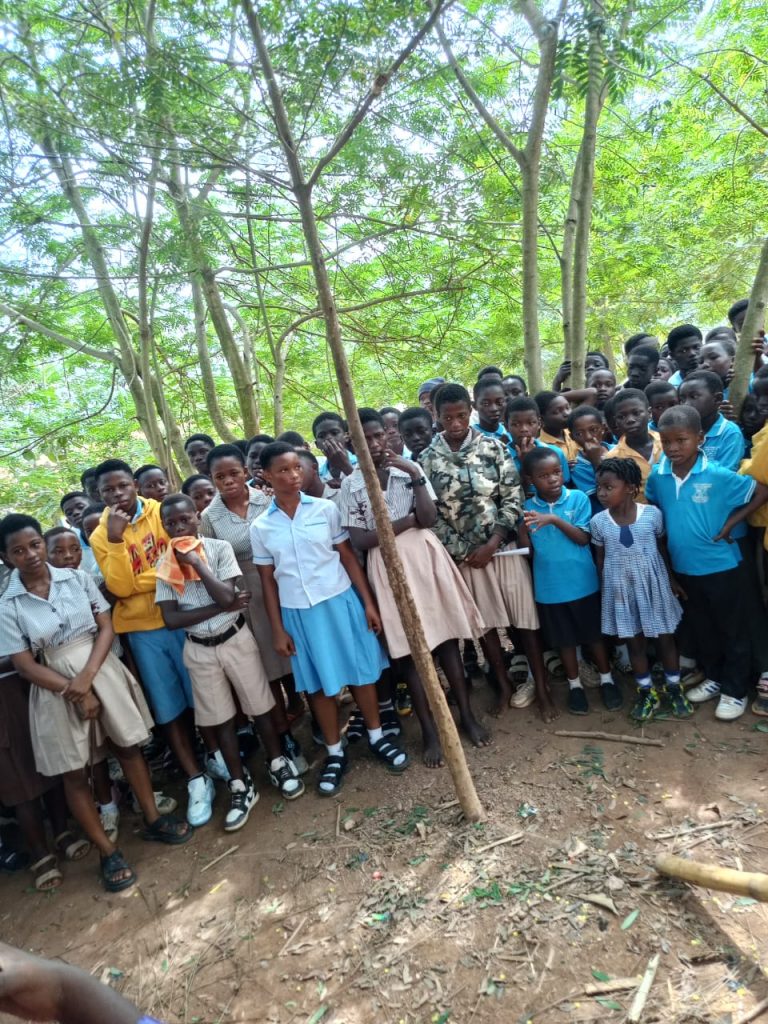
She made the call during an anti-corruption outreach organised by the Amansie West Local Accountability Network (LANet) at Manso Nkwanta DA Basic School.
The discussion was sparked by a bold question from a female pupil, who asked whether a teacher attempting to lure a student into a sexual relationship could be described as corruption.
Madam Oppong responded in the affirmative, explaining that any act prohibited by law, particularly those involving abuse of power for personal gain, constitutes corruption.
“Abuse by persons in authority, including teachers, is corruption because it violates the law and undermines the rights and future of the child,” she said.
Madam Oppong pointed out that Ghana’s Criminal Offences Act of 1960 criminalises acts such as defilement, child marriage and other forms of sexual exploitation of minors.
However, she noted that the continued prevalence of abuse points not to a lack of laws, but to gaps in reporting, awareness and protection.
She stressed that minors often fail to report abuse because perpetrators usually hold power over them – such as teachers, caregivers, religious leaders or community figures, making victims fearful of intimidation, stigma or punishment.
According to her, the first line of defence against abuse begins at home, where parents and caregivers must deliberately educate children, both girls and boys, about bodily boundaries and personal safety.
“Children must be taught that nobody has the right to touch their bodies inappropriately.
This education must involve both boys and girls so that everyone understands what is wrong and unacceptable,” she said.
She added that, while parents must care for their children, it is also important to help children gradually understand personal privacy in ways that protect them and prevent confusion or fear, when abuse of education was introduced.
Madam Oppong emphasised that child protection was a shared responsibility involving homes, schools, faith-based institutions, community leaders, and the state.
She urged religious institutions, youth organisations and community groups to actively encourage victims to speak up and to assure them of support rather than silence.
She commended the Ghana Police Service, particularly its Domestic Violence and Victim Support Unit (DOVVSU), for providing reporting channels, counselling and survivor support services, and encouraged the public to make use of them.
Madam Oppong also highlighted the critical role of the media in amplifying child protection messages.
“The media is very powerful.
Even if a story reaches only a few people directly, the information spreads through communities and can empower many more to act,” she said.
She further called attention to initiatives such as the Safe School Environment programmes, which promoted schools free from bullying, abuse and exploitation, urging journalists and stakeholders to pay more attention to such interventions.
She also raised concerns about emerging social risks, including the influence of young commercial transport operators and others with disposable income who may exploit vulnerable girls through gifts or money, sometimes without the victims fully understanding the consequences or illegality of such relationships.
Madam Oppong urged civil society organisations, state institutions and community leaders to intensify education and create safe, trusted reporting systems that give children the courage to speak out.
“When children report abuse, they are not destroying anyone’s life; they are protecting their own future,” she said.
GNA
Edited by Kwabia Owusu-Mensah/Kenneth Odeng Adade