By Albert Futukpor
Loagri (NE/R), Dec 9, GNA – Four fully furnished, modern and fit-for-purpose kindergarten facilities have been handed over to four communities in the North East Region to ensure improved learning environment for children.
The beneficiary communities were Loagri, Kukua, La-atari and Namangu in the West Mamprusi Municipality.
They were constructed as part of the implementing activities under the Quality and Inclusive Early Childhood Education Services for All Children Phase 2 (QAIECE–2) project.
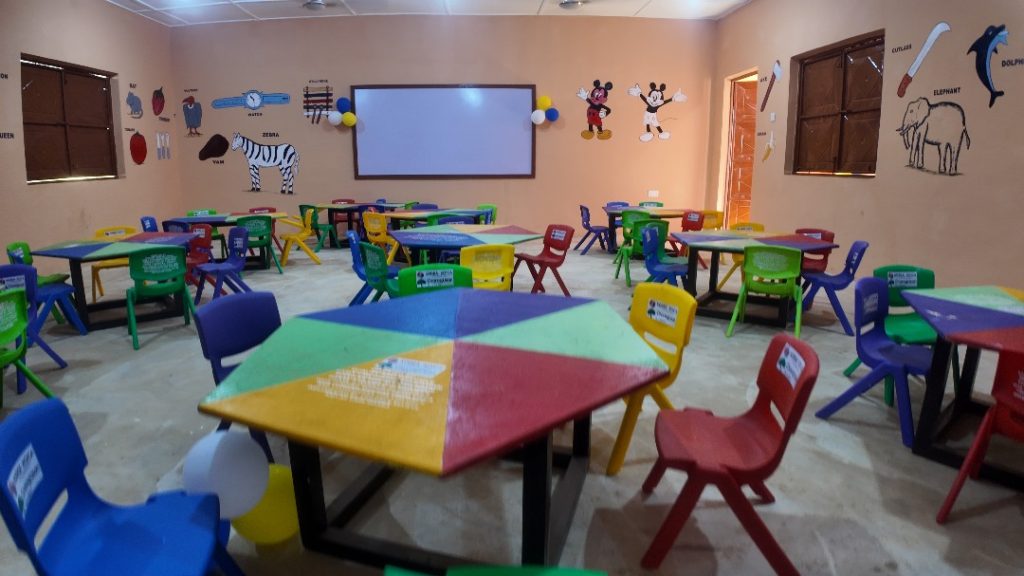
They were funded by Korea International Cooperation Agency (KOICA), Korea’s leading development cooperation agency, and implemented by ChorogUsan for Children, Children Believe, and AG Care Ghana.
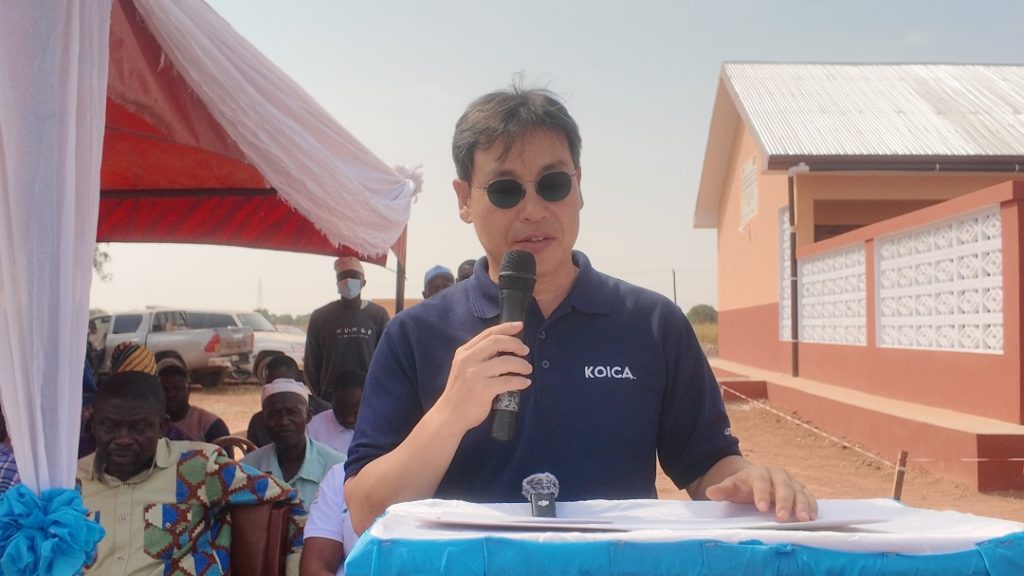
Mr Donghyun Lee, Country Director, KOICA, speaking during the handing over of the facilities to the beneficiary communities in the Municipality, reaffirmed Korea’s strong commitment to supporting Ghana’s national efforts to strengthen kindergarten education, improve learning environments, and enhance the capacity of teachers, parents, caregivers, and local education officers.
Mr Lee emphasised the significance of the investments in the kindergarten facilities, saying “These facilities are not only buildings, they are places where children will grow, learn, and build the foundation for their future.”
Madam Frieda Billa, Team Leader of AG Care Ghana, said the project targeted 30 communities and would reach 52,220 direct beneficiaries (24,873 males and 27,347 females) and 70,025 indirect beneficiaries (34,338 males and 35,687 females) bringing the total number of beneficiaries to 122,245.
She expressed gratitude to Education Directors and community members for their dedication and support from the Phase I of the project to date, saying “We trust that our partnership will continue to yield impactful success stories that bring lasting benefits to future generations.”
Madam Esenam Kavi De Souza, Country Director for Children Believe, said the organisation’s partnership with ChildFund Korea, ChorogUsan for Children, and AG Care Ghana was rooted in a shared commitment to promoting the survival, protection, development and early learning of children for over two decades.
She underscored the organisation’s belief in “Starting Right” noting that early childhood offered a vital window of opportunity that must be maximized.
She emphasised that children could not wait until primary school to begin learning, referencing Sustainable Development Goal 4, which sought to ensure that by 2030, all children had access to quality early childhood development, care, and pre-primary education.
She added that early learning was essential to achieving universal primary education.
Madam De Souza explained that the QAIECE project aligned with Ghana’s Early Childhood Education (ECE) policy framework by ensuring the availability of kindergarten spaces for children aged four to five years in the East and West Mamprusi Municipalities, supporting effective curriculum implementation, and strengthening the capacity of in-service teachers and non-professional ECE workers.
The overall goal of the project is to ensure quality early childhood education opportunities for children aged four to five years in the North East Region.
Madam De Souza said, “As we hand over these kindergarten facilities, it is our hope and expectation that early childhood education will receive the needed attention from both government and development partners.”
She commended government for its plan to construct 200 standard kindergarten blocks in 2026 as captured in the 2026 budget statement, and reiterated Children Believe’s commitment to monitoring their implementation.
The Municipal Chief Executive for the West Mamprusi Municipal Assembly, Mr Mohammed Jabaah, said the project would benefit more than 122,000 people; children, teachers, families, and communities.
He reaffirmed government’s commitment to partnerships that advanced education, saying “Today is a celebration of hope, a day when the future of children takes clearer shape before our eyes. These modern kindergarten facilities are more than buildings; they are seedbeds of dreams, vessels of potential, and bridges to a better tomorrow.”
Dr Issahaque Munawaru, Deputy Director-General in-charge of Quality and Access, Ghana Education Service, emphasised that the achievement reflected strong collaboration amongst Children Believe, AG Care Ghana, ChorogUsan, and KOICA.
He said the USD 1.85 million investment in the QAIECE Phase II project demonstrated a clear commitment to the future of Ghana’s children.
He expressed government’s appreciation to the partners for supporting national goals on access, equity, and improved learning outcomes.
He reiterated that national policy placed ECE at the heart of basic education reforms, highlighting research linking the first five years of life to physical growth, language development, emotional stability, and future academic success.
Dr Munawaru said quality kindergarten facilities enhanced attendance, strengthened school readiness, and provided the foundation for lifelong learning.
He acknowledged the leadership of Children Believe, AG Care Ghana, and ChorogUsan as well as the support of district assemblies, traditional authorities, community members, and education officers, who contributed land, supervision, and community mobilization.
He encouraged parents and community leaders “To support these facilities, protect the buildings, encourage regular attendance, and work closely with teachers. Education is strongest when families, schools, and communities move in the same direction. Your support will ensure that these investments deliver long-term results.”
GNA
Edited by Eric K. Amoh/Christian Akorlie