By Yussif Ibrahim
Juaben (Ash), Dec. 16, GNA – The Ghana Anti-Corruption Coalition (GACC) has intensified calls on young people to play a frontline role in the fight against corruption by resisting, rejecting, and reporting all forms of corrupt practices.
The call was made during the 2025 International Anti-Corruption Day (IACD) celebrations held at Juaben Senior High School (SHS) and Juaben Anglican Junior High School (JHS) in the Juaben Municipality of the Ashanti Region.
The celebration was held under the theme “Uniting with Youth Against Corruption, Shaping Tomorrow’s Integrity,” with support from the William and Flora Hewlett Foundation, GIZ and the European Union (EU) through the PAIRed Programme.
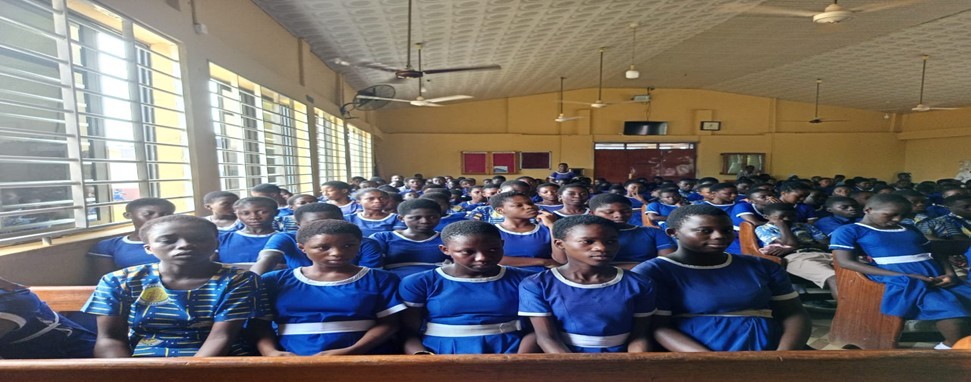
Madam Aba Oppong, Chair of the Local Accountability Network (LANet), addressing the students on behalf of the Executive Secretary of GACC, said Ghana’s commitment to fighting corruption required the active involvement of the youth, whose futures were most affected by the consequences of corruption.
She noted that corruption drained public resources, weakened institutions, widened inequality, and eroded public trust, stressing that “every cedi lost to corruption is a missed opportunity for better schools, improved healthcare, stronger infrastructure and decent jobs.”
She educated the students on the significance of International Anti-Corruption Day, observed globally on December 09 following the adoption of the United Nations Convention against Corruption (UNCAC) in 2003.
The students were taken through the Whistleblower Act, 2006 (Act 720) and the Witness Protection Act, 2018 (Act 975) and were encouraged to report corruption without fear, knowing they were protected by law.
They were also informed that whistleblowers were entitled to 10 percent of recovered funds when corruption-related monies were retrieved by the state.
The role of the youth in fighting corruption formed a key focus of the engagement as facilitators explained that young people are often the first victims of corruption through underfunded schools, limited job opportunities and restricted access to healthcare.
The students were therefore encouraged to speak up against wrongdoing, use social media responsibly, and reject the normalisation of corruption in all its forms.
GNA
Edited by Kwabia Owusu-Mensah/Kenneth Odeng Adade